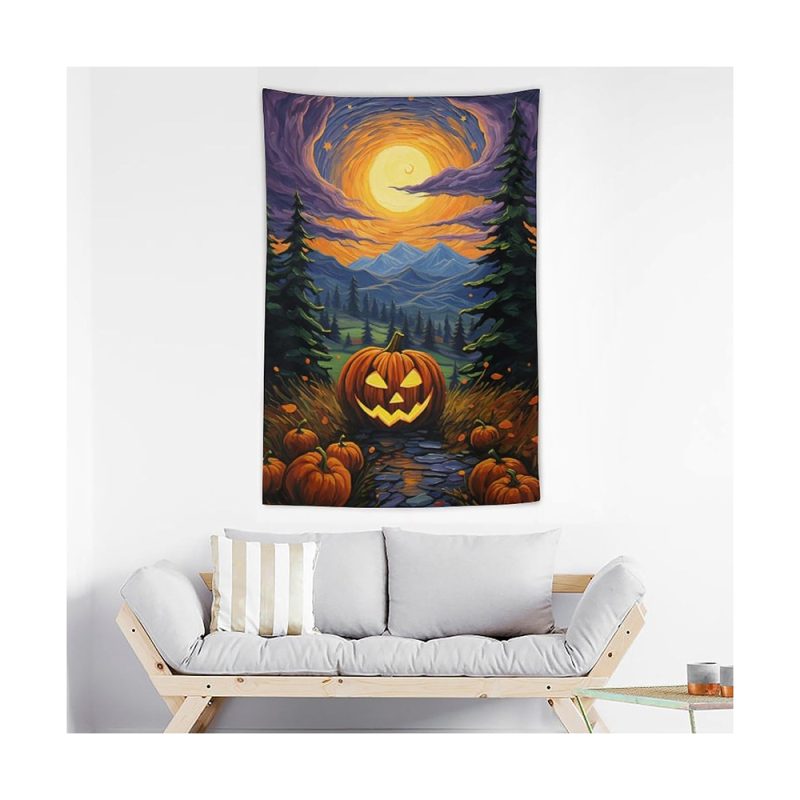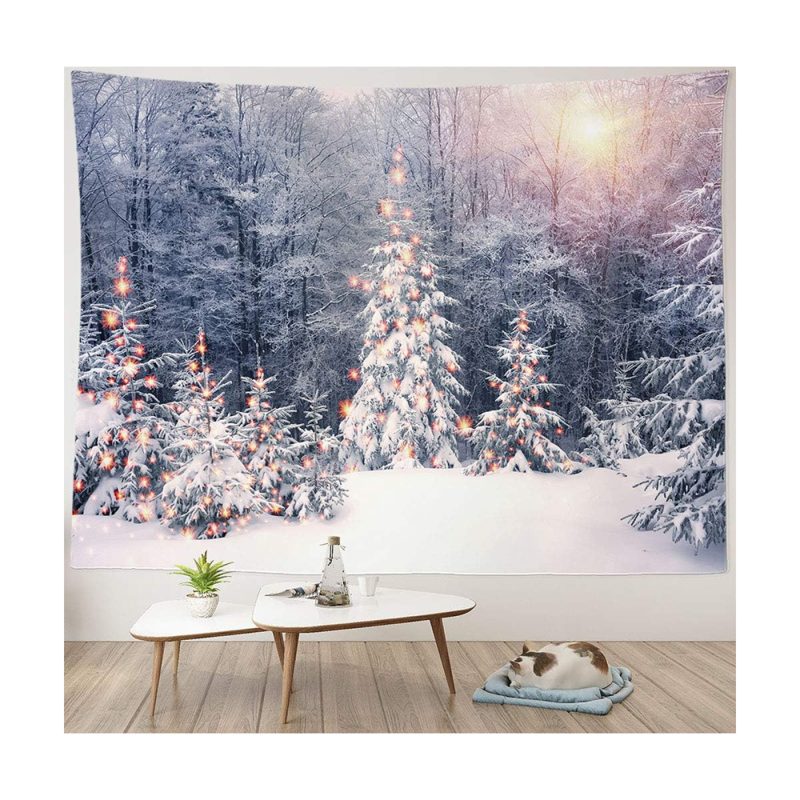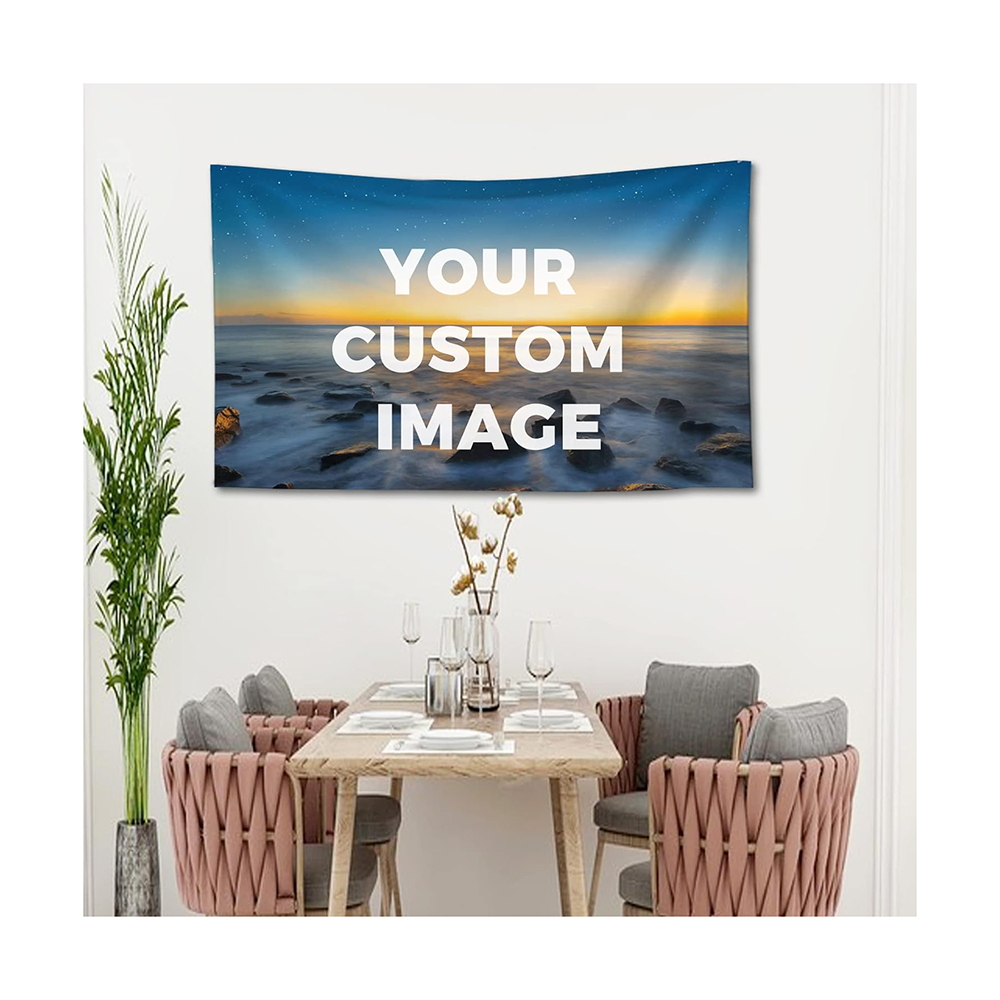
Custom Printed Wall Tapestry, Dye-Sub Poly Panels
$2.50
Custom printed wall tapestry built as a year-round reproduction service for artists, galleries, museum shops and photo-gift resellers: your artwork or your customers’ photographs dye-sublimated into the fibers of a flat, no-pile polyester sheet with a locked dark overlock edge, printed edge-to-edge or inside a white margin border you choose per SKU. Listed at 130 x 150 cm, other cuts quoted with no tooling tied to format; rod sleeve, eyelets or a clip-ready header are added when specified before sampling, and no hardware ships unasked. MOQ 100 pcs per design, physical proofs in 3-5 days, production 7-15 days after artwork approval, reorders triggered by point of sale against the stored file. Rolled or flat-folded packing, FBA labeling, sea/air/courier freight. The displayed price anchors the 100-piece tier — no gsm figure is quoted anywhere on this page, because the sample, not the listing, sets the weight.
An Evergreen Product for People Whose Inventory Never Goes Seasonal
A custom printed wall tapestry in this lane is not a Halloween or Christmas item — it is a reproduction service cut to wall format. Artist shops, gallery stores, museum shops, print resellers, event and hotel decorators all buy the same object year-round: a polyester panel that takes an uploaded image edge-to-edge and goes back into stock whenever someone’s piece sells. There is no seasonal cliff, no October cutoff, no January clearance — which changes the buying conversation completely. You are not timing a drop; you are pricing a margin per unit against artwork you own the rights to, and reordering whenever the shelf thins. This page quotes that program: 100 pcs per design to open, 3-5 days to hold a physical proof, 7-15 days of production after artwork approval, and a size and layout system you set once and rerun forever.
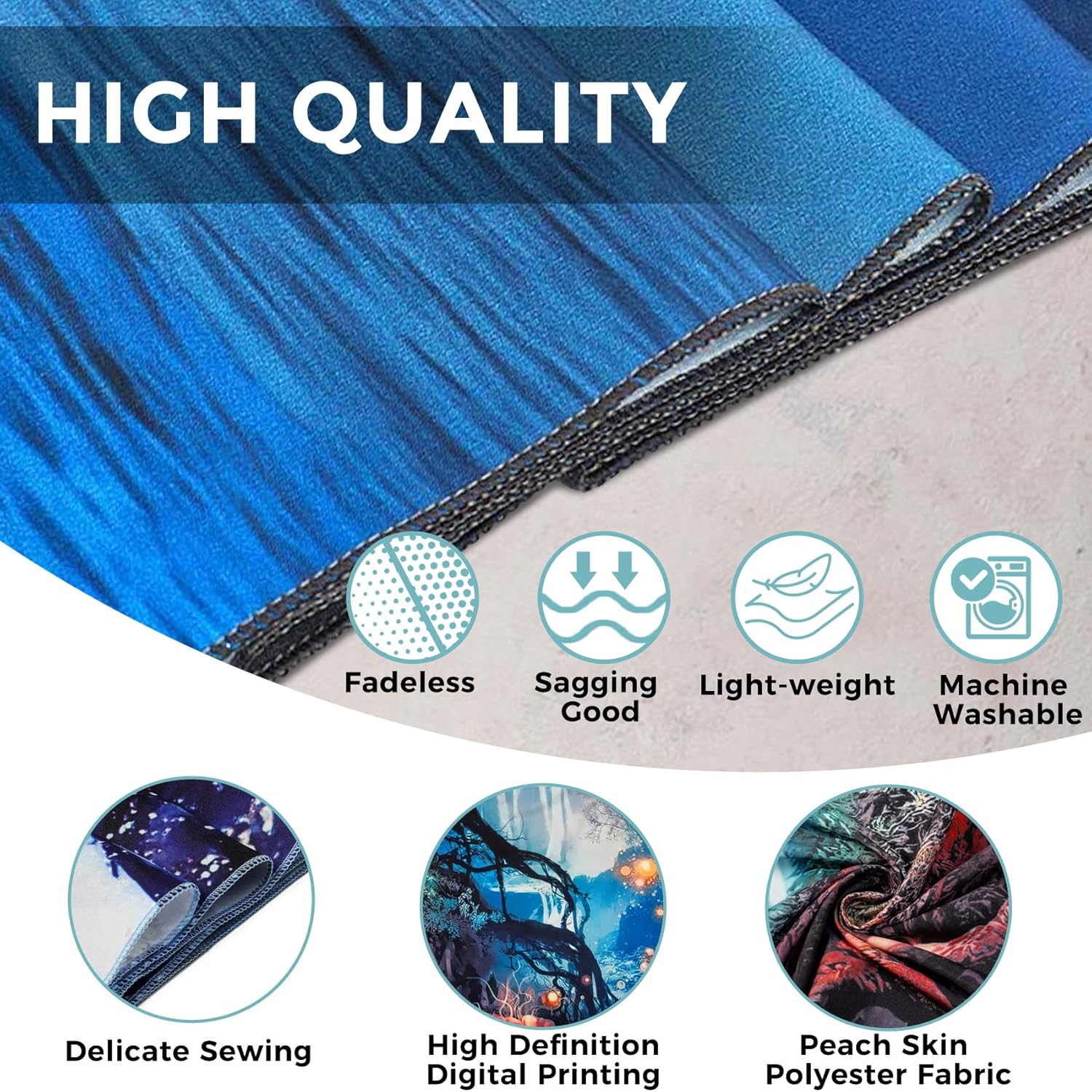
The first honest read is of the cloth itself, before any artwork argument. The hero photo shows the fabric folded across a grey surface: a printed blue abstract field — diagonal brushstroke bands in cobalt, teal and navy — with a satin-leaning sheen, and, along the turned fold, a heavy dark multi-thread overlock edge. That edge is the product’s actual finish line: not a white serged band, not a decorative border, a dense dark stitch run that locks the cut perimeter of a printed panel. No pile, no nap, no texture direction anywhere on the face. The print is a photographic-continuous-tone layer sitting flat on a tight woven sheet.
Why Dye-Sub on Polyester Is the Reproduction Format That Pays
For anyone selling artwork on walls, the process question is which print method survives contact with real buyers. Dye-sublimation on polyester answers it structurally: the dye turns to gas under heat and bonds inside the fiber rather than laying a film on top of it, so there is nothing to peel, crack along a fold, or scuff at the edges during a thousand unbox-and-hang cycles. That is why this panel photographs the way the cloth shot shows it — saturated color field, no raised ink, no surface texture fighting the image — and it is why the format is cheap enough that a gallery can carry an artist’s backlist in inventory instead of only framing originals.
The economic shape is what makes the evergreen lane different from the seasonal ones. A Halloween retailer forecasts one month; an artist-program buyer forecasts a catalog. Ten works from one printmaker, one hundred units of each hung on the same file system, reorders triggered by point-of-sale rather than by calendar, and every re-run pulling from the stored approval file so this year’s unit matches the opening batch in density and placement. Nothing in the process needs retooling between designs — the artwork is the only variable, which is exactly why the MOQ is stated per design and why a ten-design artist portfolio prices as ten 100-piece tiers, not as one negotiated program.
Two print routes exist on this listing because artwork files differ. Digital dye-sub handles photographic and painterly continuous-tone work — gradients, brush blends, sky-to-horizon fades — with no visible dot at reading distance. Silk screen is offered for flat spot-color artwork, logos and limited-palette designs where a shop wants ink layers instead of a dye pass. The mock-up sheet states which route your file lands on before the sample prints, so the approval you sign is the process your reorders repeat.
Read that folded-edge photograph once more before moving on, because buyers keep asking the wrong question about tapestry cloth. The question is not how heavy the sheet is; it is whether the image survives being handled. A heavy cloth with a surface ink film fails the handling test — it crazes at fold lines and the ink layer takes desk-rubbing shine. A light single layer with dye bonded inside the fiber passes, and the photograph shows the pass conditions: sheen living in the weave itself rather than in a coating, the overlock stitch crowding tight enough that the raw cut cannot wander, and fold creases that round instead of sharpening. Every gallery, shop and reseller program below is really a bet that the customer’s first unboxing looks like the display sample, and that bet is settled by this construction, not by fabric weight on a spec line.

The Upload-to-Panel Workflow, Stated Without the Marketing Layer
The third image on this page is a supplier step diagram: a photograph held up on a phone screen, an action arrow, and the finished panel wearing the identical image on a wall. Stripped of its banner text, it demonstrates the true production chain we operate, and it is worth stating plainly because this is the exact sequence every custom order runs. A digital image comes in; it gets fitted to the panel format on a proof sheet; you approve that proof; the approved file prints. For program buyers the practical rule hides in the first step: the file that goes in sets the ceiling on quality, so artwork arrives resolved to at least 150 dpi against the finished panel dimensions, and portrait-versus-landscape orientation is a decision made before the mock-up, not discovered after it.
Personalization programs — the wedding-gift shops, new-baby retailers, travel-photo brands and pet-portrait sellers who stock this panel because customers want their own photographs on walls — buy the same workflow with one added line: variable data. One master layout, one print position rule, and per-unit artwork swapped at imposition, which lets a single 100-piece tier carry a gift-shop program instead of one customer’s file. The proofing step is where the economics show up for them: a mock-up that states scale, crop and white-margin treatment before printing ends the “it looked different on my screen” return, which is the complaint category that kills photo-gift margins.
Rights hygiene is the final line on the workflow paragraph, because it protects you as much as us. We reproduce what you own or license; gallery programs should ship files with the artist’s written reproduction scope on the purchase order, and photograph-based programs should confirm the customer’s upload rights at point of sale — standard language for the industry, and a sentence your quotation can carry as a note so nobody argues about it after the carton arrives.
One more file-hygiene rule that separates programs which reorder cleanly from programs that spend months on proofing: name one master per design and let formats derive from it, rather than exporting a separate artwork per size. The reproduction desk refits one approved file to every format your shelf carries — a gallery that lists a piece at three dimensions submits one file and approves three crops on one proof sheet, and every future tier re-runs from the same master. That single rule is what makes a ten-artist program administratively survivable, and it lives on your quotation as a line about format families before the first sample is ever cut.
Bordered or Bleed: The Layout Decision That Sells Photo Programs
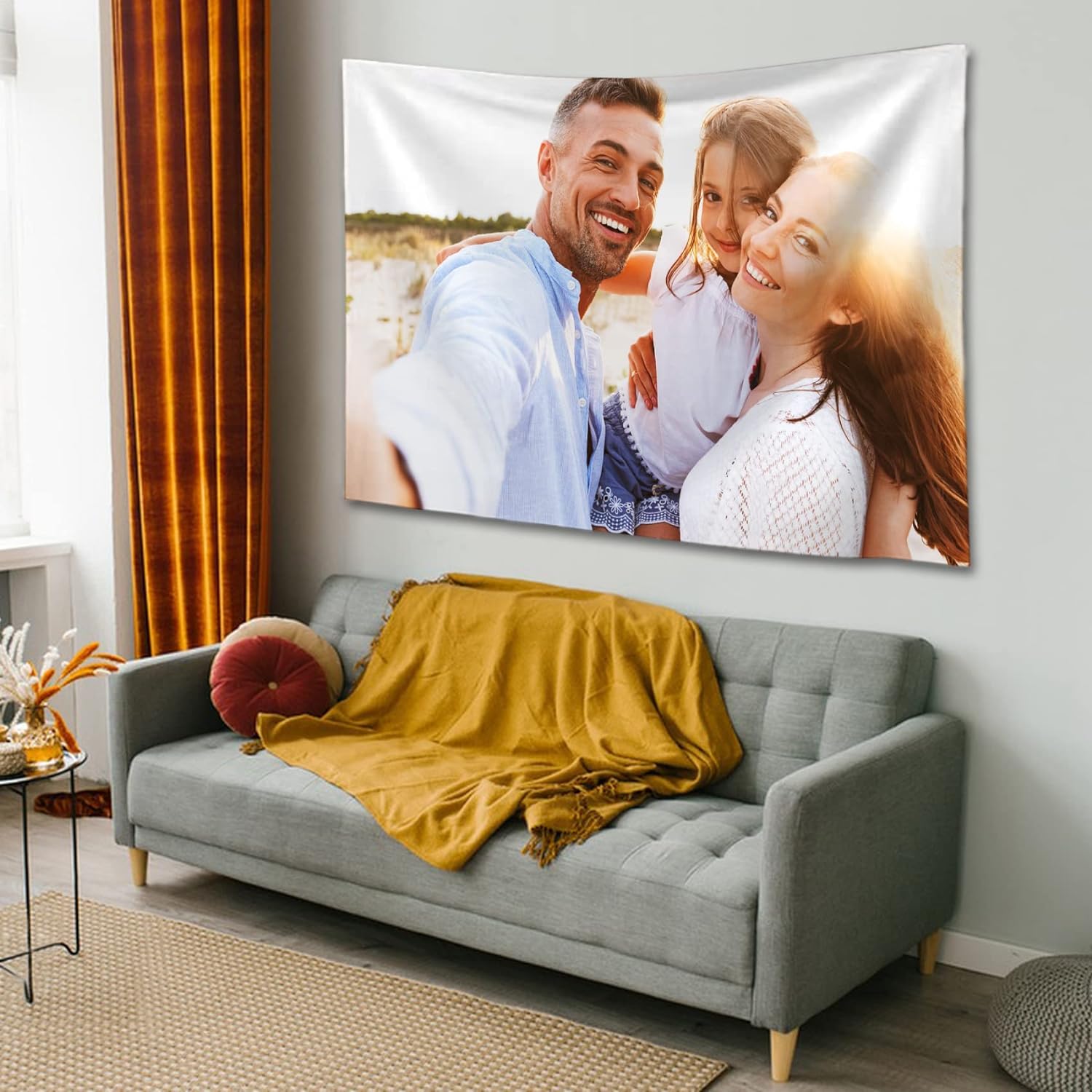
Look again at the living-room scene above the sofa: a photograph filling the panel’s field, ringed by a deliberate white margin — widest at the top, even down the sides — with the cloth’s own edge beyond it. That is a layout choice, not a printing limit. Full-bleed reproduction pushes your image to the very cut edge, the gallery look where the artwork is the object; the bordered treatment frames it inside unprinted cloth, the photo-print look buyers instantly read as a picture rather than a furnishing. One file, one checkbox on the proof sheet, and the program picks its register per SKU: bordered for portrait and pet-photo retail where the frame reads as the product, bleed for abstract and landscape art where edge-to-edge is the whole appeal.
The demo figures in the room scenes are stock-style model photographs — the family, the couple on the phone-screen graphic, nobody here is a real client’s print — and the copy treats them exactly as what they are: stand-ins for your file. What the scenes do prove is scale behavior: a panel roughly shoulder-height above a sofa, hung near flat against paint, image reading at room distance without visible dot, border or weave fighting the picture. That is the merchandising shot a gift-shop listing or an artist’s own store page needs, and the same hang works in showrooms, hotel lobby corners and short-let apartments, which is where the always-on volume for this format concentrates.
Mounting appears in those staged scenes with nothing exposed: no rail, no visible clips, hardware concealed behind the top edge, corners sitting flush or curving softly forward — thin single-layer cloth doing what thin cloth does. Because no fixing system can be resolved from the photographs, this page claims none. The stock delivery is a hemmed, unhardened panel; a sewn rod sleeve, eyelet row or clip-ready header is specified on the quotation before sampling, and the sample you approve is what the carton repeats.
The perimeter deserves one paragraph because it is where cheap photo-print panels reveal themselves. The cloth shot on this page shows the finish the program ships with: a dense overlock run locking the raw cut, dark thread matched to the artwork field so the edge recedes instead of outlining the image in factory white. Serged edges like that take clip mounting without fraying — which is the actual physical fact the mounting diagram next paragraph describes — and they hold their line after repeated roll-and-refold cycles in a shop’s back stock. What the edge does not do is decorate; there is no fringe, no bound facing, no self-border on the stock panel, and if a program wants a finished facing tape the quotation adds it as a named construction change, priced, before sampling.

What the Mounting Diagram Actually Demonstrates
The supplier graphic above the previous paragraph runs a winter-village print hung from its two top corners — the cloth bows gently between the fixings, top edge slack, bottom hanging free — beside a small inset of accessory parts: pronged hooks driven in with a hammer, clip fasteners grabbing a folded top edge, adhesive pads. That diagram is about a method a user can improvise after delivery, not about hardware we bundle: read it as proof the hemmed edge tolerates clip-mounting and corner-fixing without damage, because a folded polyester hem grabbed by clips is exactly what the step sequence shows. Nothing on this page promises that any hook, clip or pad ships in your carton; whatever fixing kit you want attached to the program is written on the quote as a named line item.
For rental and hospitality buyers the clip-and-cornice scheme is the working answer, since walls must survive tenants and seasons: two points, a clip per corner, swap the art in a minute. For gallery installations, specify the sewn sleeve and run a batten — the panel squares dead-level for spotlights, and the artist wall looks intentional instead of improvised. The one behavior to respect in both schemes: single-layer printed cloth drapes from its own weight, so straightening the top edge is 90 percent of presentation, and a panel re-hung square photographs the same at the opening and at the close of a show.
Storage advice that comes from the construction rather than folklore: keep panels flat or rolled, never pinned by a corner month after month, and keep dark artwork against dark tissue if units stack face-to-face for long periods. A dye-bonded fiber print does not mark off onto what touches it under normal stacking, but a program that warehouses a year of inventory deserves the cheap insurance of interleaving, and the packing quotation prices it as a one-line option.
Where does always-on demand actually come from through the year? The order file answers it in blocks that repeat: spring is hotel and short-let refresh, when operators re-dress soft walls without calling a contractor; early summer is gallery and museum shop stocking ahead of travel season; autumn brings the photo-gift retail builds where a shop’s own seasonal campaign supplies the artwork; and the months around a show calendar feed single-design tiers from independent printmakers testing whether a piece sells on cloth before anyone frames it. None of these clusters needs a new conversation about process — one file, one proof, one stored master, a reorder cadence set by what leaves the shelf. That steady rhythm is why this lane keeps production slots open on capacity most other seasonal wall programs only smell once a year, and why a program starting any month still sees the same 3-5 day sample turnaround.
Sizes, the Proofing Ladder, and What Never Appears on This Listing
The size conversation runs on two facts. First, the format this program lists at is 130 x 150 cm — that is the stock panel the program prints to today. Second, anything else is a quotation: alternate dimensions and portrait-versus-landscape formats get cleared with the desk before sampling, with no tooling attached, because there is no die, screen or plate tied to a format — only your file’s fit. The full matrix of available sizes and carton counts per size is issued by the quote desk alongside the mock-up, so multi-size artist programs can see per-format carton economics and freight before committing tiers. That is the size promise, and it is deliberately the only one: fabric weight in grams-per-square-meter appears nowhere in these photographs, so no gsm figure is printed on this page — the physical sample carries the hand-feel number you approve, and the stored spec follows it.
Same discipline on every claim this page declines to make. Washability, fade ratings, weight-lightness, softness superlatives and installation promises all live inside supplier banner graphics on the listing imagery, not inside measurable product evidence — so they are absent from the copy above, and a physical proof run is how you evaluate the panel against your own use instead. What the evidence does support: a flat no-pile printed face, a locked overlock edge, dye-into-fiber printing with faint print-through ghosting on the reverse, and layouts you choose. That is enough for a B2B decision when the numbers underneath are exact: MOQ 100 pcs per design, samples 3-5 days, production 7-15 days after artwork approval, capacity 1,000,000 pcs per month across our gift lines.
Specification Table
| Item | Custom printed wall tapestry — single-layer polyester reproduction panel, evergreen program |
| Material | Polyester woven sheet, flat face with no pile; dark overlocked perimeter edge as photographed |
| Print process | Dye-sublimation digital for continuous-tone artwork; silk screen available for flat spot-color designs |
| Layout | Full-bleed image, or printed inside a white margin border — set on the proof sheet per SKU |
| Size | 130 x 150 cm on the standing sheet; alternate cuts and formats cleared with the desk before your first sample |
| Custom feature | Your artwork or your customers’ photographs; variable-data photo programs supported at imposition |
| Mounting | Hemmed panel ships unhardened; rod sleeve, eyelets or clip-ready header added only when specified pre-sample; no hardware included |
| Packing | Individual poly bag, flat-folded or rolled, export master carton; FBA labeling on request |
| MOQ | 100 pcs per design |
| Sample time | 3-5 days |
| Lead time | 7-15 days after artwork approval |
| Capacity | 1,000,000 pcs per month across our gift lines |
The displayed figure on this listing anchors the 100-piece tier only; every other quantity, size and packing option is bracket-priced on your quotation. Send the file to [email protected] or +86-15967739086 and the proof sheet comes back naming print route, layout and format.

Retail math for the people reselling these finishes the number the program is built around. A gallery shop that buys an artist’s work onto cloth at manufacturer tiers and hangs it at frame-adjacent retail prices is working the oldest arbitrage in souvenir and print retail: perceived value of wall product versus the cost of a printed sheet, with zero framing labor and zero glass in the freight bill. Museum stores run the same equation against gift shoppers who will not carry a framed purchase onto a train; hotel and short-let operators run it against a soft-wall reality where anything with a frame requires an anchor, and a hemmed cloth on two points does not. That demand shape — sellable, shippable, hangable without a contractor — is why this format stays in stock all year instead of rotating with the calendar, and why the proofing ladder above starts with your file rather than your season.
Reorders by Point of Sale, Freight by Program
Because this is the always-on corner of the wall range, freight here rewards a different habit than seasonal lanes: cadence over hero drops. The pattern that works for gallery stores and photo-gift programs is a first tier of ten-design stock sized against selling space, then reorder waves triggered weekly against sales, artwork already approved and stored — a stored file re-run inside the 7-15 day window is a production slot, not a new project. Sea freight carries the standing program at the best unit math; air and DHL / UPS / FedEx / TNT door-to-door cover the surprise — a show sellout, a hotel refresh, a gift season where one photograph SKU suddenly walks — landing in the same days the file’s age would otherwise take to quote.
Carton configuration follows the artwork register one step at a time: pale photograph programs — weddings, babies, landscapes where every crease sits inside the picture — ship rolled on tubes; dark and abstract gallery stock ships flat-folded at maximum carton density for shelf and FBA fit. Interleaving tissue and printed header cards are line items on the same sheet, so a panel can arrive as warehouse inventory or as shelf-facing retail product off one artwork file.
And when your program goes seasonal, the pipeline does not change: the same cloth, the same print routes, the same proofing ladder simply switch the artwork calendar.
Buyer Questions, Answered Plainly
Can we print an artist’s or our customers’ photographs on these panels?
Which is better for artwork, dye-sublimation or silk screen?
Do sizes other than 130 x 150 cm require new tooling or setup costs?
Is any hanging hardware included with the panels?
Will a reorder of the same artwork match the first batch?
What fabric weight are these tapestries?
Where This Page Sits Against the Seasonal Wall Lanes
The wall program splits by calendar, and buyers of this panel usually run all three shelves. This page holds the always-on reproduction lane; when your artwork rotates, the Halloween edition takes the September window and the Christmas backdrop panel covers the November-January rotation, both on the same cloth and proofing pipeline so artwork swaps cost nothing in process. Everything prints under the tapestries category, next to the matching cushion covers that let a gallery put the same image on two surfaces, inside the full home-textiles line.
Start the Program
Artwork files, a size list and a reorder cadence go to the quote desk. What returns is one page: the mock-up on your actual image, the print route named, bordered-versus-bleed options shown, tier pricing bracketed against the 100-piece floor — and after your sign-off, samples inside 3-5 days.