Custom Kawaii A5 Spiral Diary Notebook, Gold Wire Coil
$0.68
A5 character-diary shell on a gold twin-loop wire-o coil: cream matte card cover with full-color cartoon print, 14.8 x 21 cm trim per the printed chart, 80 gsm ruled sheets at 8 mm pitch, Date and No corner block, 80 sheets / 160 pages as photographed. Lined, grid, dotted or blank ruling per design; deckled-edge or clean-trim cover; individual clear sleeve packing. MOQ 100 pcs per design, free digital mock-up, samples in 3-5 days, bulk in 7-15 days after artwork approval, FBA labeling available. Built for boutiques, kids gift retail, and school-prize orders testing character collections in small runs.
This custom kawaii A5 spiral diary notebook is built for stationery boutiques, kids-and-teen gift shops, and schools ordering prize batches: buyers who merchandise cute paper goods in character collections and need small runs per design without committing to full-carton quantities. The photographed sample pairs a cream matte card cover with a printed cartoon scene, a gold twin-loop wire coil at the left edge, an A5 trim of 14.8 by 21 cm per the printed chart, and ruled 80 gsm sheets at an 8 mm pitch.
Cute stationery retail turns on three mechanical things: a cover that reads from across an aisle, paper that survives daily pencil and gel-pen pressure, and a restock rhythm that lands before the season you are selling into. Character programs answer the first, the 80 gsm spec answers the second, and a 100-piece minimum per design with 3-5 day samples answers the third. The copy below sticks to what the listing photographs prove, then lays out the commercial frame around that evidence so you can quote your own shelf price from confirmed facts rather than adjectives.
Cover Program: What the Photographs Prove
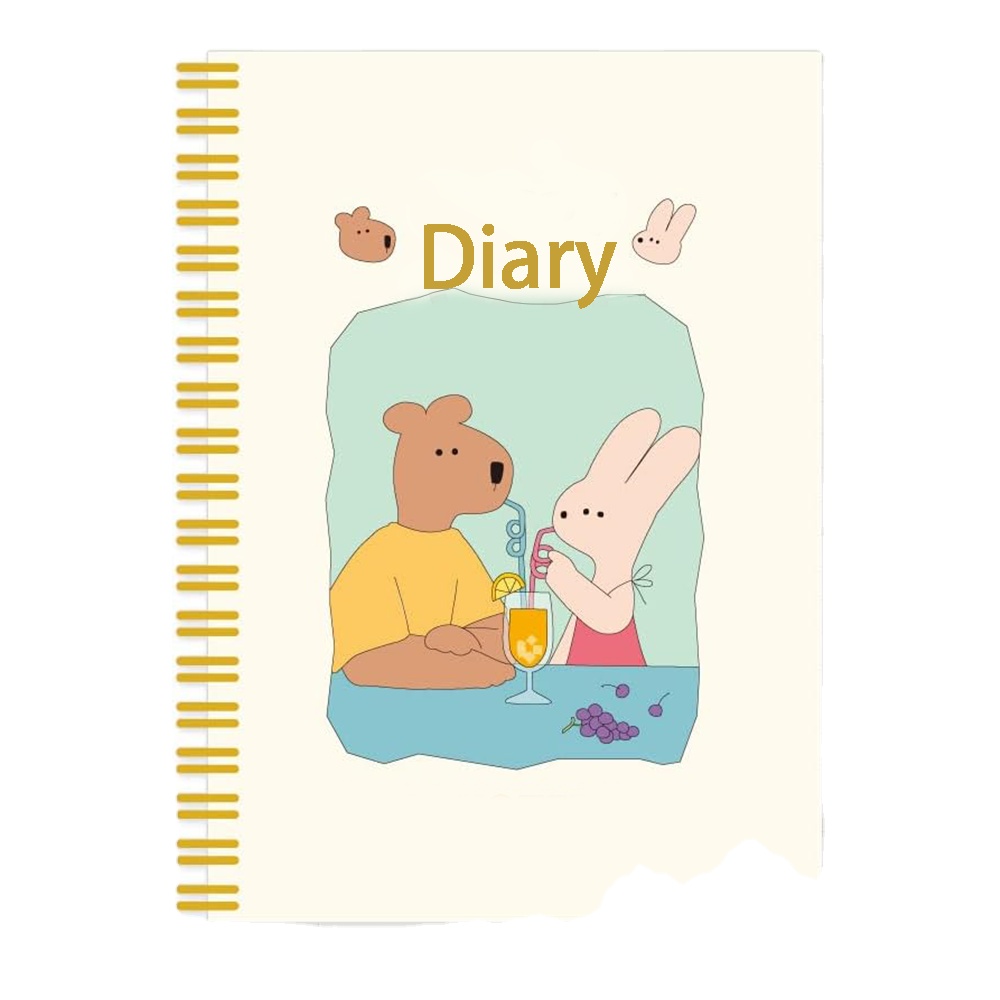
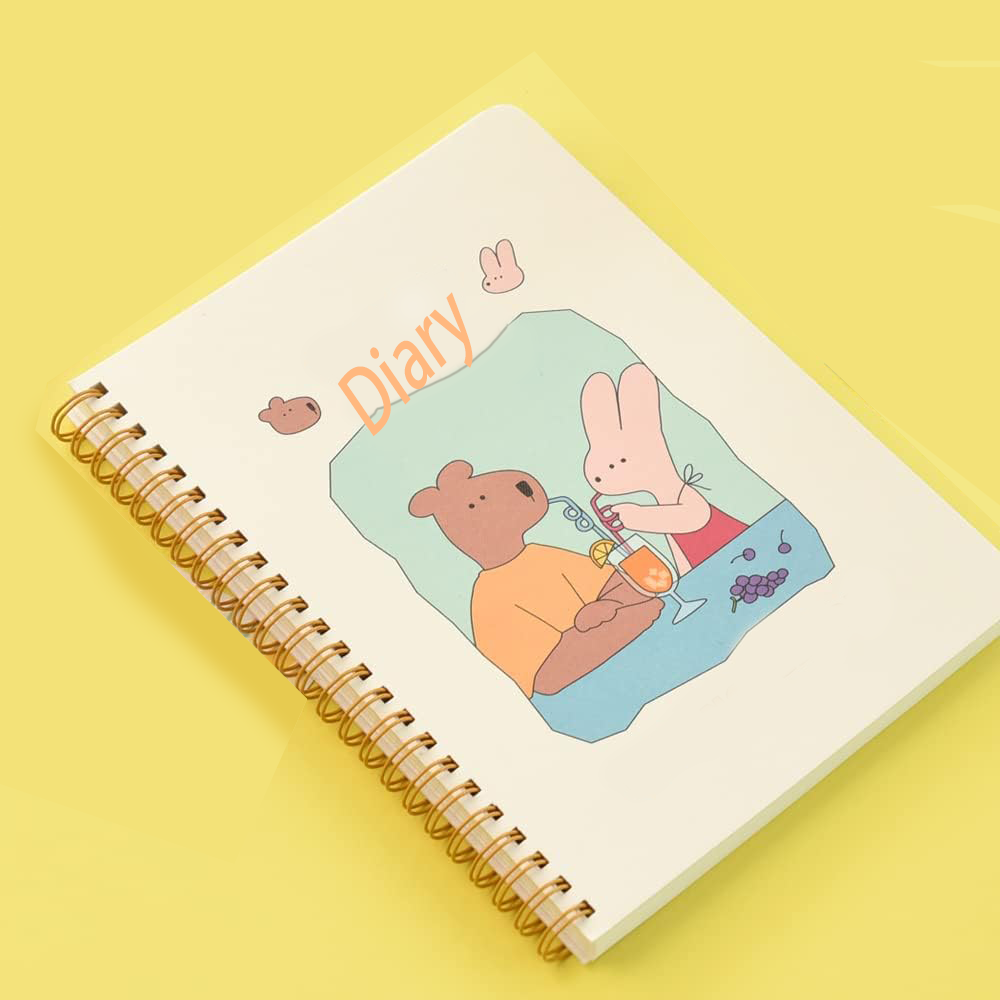
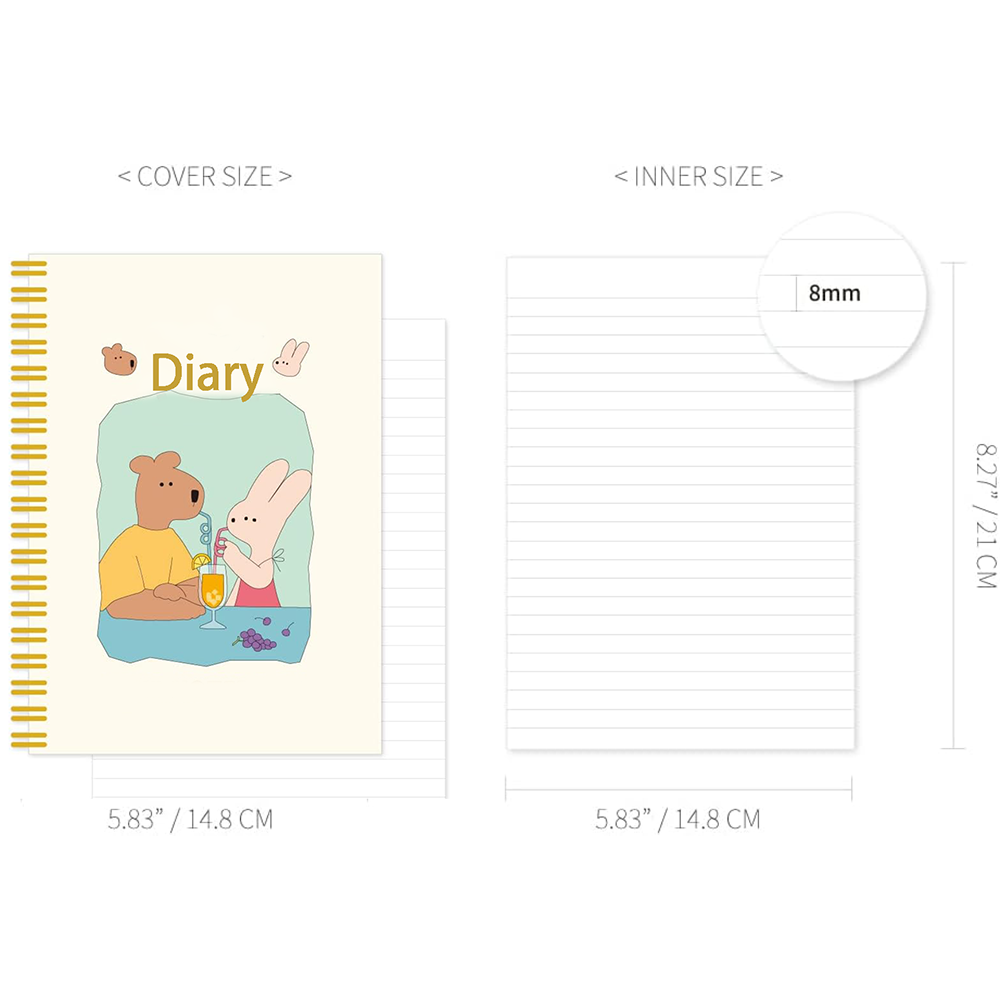
The artwork on the sample cover is a two-character scene: a tan bear and a pale pink rabbit share a tall glass of orange juice, complete with ice, a lemon wedge at the rim, and two curly straws, over a teal tabletop dotted with purple grapes. The scene sits in an irregular mint-green panel with drawn, torn-looking edges, and the word Diary prints above it in a rounded gold typeface, flanked by two miniature character heads. None of that is a fixed brand element. The printed word is a placeholder label, and the illustration zone is exactly where your characters, licensed art, or in-house mascot go. Send print-ready files at CMYK with 3 mm bleed and the same layout engine that produced this sample runs your cover instead.
The binding is the product’s other visual anchor. A gold twin-loop wire-o coil, twenty-plus evenly spaced loops, runs the full height of the left edge with a glossy metallic finish against the matte cover stock. Wire-o opens flat enough for a child to write one-handed on a bus seat, and it will not fight a backpack the way a rigid spine does. Coil color is changeable per design: the photographed gold reads premium for gift aisles, while black, pastel, or candy-tone wire suits classroom prize runs, all within the same 100-piece-per-design minimum.
Two cover finish options appear across the photography. The deckled, torn-effect bottom edge gives the diary a scrapbook, handmade mood that photographs beautifully and justifies boutique shelf pricing. The second angle trims clean for a neater planogram face and shows the individual transparent sleeve the units ship in, the default retail-ready wrap with no extra tooling. Pick one finish per design; swapping between them mid-series is a production change, not a sample-level surprise.
Why cartoon covers sell in collections rather than singly: collectors buy the second character the moment they spot the first, gift buyers match covers to a child they know, and school prize coordinators order one shell with a stamped congratulations panel. All three motions depend on low per-design floors, which is the commercial point of this page.
Artwork logistics, stated once so nobody re-asks: files should arrive as print-ready PDF or AI at CMYK, 14.8 x 21 cm with 3 mm bleed, fonts outlined, and a 150-line-per-inch minimum for photographic elements. The free digital mock-up returns on the real template within a day or two, and every character tweak after that first mock-up costs one revision cycle, not a tooling change. Boutiques without in-house design can hand over sketches, reference photos, or a competitor shelf shot, and the artwork team will trace the file back; that service path follows the same 3-5 day sample clock, so a napkin idea and a finished vector enter production through the same door.
Seasonality decides quantities more than any single design choice does. Back-to-school waves move diaries in August and September, winter gift sets stack two or three characters into one ribboned bundle in November and December, and spring prize orders for end-of-year ceremonies land on a February-to-April approval cycle. Reorder waves priced against a tier table keep all three seasons on one shell: only the artwork and the band copy change between them, and one cover tool stays current for the entire run of a shop’s character program.
A5 Trim, Read Straight Off the Printed Chart
Artwork proofing for character covers deserves one practical warning: gradient-heavy digital art prints differently on matte card than it glows on a tablet. The sample photograph of the cover is your calibration reference; at mock-up return, check that thin line weights in paw pads and whiskers survive at print scale, and ask for a second color proof before artwork approval if your palette runs pale yellow against cream stock, because low contrast disappears at arm’s length on a shelf.
Dimension arguments end before they start here, because the listing ships its own annotated measurement graphic. The left column brackets the cover at 5.83 in / 14.8 cm across. The right column brackets a single inner sheet at the same 14.8 cm width against an 8.27 in / 21 cm height, the standard A5 rectangle. A magnifier inset on the ruled page calls out the writing line pitch at 8 mm. Those three figures are all a buyer needs to place this diary into a planogram, a gift box, or a desk-drawer tray without asking a follow-up.
The 8 mm ruling is not a cosmetic detail. Wide-ruled pages absorb heavy-handed pencils, keep baseline letters from crowding, and stay legible for teen buyers who write fast rather than small. Six-millimeter college rule reads cramped at this trim and returns to boutiques as unsold stock; the chart pre-answers that objection with a printed tick mark. For classroom prize orders, the same pitch gives teachers room to leave margin comments without writing over the student’s lines, which is the feature that makes a diary series repeat-purchased year after year instead of a single impulse sale.
Practical artwork notes fall out of the same graphic. The inner sheet sits offset behind the cover, showing the trim relationship you should design against: full-bleed art to 14.8 x 21 cm plus 3 mm bleed, a coil-free strip at the spine edge for text, and a title zone kept clear of the character scene if you plan to stamp names for prize orders. Because the chart publishes exact inches and centimeters, your designer never has to reverse-engineer a mock-up from a photograph’s perspective, and proofing cycles shrink to the file changes that actually matter: palette, character pose, and whether the word Diary stays or goes.
Alternate trims near A5, or a pocket-sized variant for checkout-counter impulse bays, are quoted on request against a physical sample so your size claim and your retail price per carton footprint both come from measured paper, not from a chat guess. Boutiques that merchandise by height rather than area tend to add one slim companion format per shelf set: same character lineup, shorter spine, lower ticket price, and a second entry point for gift buyers who would not commit to a full diary.
80 gsm Sheets, 160 Writing Pages, as Photographed
The paper shot is a specification image, not a mood image. Its printed figures state 80GSM and 80 SHEETS/160 PAGES in plain type, and the fanned leaves show why those numbers matter: the sheets hold a firm arch rather than flop, the cream stock reads warm instead of hospital-white, and the ruling on each lifted page stays sharp with no ghost of the pattern behind it. Every visible page carries a compact corner block with Date and No fields, the organizing habit teachers and prize coordinators expect in a school diary. Photographers fan paper for a reason: a limp 60 gsm sheet cannot hold that arch, so the curl in the image is itself the weight proof a buyer can read without a scale.
At 80 gsm, the ruling runs as a single set of full-width horizontal lines with no vertical margin rule, leaving the whole page to the writer. Ballpoint, rollerball, and most gel inks sit clean on it, which covers the realistic use case of a kid’s pencil pouch. Fountain pens are a different physics problem, and this page does not promise what the photo does not show: heavier weights in the 70-120 gsm envelope are quoted on request against a physical sheet so you can run your own ink test before approval. For classroom sets, the practical ceiling question is eraser abuse rather than ink: 80 gsm takes repeated pencil erasing without the surface pilling that turns cheap exercise books into shredding pulp by week six, which is the durability story parent-teacher associations actually ask about.
The 160-page count carries commercial weight too. A diary that lasts a full term justifies a higher shelf price and a school prize budget line; a 48-page memo pad does not. Alternate sheet counts matching this coil spec are available at this MOQ, and the pre-production sample will state the final count on its packing list so restocks match the first order carton-for-carton. If your market prefers a slimmer travel diary for stocking stuffers, quote that count the same way, against sample paper. One carton-math note for freight planning: doubling sheet count raises per-unit weight roughly proportionally, so the same carton volume ships fewer pieces and sea freight per diary moves with it; request the packed carton weight with your tier quote so landed cost is real before your retail price is fixed.
One carton-math footnote for gift-shop buyers stacking shelves: two diary depths, 80 sheets and a slimmer 48, merchandise well together at the same ticket gap, the thicker one claiming the keepsake price and the thinner one the impulse price, while both run the identical coil and cover program. That pairing keeps a character series on one reorder line and two price points.
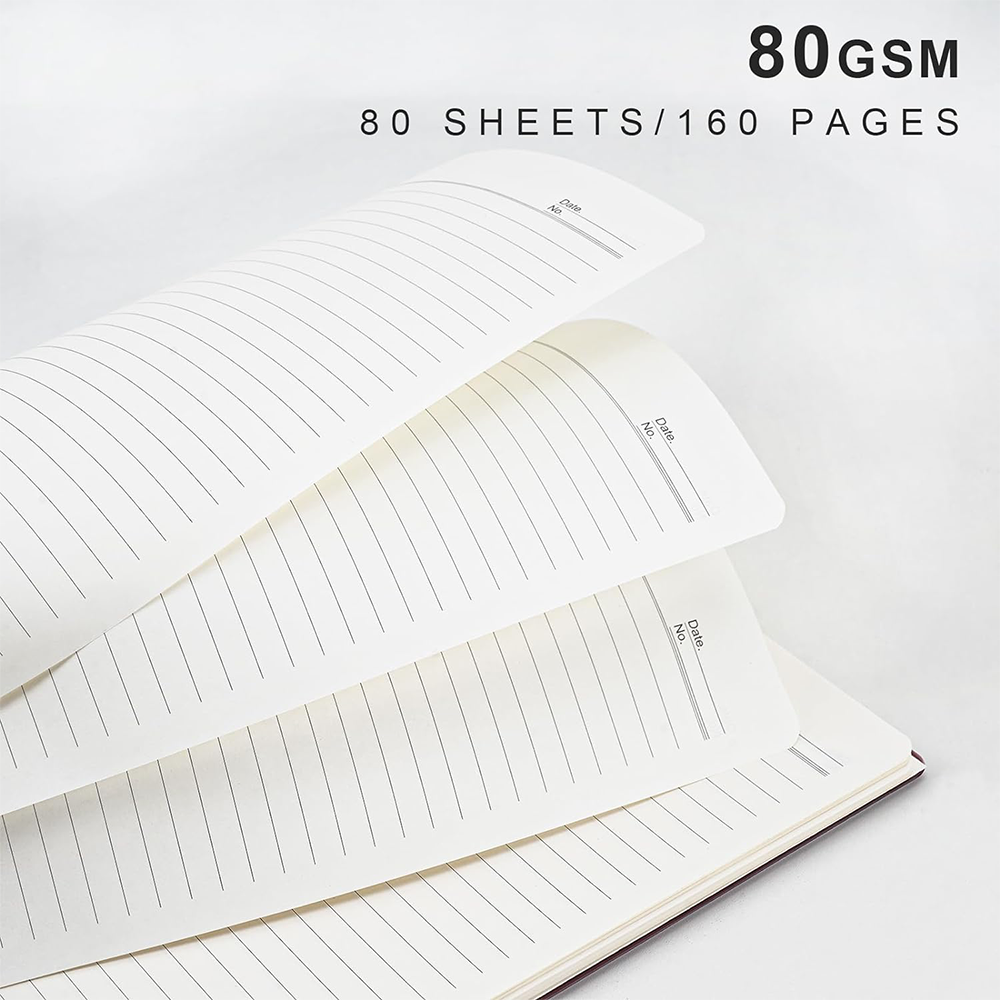
For resellers building product pages of their own, this single photograph does the listing work for you: it is the spec image a boutique can borrow context from because the figures are printed, not whispered.
Four Interior Choices for One Diary Shell
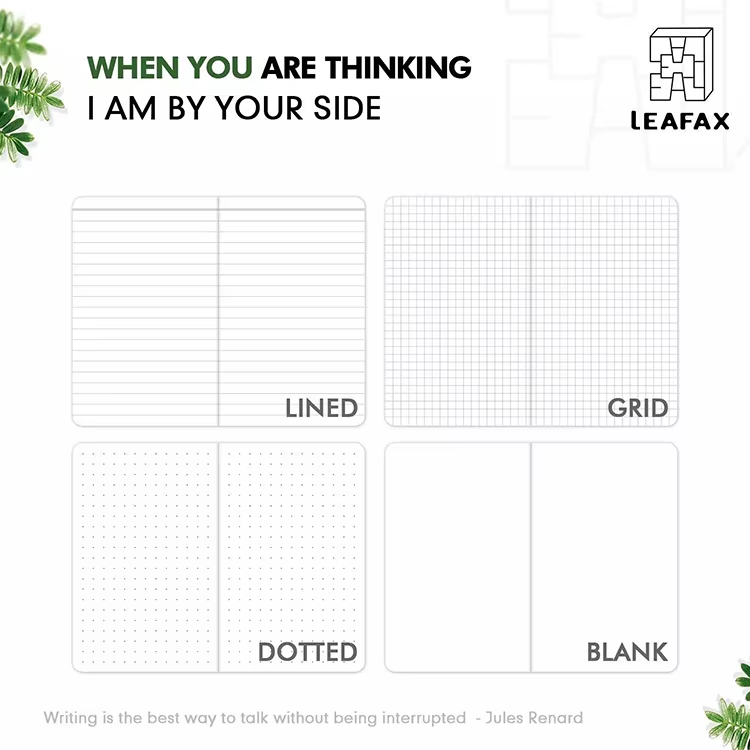
The interior-options graphic on this listing displays four two-page samples in one grid, each tagged in neutral type: LINED, GRID, DOTTED, BLANK. Lined is the shipped default of the photographed diary. Dot grid suits the bullet-list crowd that fills teen gift aisles, square grid sells into math clubs and planner-sticker programs, and blank pages flip the item into a coloring or sketch notebook for travel gift packs. Same coil, same trim, same cover tooling: ruling is a print-file swap, which is why a boutique can run a four-way assortment off one conversation with us.
One ruling per design keeps the 100-piece floor honest and the costing simple. Mixed ruling in a single book, for example lined first half and blank second half, is possible for a school-prize hybrid and gets proofed on paper before you approve it; it is priced and led by the sample you sign, never assumed from this page. The Date and No corner block can join or leave any of the four choices, and prize coordinators typically keep the block for academic runs and drop it for retail coloring editions so nothing on the page competes with the artwork.
Assortment math before your first PO: four ruling variants at 100 each is a 400-unit trial that still reads as one shell order, and the sell-through report after eight weeks tells you which format earned the reorder wave. Boutiques that stock only the lined default tend to reorder the same quantity twice; boutiques that shelve the grid and dot variants grow the same shelf into a stationery program instead of a single product, because repeat customers bring friends looking for the format they could not find last season.
Sticker and accessory compatibility rounds out the ruling conversation. Parents and teens decorate these diaries, so the practical interior question is whether planner stickers, washi tape, and photo corners adhere to the sheet surface without bleeding adhesive through to the reverse. The photographed cream stock is uncoated matte, the family that accepts tape cleanly and dries ink without smear; glossy coated sheet finishes are a different build and are not what this coil program ships. If your boutique bundles sticker sheets with the diary as a gift set, keep the ruling simple, lined or dot, so the decoration covers the page without fighting printed structure, and reserve grid variants for the math-club and architect-parent shelf tags that ask for measured boxes.
What you can customize:
- Cover artwork: characters, mascot, or seasonal motif replacing the sample scene, CMYK print-ready files
- Printed title word: keep Diary, swap in your own word, or delete it for an open art panel
- Coil color: gold twin-loop as photographed; black, pastel, candy tones quoted per design
- Cover finish: deckled torn edge or clean trim, both shown
- Ruling: lined, grid, dotted, or blank, one choice per design
- Sheet count and paper weight: 80 sheets / 160 pages at 80 gsm as photographed; alternates quoted on request
- Page header block: keep, edit, or remove the Date and No fields
- Packaging: individual clear sleeve as shown; header cards or belly bands added per design
Specification Sheet
| Item | Custom kawaii A5 spiral diary notebook for boutique, gift, and school-prize retail |
| Size | Cover 14.8 cm wide; inner sheet 14.8 x 21 cm (A5), per printed chart |
| Paper & Ruling | 80 gsm, 80 sheets / 160 pages (photographed figures), 8 mm ruled; grid, dotted, or blank as alternate choices |
| Cover | Cream matte card, full-color cartoon print, deckled-edge or clean-trim finish |
| Binding | Gold twin-loop wire-o coil along the left edge |
| Logo & Finish | Your artwork replaces or supplements the sample scene; matte laminate standard, other finishes quoted on request |
| Packing | Individual clear sleeve, inner boxes, five-layer export cartons; FBA labeling available |
| MOQ | 100 pcs per design |
| Sample time | 3-5 days |
| Lead time | 7-15 days after artwork approval |
| Capacity | 1,000,000 pcs per month across our gift lines |
Mock-up to Drop Date: the Ordering Clock
The sequence is fixed and short. You send artwork; we return a free digital mock-up on the real cover template. Physical samples ship in 3-5 days from your file, which is what lets a boutique verify sleeve quality and coil color before signing a production PO. Bulk production then runs 7-15 days after artwork approval. The displayed price on this listing anchors the 100-piece tier for one design; multi-design orders scale by design count at the same floor, not by hidden tooling fees.
Now run the clock backwards from your season. A late-August back-to-school table needs artwork locked by early June: the 3-5 day sample, the 7-15 day production window, plus sea or air transit fit into that gap without panic. October planner drops and end-of-term prize orders for June ceremonies anchor the same arithmetic at different dates, and holiday gift batches stack three or four character designs into one container. Reorders through the same line never require re-qualification, because capacity across our gift lines runs to 1,000,000 pcs per month.
Packing, Freight, and FBA Prep
Units ship in their individual clear sleeves, packed into inner boxes and then five-layer export cartons that survive transshipment without bruising the deckled edges. Freight moves by sea, air, or courier against your Incoterms: DHL, UPS, FedEx, and TNT for samples and urgent top-ups, sea for series restocks. FBA prep with barcode application and carton-compliance checks happens before containers leave, removing a third-party step for Amazon stationery sellers who need shelf dates they can actually promise. Carton counts stay fixed per SKU, so a partial-color restock never disturbs your master list.

Questions Boutique and School Buyers Ask
Do we need rights to the cartoon characters on the cover?
Can a single order carry three different character covers?
Will gel pens bleed through these pages?
What restarts the production clock after approval?
Is this diary pre-printed with dates or a calendar?
What does a 500-piece landed cost look like?
Cross-List These Adjacent Pages
A cute diary and a corporate journal share a buyer conversation at gift shops that stock both ends of the range: add the faux leather hardcover journal for desk-gift customers, and the leather planner with printed calendar spreads for holiday agenda buyers. The full notebook category covers shell shapes, printed items covers matching paper collateral, and new programs open at the request-a-quote desk.
Open Your First Character Run
Send a mood board, a character sheet, or a photograph of the competitor shelf you want to beat to [email protected] or +86-15967739086. The A5 mock-up template comes back before any money moves, the sample follows within days, and a three-design series can sit on your planogram in the same season it was sketched.