Custom Pet Birthday Cards with Envelope
$0.80
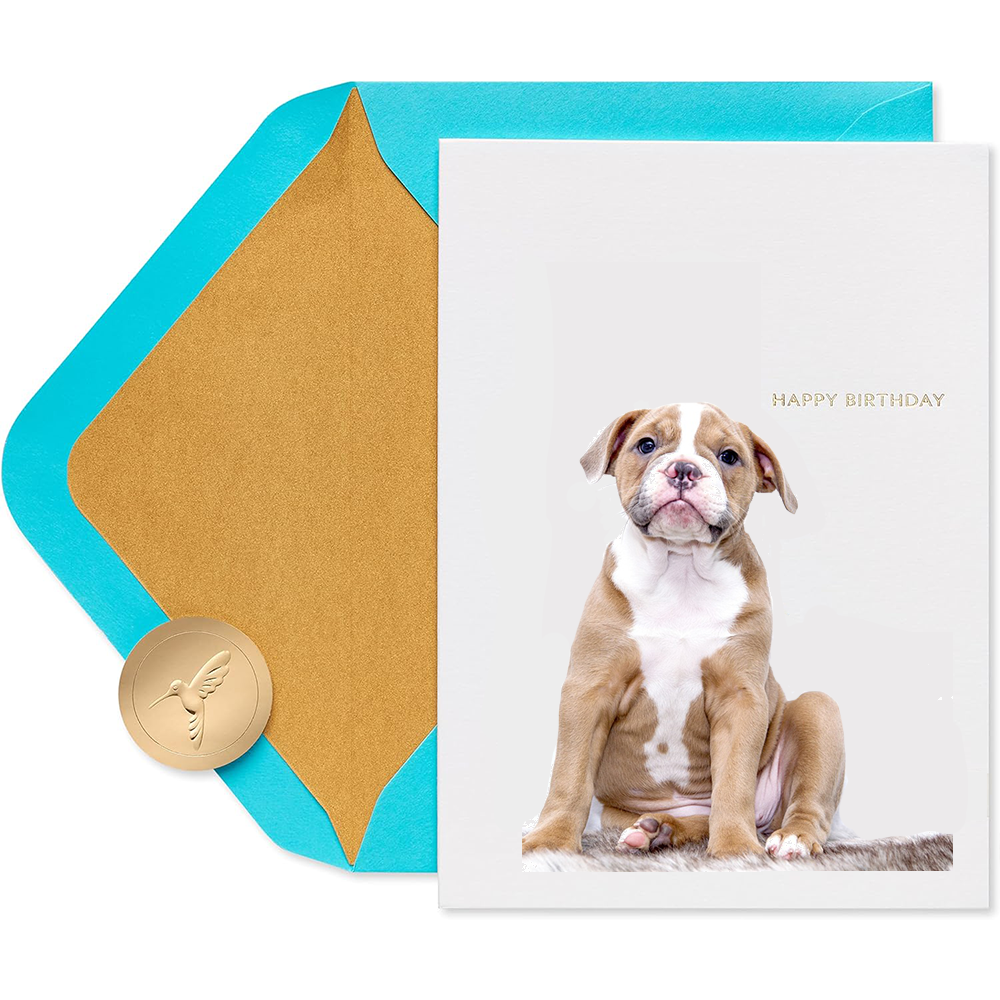
Custom pet birthday cards with envelope pairs built for groomers, pet boutiques and veterinary front desks. Photographed faces show a studio puppy portrait printed full-color on matte white stock with a gold foil HAPPY BIRTHDAY line, matched to a turquoise envelope with a metallic gold diamond liner and a round blind-embossed closure seal. The portrait zone is a fixed-size swappable slot: substitute a client pet photo, shelter resident or breed illustration – corgi, poodle, cat – at file level with no tooling change, and the free digital mock-up places each submitted face inside the identical frame. Interior floods matching teal with a blank writing panel; formats and liner options quote on request. MOQ 100 pcs per design, samples 3-5 days, bulk 7-15 days after artwork approval, FBA co-pack available.
Custom pet birthday cards with envelope for groomers, boutiques and vet desks
These custom pet birthday cards with envelope are programmed for the pet-aisle buyer: the dog-or-cat birthday occasion that chain pet stores, grooming salons, veterinary reception desks and neighborhood boutiques now ring up beside treats and toys. The photographed set does the selling. The card face is a studio portrait of a fawn-and-white puppy – head tilt, white facial blaze, seated on gray faux fur against white – printed full-color on an off-white matte panel with generous margins, and a small uppercase HAPPY BIRTHDAY hot-stamped in gold foil beside the portrait. The envelope is vivid turquoise with a metallic gold diamond liner that opens behind the message, and the closure in the photo is a round matte-gold seal carrying a blind-embossed bird device with no wordmark. For a co-brand program the portrait is the obvious variable slot – swap in a store pet of the month, a shelter resident or a client-submitted photo – while the foil line, teal envelope and gold seal stay constant across the SKU family. That constancy is the procurement point: one fixed frame, many faces, each a file-level change.
Set anatomy, piece by piece, read off the flat lay
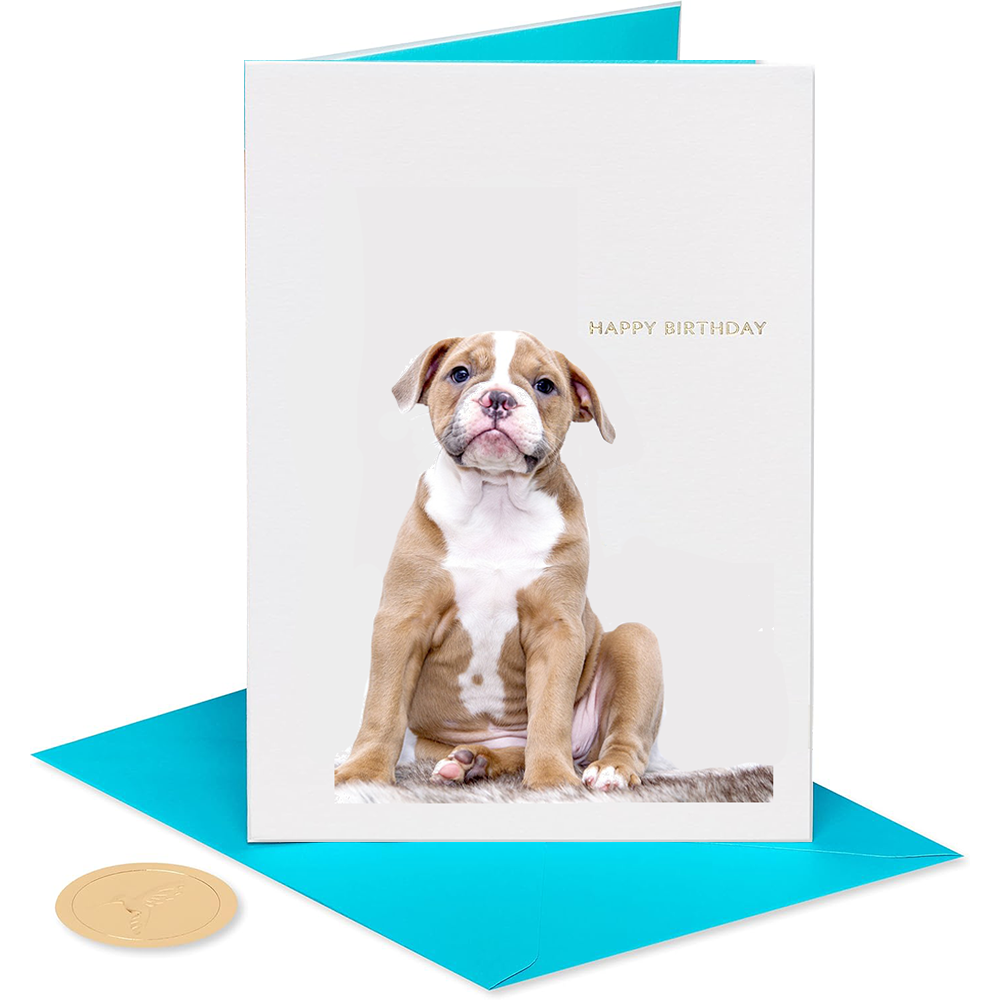
The opening photograph works as a bill of materials. One, the card face: smooth white-to-cream stock with a fine matte tooth, the puppy photograph printed full-color in the lower two-thirds with the greeting zone left deliberately quiet above it. Two, the foil line: metallic gold, small-scale, uppercase, pressed flat with the faint raised edge hot-stamping leaves – the single premium touch on the panel, chosen because foil survives shelf lighting better than metallic ink and reads as gift merchandise rather than office print. Three, the envelope exterior: solid turquoise, matte, pointed flap, the color doing half the shelf work at distance. Four, the liner: a gold metallic underprint forming a centered diamond when the flap opens, so the mailbox reveal lands gold-against-teal behind whatever the giver wrote. Five, the seal: a thick matte-gold disc, blind-embossed with a bird-in-flight device and no readable text – it appears in the photo resting at the liner edge, functioning as styling prop or optional closure. The standing shot in the next frame confirms a sixth structural fact not visible in the flat lay: the card’s interior is printed solid teal matching the envelope, seen as a sliver where the fold gapes, which is the detail that tells a shopper this is a designed set rather than a card fished from a random stock envelope. Each numbered piece is separately quotable: drop the seal to trim cost, re-run the liner as a printed pattern instead of foil, or switch envelope stock to a kraft tone for a different shelf temperature. No size numerals are printed on any photograph in this set, so formats in the 5×7 / A7 and 4×6 / A6 range, with envelopes cut to match, are quoted on request against your artwork rather than declared here.
Two handling notes worth pinning before you sample. The foil greeting sits outside the portrait zone on purpose: when you drop in a client photo with a busy background, the small uppercase line keeps its contrast because it never overlaps the image block. And the envelope’s turquoise is a spot color repeated twice in the set – face interior plus envelope – which means a chain that wants navy instead changes two print units, not one; quote color families at the mock-up stage to avoid a second proof round. If your storefront sells in warm light, note that gold foil under color-temperature-shifting LEDs photographs slightly amber on a phone screen; the physical sample round is where a merchandising team settles that argument, which is exactly why we push the 3-5 day sample before any five-breed commitment.
Why the matched set sells as one SKU, not two
Pet-gift shoppers are impulsive and unprepared: the card enters the basket only when a customer realizes a dog birthday is Friday, and a pre-matched set deletes the second decision entirely – the card never travels without its envelope because factory bands or sleeves pair them before the shipment leaves. The standing composition doubles as a merchandising template: teal envelope opened flat, card propped ajar so the foil catches store light and the teal interior shows at the fold. Counter clips at veterinary desks behave the same way – a receptionist hands over one sleeved unit with no assembly step during clinic hours. For program buyers the co-brand menu is concrete: replace the puppy portrait with an approved client pet photo or an illustrated breed series; change the foil line to a localized greeting or reserve a small wordmark zone for the store name; recolor envelope, liner and interior flood to a chain palette; convert the embossed seal to a printed sticker carrying your device, or remove it from the bill of materials. Every submitted artwork file prints at MOQ 100 pcs per design, so breed families are planned in hundred-unit increments – a five-breed grid is a 500-piece order, not one 100-piece gamble. Because the portrait is a fixed rectangular zone with constant margins, a photo swap is a file-level edit with zero tooling change: no new die, no new plate, no re-quote of envelope or foil positions. Send three breed images and the same proof round places all three inside the identical frame, which is how a boutique tests which faces move before committing deeper quantities to the winner. Retail-ready formats quote separately: belly-band packs of six with a mixed breed mix, or single-card sleeves with a header card for peg hanging.
Operations at the counter matter as much as aesthetics. Sleeved sets face out on a peg with the foil line catching aisle light; unsleeved bands of ten live under the register for the receptionist who adds a card to a grooming package at pickup. Both formats run off the same printed sheet – only the pack-out line changes on the quote – so plan your split ratio when you order rather than re-converting stock later. Pet parents also photograph the opened set for social posts, and the gold diamond liner behind a handwritten note is precisely the frame that earns that free advertising; if your marketing team wants a hashtag or clinic phone line inside, it fits below the metallic sample-message position without touching the flooded color.
Choosing the animal roster your register can actually move
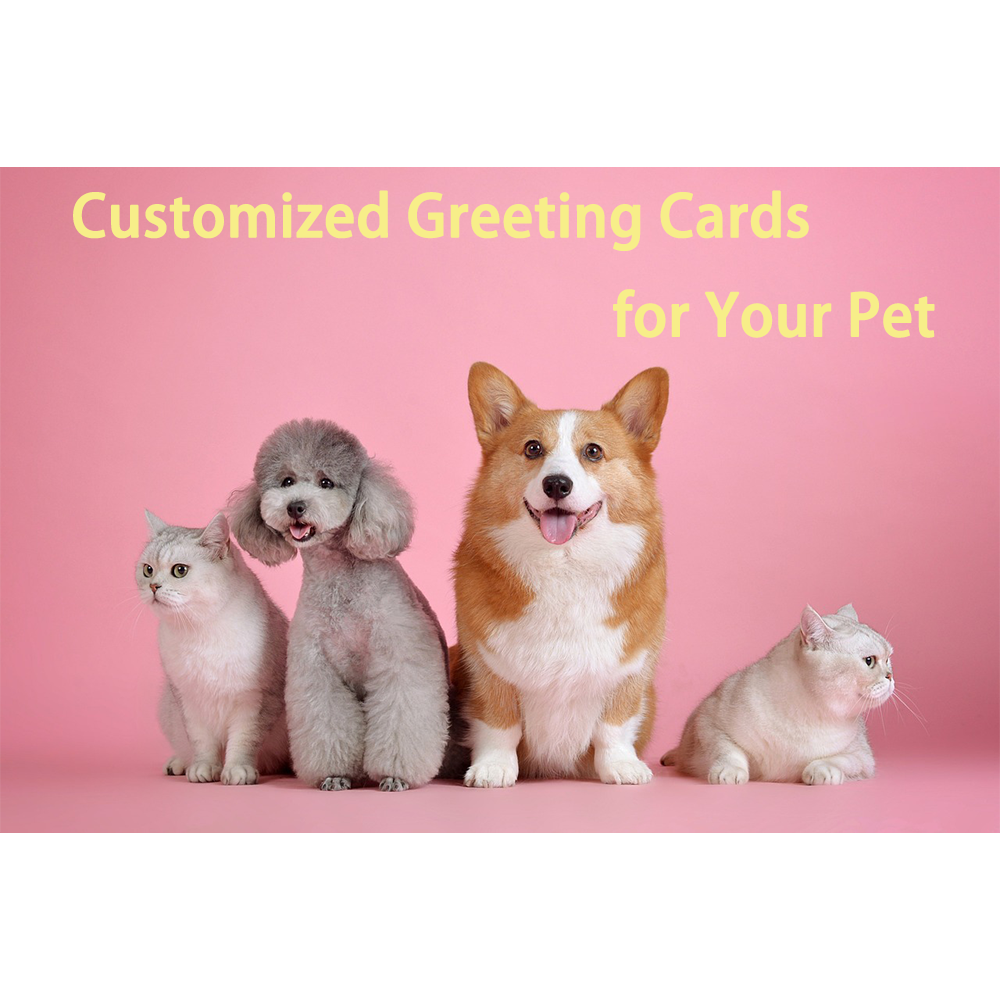
The banner photograph – a silver shorthair cat, a teddy-groomed toy poodle, a sable corgi and a second cat posed in a row on bubblegum pink beneath a two-line headline about customized greeting cards for pets – is audience evidence rather than product evidence, and it registers as a header image only; note in our build flags that no physical card appears inside that frame. Its merchandising point is still the useful one: pet-occasion shoppers self-select by animal, not by sentiment. That is why the SKU structure that moves in this aisle is a species-and-breed grid. Start with two anchors – a dog face and a cat face – then extend into breeds with local demand: the corgi and poodle visible in the banner sit inside most groomers’ client files, and shelter partnerships favor a generic puppy-and-kitten pair that offends no owner. Veterinary desks lean neutral for the same reason: a portrait that could belong to any client animal never reads as favoritism toward one breed. Order rhythm follows the pet calendar rather than the human one – gotcha-day anniversaries cluster through spring, December carries the gift-giving surge for the owner who shares a birthday season with the dog – so a breed grid locked by October ships ahead of holiday pegs, and a March proof cycle lands the spring wave. For programs wanting humor positioning rather than portraits, the same frame accepts illustrated scenes: a cake with kandles, a party hat on a cat, a paw-print border – file-level swaps, identical construction, identical pricing tier.
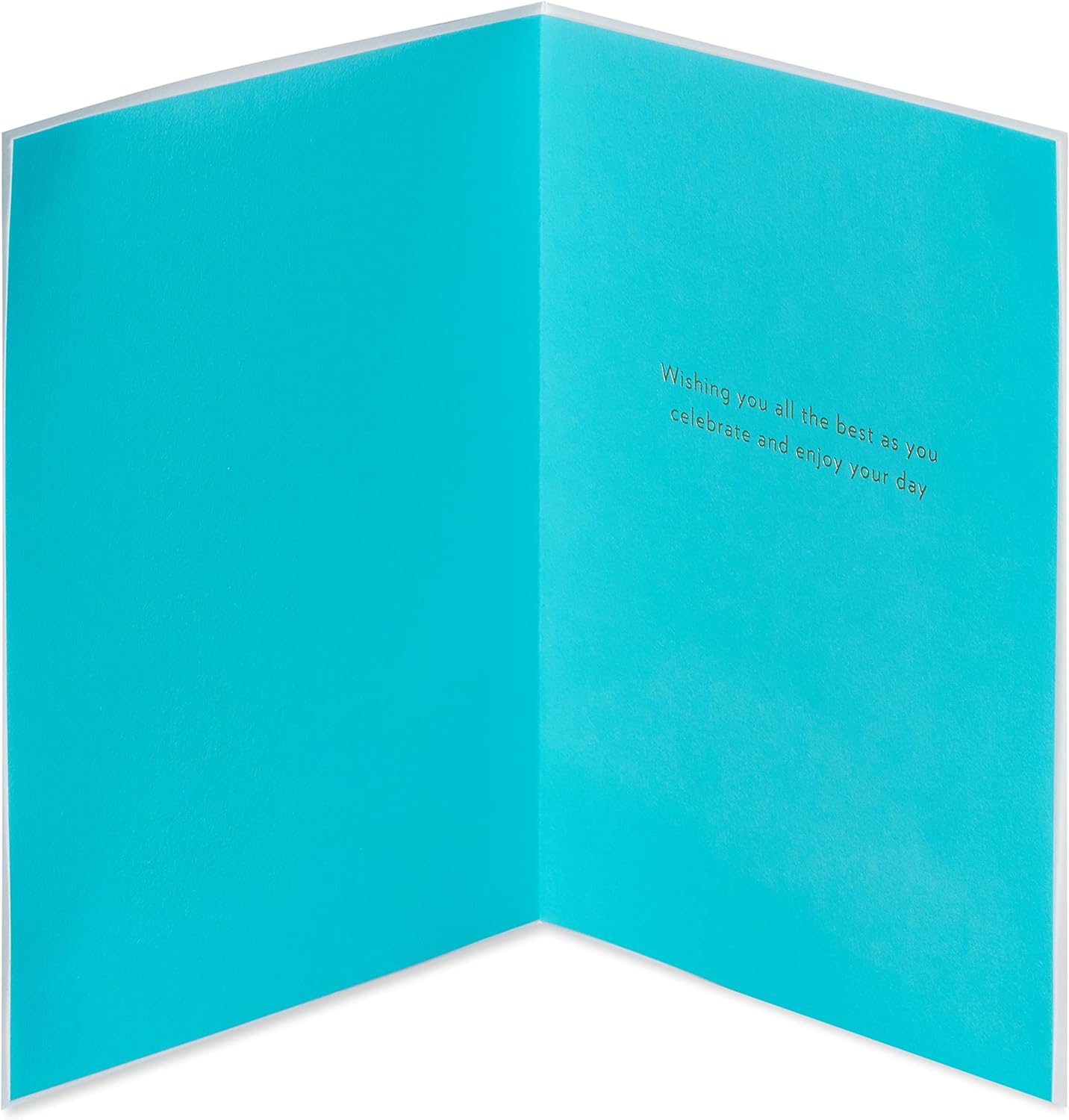
One more buyer question the photographs answer: what happens to the writing step. Because the interior flood is a mid-tone color, standard dark-ballpoint and gel both stay legible on the turquoise field, but the metallic sample line shows why pencil-heavy customers should still get a blank left panel – contrast on colored stock favors ink over graphite. If your program expects heavy handwritten paragraphs, request the interior half-flood: envelope and right panel keep the teal, left panel reverts to white for writing. That variant uses press units already running on the sheet, so it prices as a layout change rather than a new material, and it photographs cleanly for e-commerce listings because the open card still shows the color signature at the fold.
Every face in the grid shares this interior, so one verse decision covers the whole breed family; the seal, foil pass and envelope color ride unchanged across it, which is how a boutique keeps six SKUs looking like one brand while paying six separate 100-piece minimums.
The interior spread and what stays open for your copy
The open-spread photograph settles the inside question completely. Both interior panels flood solid turquoise with a thin white paper core visible along the trim edges, proving the card is one printed sheet folded, not two boards laminated; the left panel stays entirely blank for the handwritten message, and the right panel carries a short centered two-line well-wishing block in a warm metallic tone at the upper middle, set well clear of the fold so handwriting never crowds the spine. The verse in the photo is a sample – your program can print a different line, a store sign-off, a breed joke, or match the photograph by leaving both panels bare for maximum writing room, which buyers adding a printed name or photo of the recipient’s pet often prefer. Metallic interior type can step down to flat print to cut a cost tier, or step up to a second foil hit for premium packs; either move is a line item on the mock-up, not a rebuild of the quote. Keep the interior flood matched to the envelope color deliberately: that continuity is what shoppers notice when they tilt the card under store light, and it is the cheapest perceived-premium move in this product’s BOM – one extra spot color, already running on the press for the envelope, reused inside. For bulk e-commerce sellers the blank left panel doubles as a returns-safe zone: no printed sentiment means no mismatch when a customer re-gifts the card to a different animal.
Pet Set Components, Piece by Term
| Item | Pet birthday greeting card with matched envelope (seal optional) |
| Size | No numerals printed on photos; 5×7 / A7 and 4×6 / A6 with matched envelopes quoted on request |
| Stock & Finish | Matte white face with full-color portrait print and gold foil greeting; turquoise envelope with metallic diamond liner; exact GSM quoted on request |
| Printing & Artwork | Fixed frame with swappable portrait zone and interior copy; free digital mock-up before production |
| Envelope or Extras | Teal pointed-flap envelope as photographed; round blind-embossed or printed seal on request; sleeve, belly-band or header-card retail packs |
| Packing | Card-plus-envelope sets banded, sleeved or belly-banded to spec; flat export cartons by count |
| MOQ | 100 pcs per design |
| Sample time | 3-5 days |
| Lead time | 7-15 days after artwork approval |
| Capacity | 1,000,000 pcs per month across our gift lines |
Co-brand workflow from portrait file to counter pack
Send the pet photo or breed illustration, your greeting line and an envelope color preference; the digital mock-up comes back free, and a physical set in your hands takes 3-5 days so foil and liner can be judged under your actual store lighting, not a studio lamp. Bulk production closes 7-15 days after artwork approval. The page lists a 100-piece reference tier only; final numbers depend on quantity, foil hits and pack format. Pet occasions cluster around December gifting and spring gotcha-day anniversaries, so breed-grid orders prove strongest when locked eight to ten weeks ahead of the shelf date. With capacity of 1,000,000 pcs per month across our gift lines, a six-design species grid finishes inside one production window rather than queueing face by face, which keeps a chain rollout on a single ship date.
Export packing, sleeves and FBA combine
Sets ship flat in inner sleeves sized to your shelf spec, banded or shrink-wrapped per retail requirement; freight runs sea, air or DHL / UPS / FedEx / TNT express. Amazon sellers get FBA labeling and combine-carton packing when the birthday card travels with bandanas, treat jars or other pet SKUs from the same program – inserts co-pack in one inbound box. The composite below shows the warehouse racking, parcel line and courier setup behind these shipments.

Is the envelope really matched to the card or just styled for the photo?
Can we replace the puppy portrait with our own pet or breed art?
What does the gold foil add versus plain print?
Do you supply the round seal as a functional closure?
How small can a boutique start for one breed design?
Neighboring cards for the same occasion wall
Hang this set beside our jumbo oversized birthday cards for the milestone shopper, fill-in birthday invitation cards for kids-party volume, and bulk thank-you inserts for pet-shop order follow-ups. Seasonal pairings sit in the gift sets category; the wider printed cards lineup is one click away, and the quote desk turns your breed grid into a tiered number.
Start the breed grid
Send portrait files and counter quantities to [email protected] or call +86-15967739086; the mock-up and a physical sample follow within the week.