

Custom Travel Backpacks with Logo | Corporate Trip Kit
$4.50
The structured end of adult travel carry: a marl-weave shell that holds its shape empty, twin-zip main compartment that opens flat, padded sleeve with a centre retention strap, back-wall slip pockets, and a plain front panel sized for a corporate mark. Photographed in four colourways – red, grey, black, navy – so one artwork file covers a department split without extra proof rounds. Gym chains, onboarding kits and conference programmes are the daily buyers. No photo prints a dimension, so cabin fit and laptop diagonal stay quoted on request instead of invented. 100 pcs per design, free digital mock-up, reference sample 3-5 days, bulk 7-15 days after artwork approval, FBA prep available.
Custom travel duffel bags with logo is what corporate buyers search before they know which shape they want; the photographs on this page fix the shape first. This is the structured end of our adult travel line: a heather-grey carry built around a padded technology sleeve, twin metal zipper pulls under a rigid grab handle, and a plain front panel waiting for a mark. Nothing on any photographed bag prints a dimension, and nothing in these frames shows a shoe compartment – so this listing quotes both on request instead of inventing them. What we do commit: 100 pcs per design, free digital mock-up before tooling, reference samples in 3-5 days, bulk within 7-15 days after artwork approval, and 1,000,000 pcs per month across our gift lines when a travel programme has to land on a fixed date.
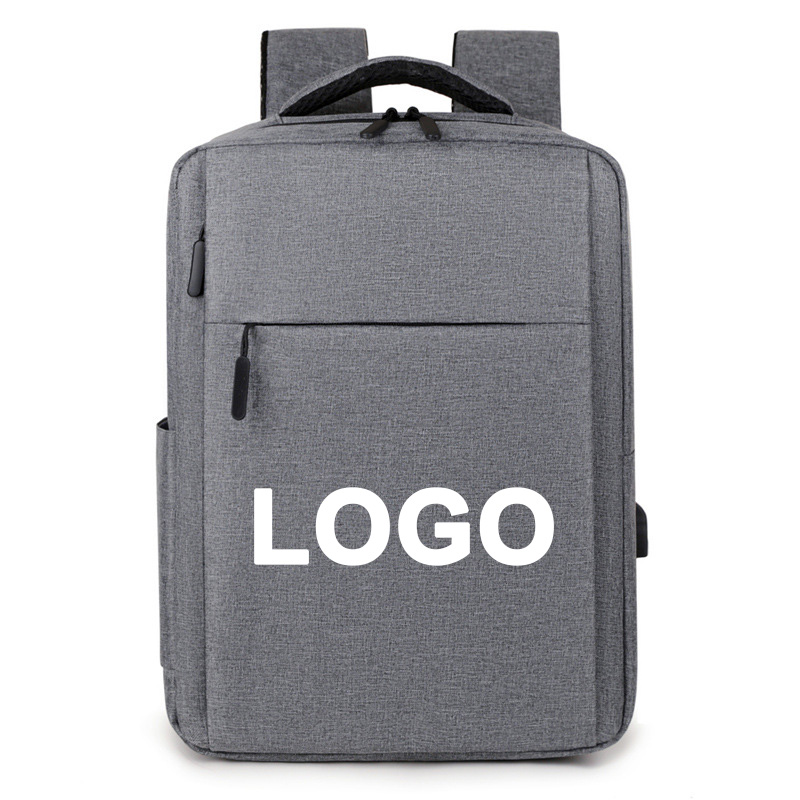
What the Front View Proves About the Shell
Read the catalogue shot like a sample report and it says a lot. The body cloth is a marled weave – light and dark yarns crossed tight – the faux-linen surface this price class uses because it photographs clean under office lighting and takes a mark without gloss fighting it. The hardware family is black everywhere: webbing grab handle on the lid, twin pull-tabs meeting under that handle at the main zip, one pull hanging on the horizontal front-pocket zip, a vertical zip with its own pull down the left side panel, an open slip pocket below it, and a small black keeper tab on the right edge. There are no printed dimensions, no litre badge, no size tag on the bag – the frame simply does not carry that information, and a buyer who needs the exact shell measurements gets them quoted on request against a physical sample rather than read off a page that would have to make them up. What is provable from this angle is structure: the bag stands its shape empty, the front face is flat enough to print, and the corners are stitched with neat topstitching rather than taped. For a corporate order, that flat panel plus clean sides are the whole product – a gift that reads as luggage, not as swag, earns its place in the welcome pack.
Why Travellers of This Shape Are Actually Procurement Departments
Nobody buys two hundred of one carry bag for themselves. The realistic buyers behind this listing: an HR team assembling onboarding kits that leave the laptop-and-charger life to the new starter, a sales department that rewards a quarter with something a rep will genuinely drag through an airport, a gym or studio chain that sells member kit on the front desk, and an event office that needs attendee carry for a conference weekend with the agenda inside. Each of those jobs shares one constraint: the bag must look like the brand and behave like luggage at the same time. That is why the artwork conversation on this page is boring in the best way – one flat panel, one predictable size, four colourways photographed, and a mock-up rendered before any money moves. Cabin-bag arithmetic is where honesty earns its keep: since no photo prints a height or a width, nobody should pretend this shell fits a carrier’s gauge chart. Request the measured dimensions, compare them to the airline rules your travellers actually fly, and settle it at sample stage, in centimetres, not in listing copy.
Artwork Zones on a Blank Body
Three printable surfaces exist in the photographs, and they are worth naming precisely because each one behaves differently with a logo. The front panel, below the pocket zip and above the base seam, is the hero zone – the mock-up places your mark there at real scale, flat on a matte marl background. The left side panel, above the vertical zip, is a secondary strip for a wordmark run small; the webbing handle and cord pulls are hardware, not print zones, but they can be swapped in colour at quote stage as an upgrade. The back carries no visible print surface in the photographs, so it starts blank and stays blank unless you ask otherwise. Mark technique follows the panel: flat print is proven by the picture; embroidery or a rubber badge on that same zone is possible on this category but unseen here, so it is quoted on request against a sample, and colour matching runs against whichever reference you name – the grey body is a mid-tone, so white and single-colour marks stay crisp while dark marks sink into the heather texture. Send the vector, get the mock-up free, and approve zones, not vibes.
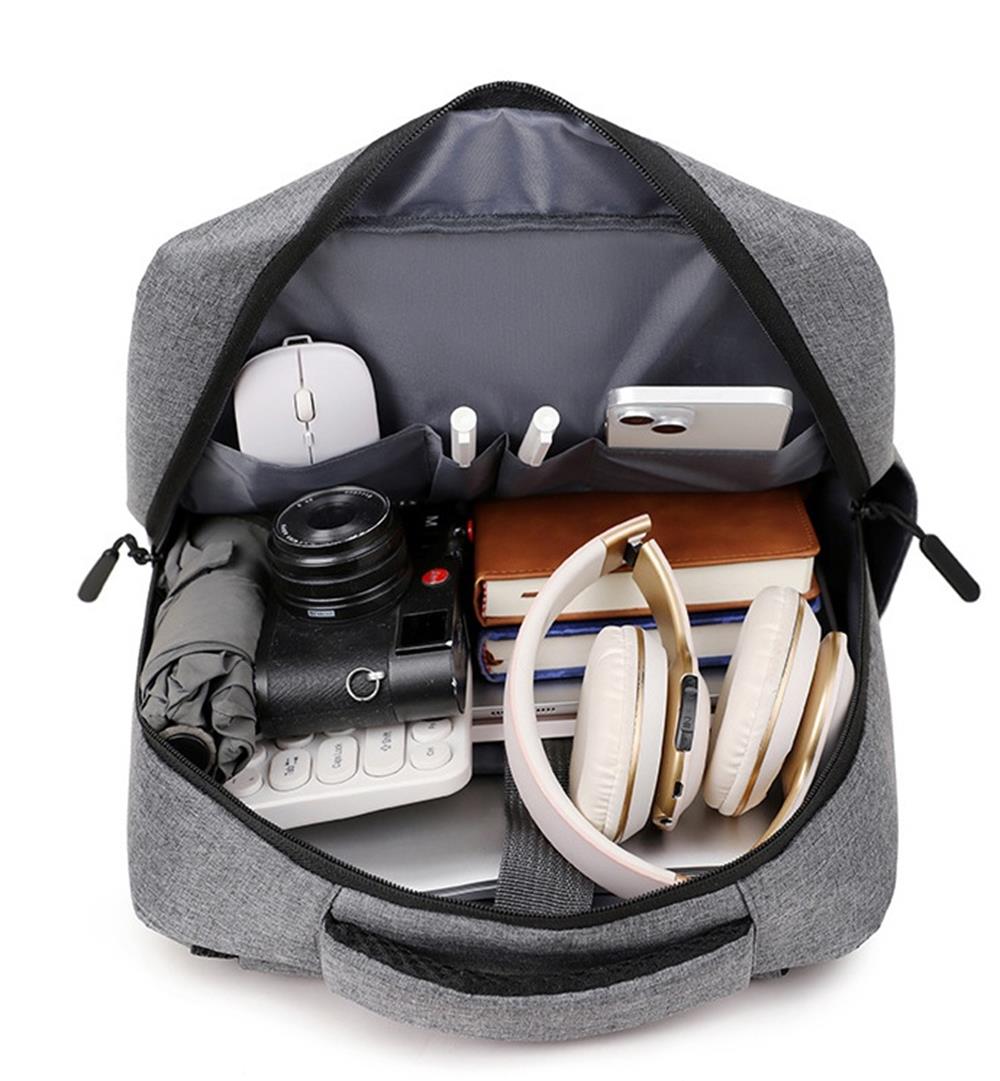
The Interior Wall, Photographed Flat Open
The overhead shot unzips the perimeter and lays the main compartment flat, which is the only honest way to show an organisation layout: three open slip pockets across the back wall, a padded vertical sleeve on the cavity floor, and a woven strap running up the centre to hold whatever sits in that sleeve in place. A dark divider panel stands between the sleeve and the front half. The gadget resting inside the sleeve is a styling prop placed to show purpose – a slim laptop of no quoted screen size, because nothing printed on this bag declares one – and the retention strap is the product fact: it keeps the flat padded item from sliding forward into the weight of everything packed in front of it. For a corporate kit order this is the paragraph that matters most at sample stage: put your own laptop, your own charger brick, your own notebook stack into that layout, and confirm the strap clears all three before proof sign-off. The lining itself is a smooth charcoal cloth that photographs clean and wipes down easily, which is what a shared-fleet gym purchase needs from a bag that lives on benches and floors.
What Fits When Things Are Packed for Real
Capacity claims are easy to type and hard to prove; this page proves only geometry, from the packed frame: the cavity holds a flat padded item plus a keyboard-height stack of small items plus a folded umbrella in a side channel, with over-ear headphones resting above the divider. That is a workday-to-weekend footprint, not a fortnight of laundry – and a buyer whose programme needs bigger should ask the desk about scaled variants rather than hope this shell stretches. The front slip pocket and the zip side pocket are the two zones where the small theft-prone items live: cards, a fold-up tablet, a phone that needs to be reachable without opening the main compartment at a gate or turnstile. Everything in frame is a prop; nothing packed in the photographs ships with your cartons. The honest usage test before an order is signed: load the 3-5 day reference sample with your own kit list, lift it by the top handle, walk it twenty minutes, then look at where the retention strap has rubbed. That is a better acceptance report than any bullet list. And because the packed frame also shows the umbrella riding in a dedicated side channel, the rain-plan question answers itself for UK and northern-European programmes: the wet-fold item stays vertical and separated from the padded sleeve rather than soaking tomorrow’s laptop. Corporate buyers who skip this paragraph tend to discover the same lesson one way – through a damaged machine at the January induction – which is why the sample stage on this page is written as a kit-loading exercise rather than a formality.
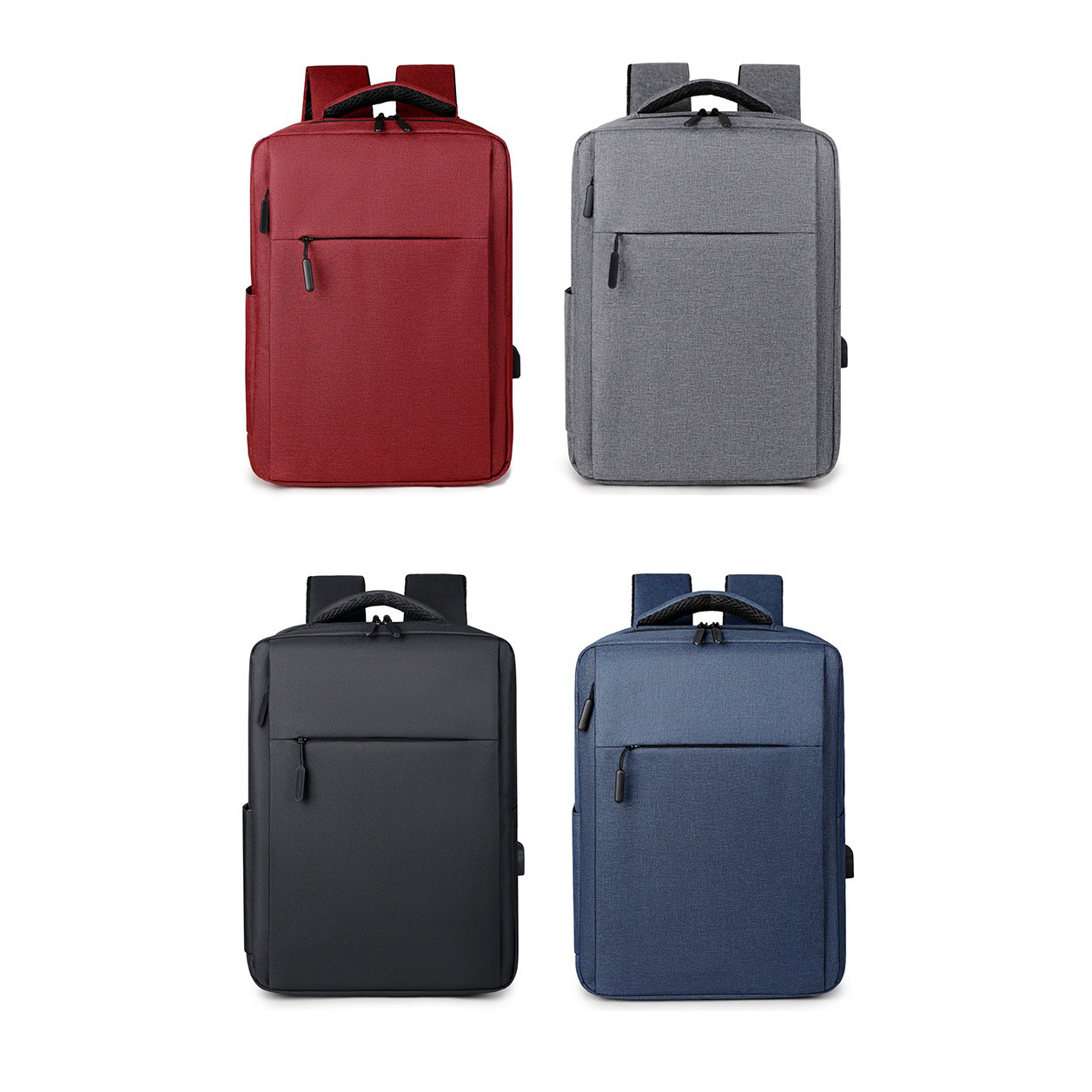
Four Bodies From One Master File
The colour grid shows the decision a gym chain or corporate catalogue actually faces: same silhouette, same black hardware, four bodies – deep red, heather grey, black and navy – so a brand can match departments instead of compromising on one colour. One artwork file prints across all four; colourways are packing maths, not design maths, which means a split like 120 grey for HQ, 80 navy for the sales fleet, fits inside a single 100 pcs per design commitment once the total clears the floor per signed design. For studios and gym retailers the same logic runs in reverse: one branded shell in two member colours, sold at the front desk, reordered by the quarter on reserved artwork. Mixed orders of this shape plus the wider carry line – weekend shells, team sacks, school bodies – ride on separate proofs rather than one file, but the packing desk can consolidate them into mixed pallets so a single receiving window stays quiet.
Order Numbers and Proofing Steps a Procurement Ledger Can Verify
Everything quotable on this listing sits in one place: minimum 100 pcs per design; free digital mock-up before any tooling is committed; reference sample in 3-5 days; production 7-15 days after artwork approval; monthly output 1,000,000 pcs per month across our gift lines. Pricing appears as an approximate unit at the 100-piece entry band inside your quote, never as a fixed number printed here, because the figure that moves with your quantity, zones and hardware swaps belongs on a quotation rather than on a page. Freight leaves the ledger flexible: sea, air, DHL, UPS, FedEx or TNT routing, with the same batch able to split across courier cartons for executives and sea pallets for the rest. Reorders keep the signed master file on the shelf: a January cohort gets the same October artwork without a second proof round, which is the difference between a programme and a one-off purchase. Three checkpoints stand between a logo file and a pallet, and each takes minutes, not meetings. The mock-up puts your mark on the photographed panel at scale – approve placement there, in writing, before anything harder to change exists. The reference sample is where the retention strap, the zip pulls and the padded sleeve get tested with your own laptop and your own charge brick; that test is the acceptance report for corporate orders, and skipping it is how a programme ends up with two hundred bags and zero happy recipients. Once both pass, approval starts the production window; a programme tied to a fixed onboarding date should back-plan at least two weeks of slack inside that window before choosing sea freight, or choose air and shorten the argument with physics.
| Attribute | Where this product stands |
|---|---|
| Shell shown | Structured marl-weave carry, flat-print front panel, black hardware throughout |
| Main closure | Perimeter twin-zip; back wall slip pockets, padded sleeve, centre retention strap |
| Colourways photographed | Red, grey, black, navy; one artwork file spans all four |
| Dimensions, laptop fit, capacity | Printed on nothing photographed – quoted on request against a sample |
| Shoe compartment | Not shown in any frame here; exists in the wider range, ask the desk |
| Entry commitment | 100 pcs per design, mock-up free before tooling |
| Clock | Sample 3-5 days; bulk 7-15 days after artwork approval |
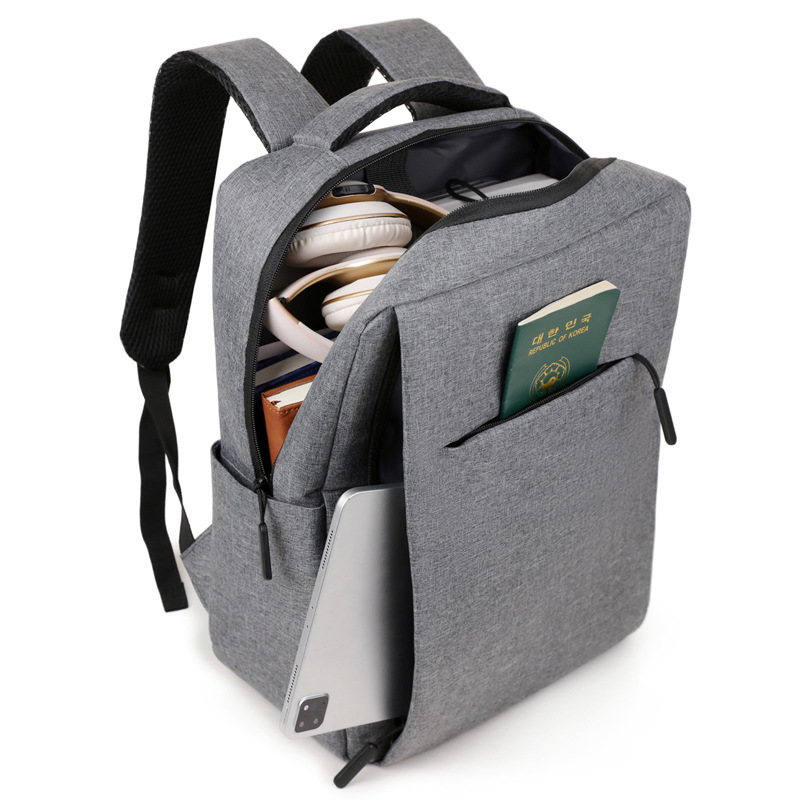
The Carry System, Seen From Behind the Bag
Comfort questions get answered by the rear frame or not at all. What it shows: two padded shoulder straps, body-coloured outside and black ventilating mesh against the wearer, each ending in a webbing tail with a slide adjuster; a fabric-wrapped grab loop at the top between them; cord-loop pulls that sit flat enough for the bag to ride under a seat. The straps read as structured padding in the shot – thickness, foam grade and back-panel shape are sample-stage questions, quoted on request, because a photograph cannot honestly declare millimetres. A flat tablet-shaped prop rides in the zip side pocket in the same frame, which is the practical argument for that pocket: the item you need at a counter or turnstile stays outside the main cavity. A booklet prop sits in the front slip for the same reason. Neither prop belongs to the product or ships in your carton. For a traveller who switches between handle and straps all day – gate, taxi, platform, office – that two-mode carry is the entire reason this silhouette outlasts the rolling case in a corporate kit.
Mixed-Line Reorders, Cartons and the Freight Decision
The accounts that pull this shell rarely stop at one SKU. A club ordering the team sack for juniors will also order this structured body for the coaching staff; a school buying the young-day backpack wants the same logo, at adult scale, for the staff room; a resort buying pool-side lined totes needs the guest carry bag that leaves with them. Keeping one artwork master per mark, per scale, is what makes those orders consistent across years, and the packing desk labels per line so a single delivery unpacks straight into the right cupboard. Ask about matching zones – same mark, same position, across shapes – while proofing, and the mock-up round builds the whole family before bulk begins, inside the capacity already reserved by 1,000,000 pcs per month across our gift lines. A gym chain is the clearest recurring pattern: member kit on the front desk in black and navy, coach carry in grey with a staff-only side mark, both reordered each quarter from the same two signed files while the marketing department prints a third campaign body whenever a challenge month runs. Nothing on this pattern needs a new proof unless a mark actually changes, and the reorder paperwork stays a quantity note rather than a fresh specification conversation every time. When those mixed families ship, the shells travel standing on their bases, nested in rows, each one individually polybagged to keep the marl cloth clean through transit – the reference chart further down shows the standard export build: poly, carton, pallet, and the routing menu beside it. Lock artwork first, then choose freight against your date: sea for a quarter-long runway, air when a launch slipped, DHL, UPS, FedEx or TNT for samples and exec batches, split consignments when HQ and the regional office receive on different days. Marketplace-bound units get FBA prep, pick, pack and labelling off the same production batch. Anything on this page the photographs left open – exact dimensions, padded-sleeve diagonal, hardware colour swaps – closes at the quote desk, in numbers, before a proof is signed: [email protected] or +86-15967739086.

What Buyers Ask Before the Proof Round
What are the exact dimensions, and will this fit cabin allowances?
Is there a shoe compartment or a separate wet kit zone?
Can the front mark be embroidered rather than printed?
How do colourways count against the 100-pcs floor?
What laptop size does the padded sleeve actually take?
Can this shell be reordered beside other carry lines?
More of the Carry Aisle, and the Desk That Quotes the Unknowns
This shell is one adult body in a line that covers households and programmes end to end. The junior version of the same daily carry lives on the kids backpack listing, the team-issued sack for the sports programme sits at the academy cinch page, and the lined day-trip tote that travels inside luggage waits at the cooler tote’s own entry. Browse the full textile selection at bags under textiles, printed carry at the printed bags branch, the wider aisle at the printed items hub. Dimensions, sleeve diagonals, hardware swaps and freight mixes all close at the request-quote desk in one reply.
Send the logo file, the colour split and the fixed programme date; the mock-up, the 3-5 day sample and the 7-15 day bulk window do the rest.


