Custom Paper Bags with Window | See-and-Buy Retail Packs
$0.20
Custom paper bags with a clear window panel, engineered for see-and-buy retail: kraft shells with optically clear film sealed into the front face, photographed in a lower diagonal-top band on a folded-mouth carrier and a centred straight rectangle on a stand-up pouch with press-to-close zip track. Panel position is merchandising geometry — low glass frames the settled, generous part of the fill; blank shells plus a sticker launch an assortment at zero plate cost and one shell serves every SKU behind it. Film polymer, gauge, paper weight and millimetre dimensions are quoted on request against your filled weight; none of them appear in our photos. Order floor 100 pcs per design, free true-size mock-up on your dieline, physical samples in 3-5 days, bulk 7-15 days after artwork approval off 1,000,000 pcs per month across our gift lines. Flat-packed with interleaved film protection; sea, air, or DHL / UPS / FedEx / TNT; FBA labelling supported. Write [email protected] or +86-15967739086 with your product and shelf bay.
Custom paper bags with window panels, built for the one job no other packaging does: selling the product while it is still inside the pack. A kraft body with a clear film face lets shoppers check colour, size and fill level without opening anything — the see-and-buy logic behind confectionery, bakery display, gift and retail assortment packaging. Alice Gifts cuts these shells on printed paper stock with a sealed transparent panel on the front face, in two photographed formats: an open carrier with fold-over mouth and a stand-up pouch body with a press-to-close zip track across its folded top. Window geometry, film type and dimensions get quoted against your product, never guessed from a photo. Order floor 100 pcs per design, samples in 3-5 days, production done 7-15 days after artwork approval.
The Shelf Argument for Seeing Inside
Display packaging asks customers to make two decisions — do I want this, and can I trust it — and a window answers both at once. Photographed product on the outside promises something; the transparent panel proves it, right there in the hand, at the exact moment hesitation turns into putting the item back. That is why confectionery, cookies, dried fruit, gift sets and colour-critical assortments standardized on windowed packs decades ago and never went back: the panel converts packaging from a label into a display case the customer carries around the store.
The economics follow the psychology. A windowed bag needs less design labour than a fully illustrated one — the product is the artwork, your brand just frames it. Reorders across a changing assortment never touch the plate: the same bag serves every SKU that fits behind the panel, which is exactly how a bakery running six cookie types buys one packaging. Compare that with a printed variant per flavour and the window starts looking like a discount on your whole print budget, not just a feature.
What the First Photograph Actually Shows
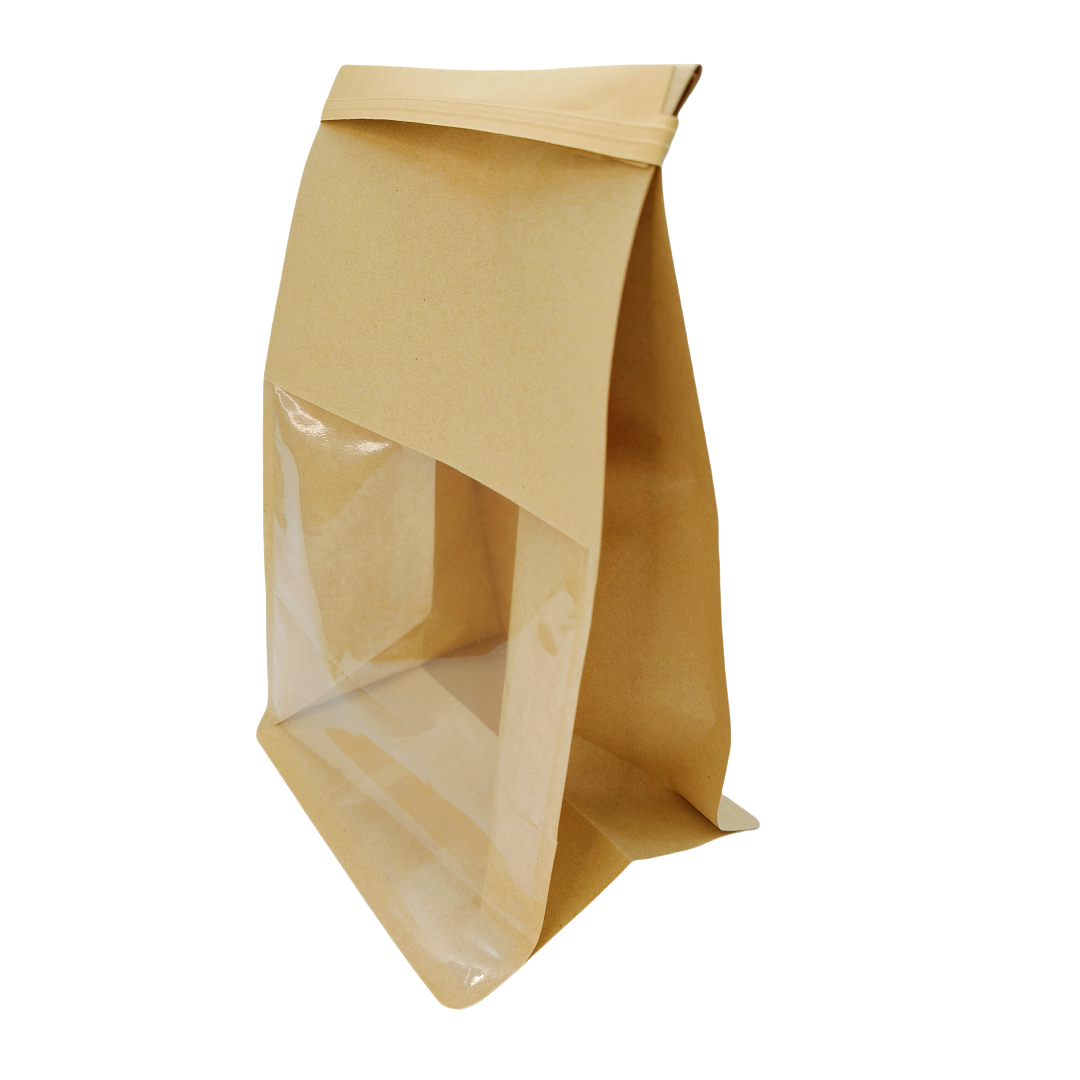
Read the standing bag closely, because it settles three spec questions before you email us. One: the window shape. The clear panel is not a plain rectangle — its top edge runs on a diagonal, sloping down across the face, which turns a basic cut into a designed gesture without any printing at all. Two: the placement. The panel fills the lower-to-middle band of the front face and spans nearly its whole width, leaving a generous kraft band above. That geometry matters more than buyers expect, and the next section explains why. Three: the interior truth. Because the bag is empty, you can see straight through the film to the far wall, the vertical pleats and the folded base — the window shows structure too, not just contents.
The mouth is turned down once into a band across the top, and there is no handle, no tie, no clip. This is a display shell, not a carrier: it stands, it shows, it gets opened at home. The three-quarter angle also exposes the side pleat and the corner of the square base, so the whole construction — gusseted sides, glued bottom, folded rim, sealed film — is visible in a single studio shot with nothing printed on it.
Window Placement Is Merchandising Geometry
Where the panel sits decides what the shelf sees. A window low on the face, like the photographed bag, points at the bottom third of the contents — the full, heavy part of a settled product. Fill level reads generously when the panel grabs the base of the pack, because crumbs, air gaps and settling all happen at the top. A centred panel shows the middle mass; a high panel risks framing the empty headspace every loose-fill package has. This is not styling. It is the difference between a bag that looks generous on display and one that looks underfilled in the same photo.
Then there is the diagonal edge in the first shot. A slanted window line does two quiet jobs: it breaks the rectangle so the pack reads designed rather than default, and it creates a broad kraft zone above the film for a brand mark, sticker or hang-tag without crowding the glass. When you spec your own geometry, send us the product and we will mock the panel at the height where your specific item fills best — square cookies behave differently from vertical sticks, and a window designed for one looks wrong holding the other.
Film selection stays honest too: none of our photographs label what polymer the panel is, so we quote film type, clarity and gauge against your order sheet rather than inventing an acronym in the listing. What you can verify visually here: the panel is optically clear, glossy against the matte paper, sealed cleanly into the front face with no ink between glass and goods.
The Stand-Up Format: Retail That Stays Open
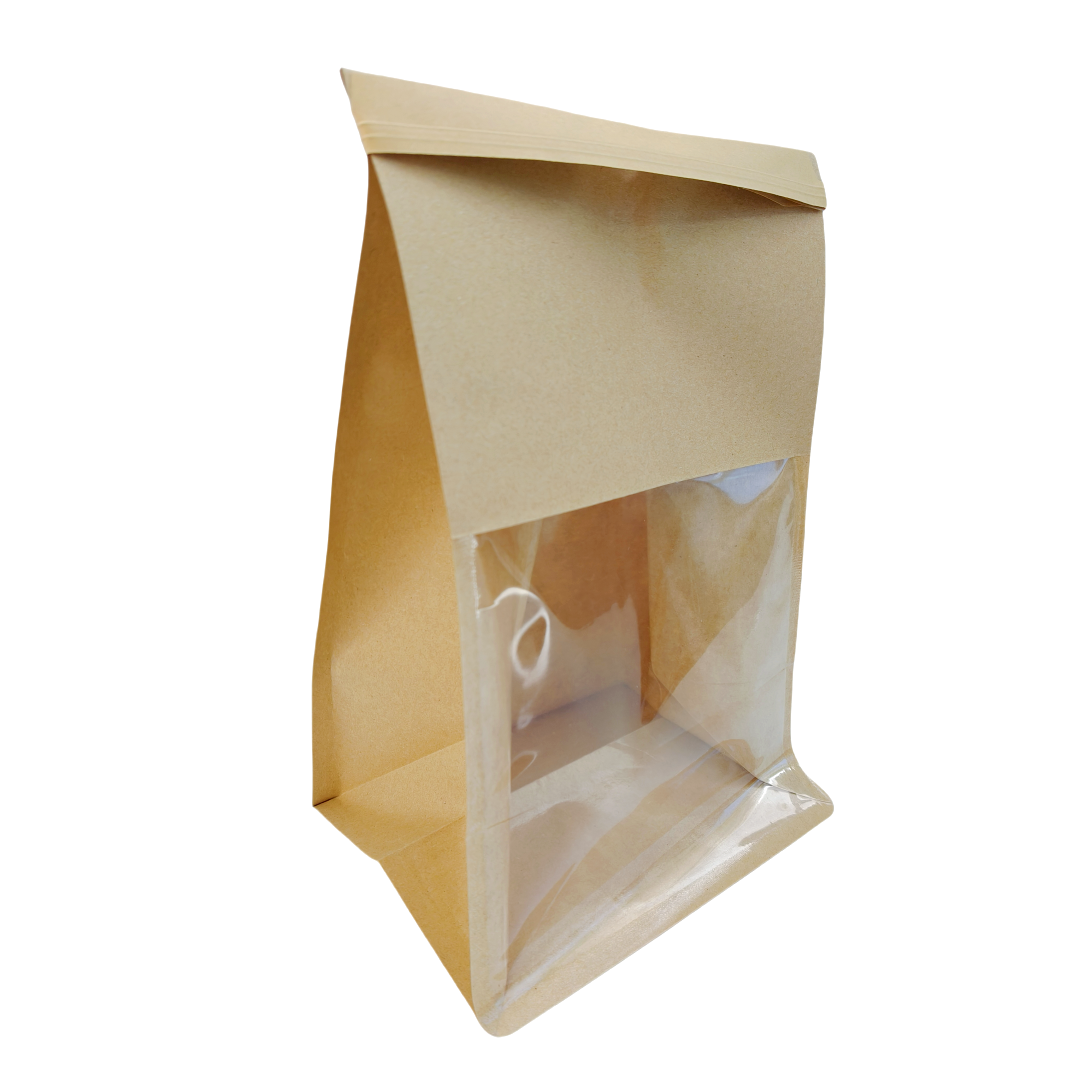
The second photograph shows the pouch sibling: the same kraft-and-window idea engineered for the shelf instead of the counter. A flat folded base lets it stand unassisted, side pleats expand when filled and collapse on the store shelf, and the rectangular window — straight top edge this time, centred, running down to near the base — frames the contents like a display case built into the pack. The visible horizontal ridge across the folded mouth is a press-to-close zip track: recloseable, no clip, no clip basket at the checkout, and the product stays marketable between visits to the pantry.
That reclose changes what you can sell in a windowed bag. Single-serve treats live fine in the open format; anything a customer eats across a week — nuts, coffee, baking mix, pet treats — needs the zip, because an opened non-reclose pack gets transferred to a tub and your brand disappears from their cupboard forever. Buy the format from the consumption pattern, not the mood board. And note what the pouch photo proves about blank stock: with a strong window shape, plenty of retail runs launch with nothing but a sticker or hang tag — zero plate cost, fastest possible reorder loop.
Structure Behind the Glass
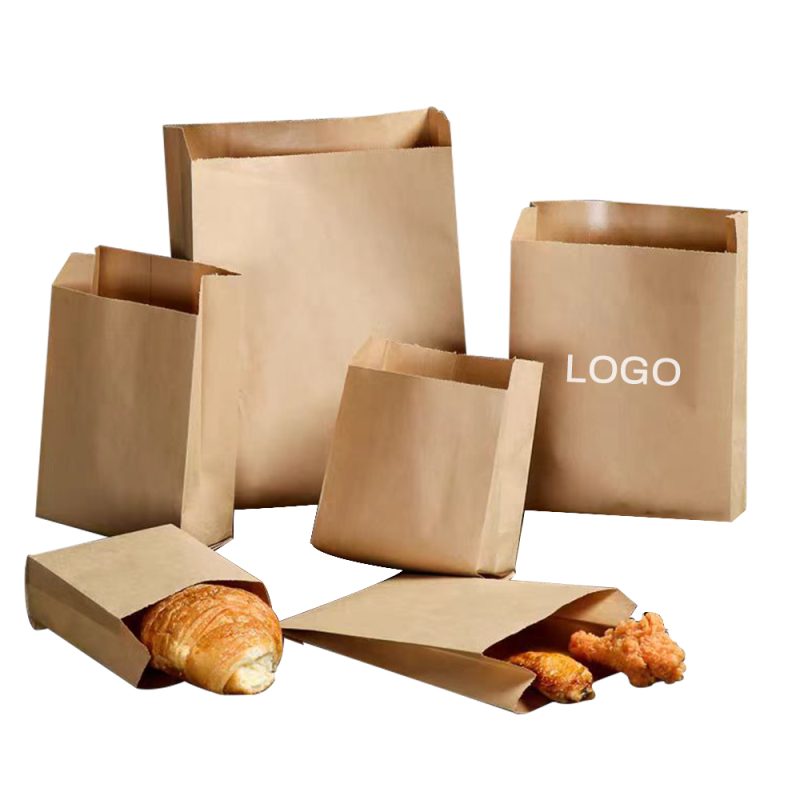
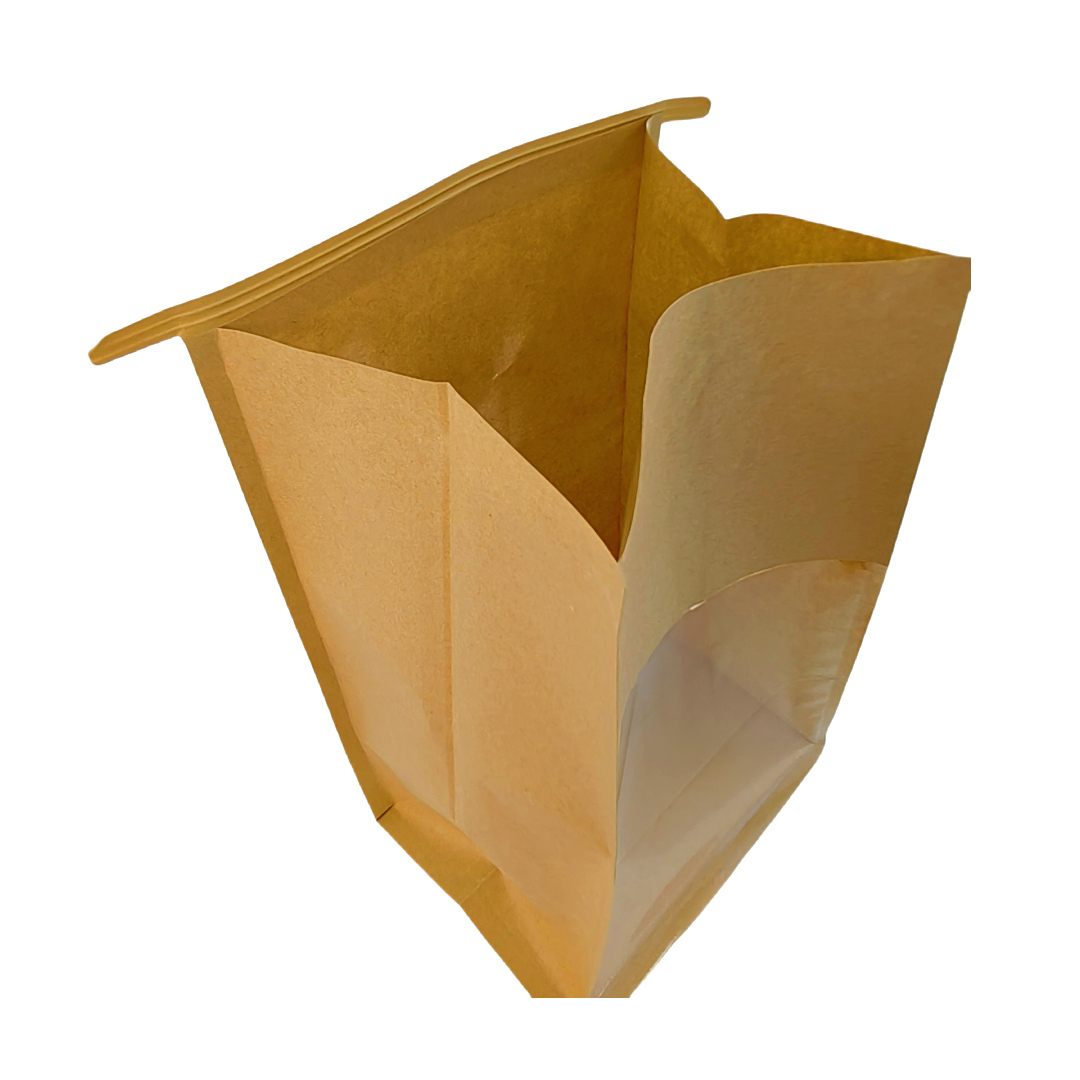
Windows add a weakness that sellers rarely think about and stores always feel: the film is the only part of the pack with no fibre strength, so the paper around it does double duty. Every window on this page is bordered by kraft on three or four edges, and the seal runs under the paper margin, not at its knife edge — that is what keeps a panel from peeling when a pack is stacked, squeezed or thrown in a cart. The third photograph (the overhead view into an open sack) earns its place here precisely because it has no window at all: it shows the plain-paper sibling — doubled pinched rim, vertical pleats, pointed folded base — and the soft pale glow low on its right panel is light through thin kraft, a property of the sheet, not a second panel. We would rather point that out than pretend every photo on a windowed-bag page contains a window.
For heavy contents we square the weak part of the pack with construction: deeper bottom glue, stiffer board in the base fold, narrower window borders. A one-kilo bag of coffee and a 150-gram bag of cookies cut the same silhouette but not the same paper. Tell us filled weight and the shell gets spec’d to it; the figures come back in writing on your mock-up sheet, because none of them exist in a photograph.
Print, Tags and the Zero-Ink Launch
The photographed shells are blank, which is the honest starting point for most windowed programmes: the product inside is the visual, so packaging design starts at framing, not decorating. From there you escalate deliberately. A belly band or sticker across the kraft zone above the window carries logo, net weight and legal panel with no plate cost and instant SKU flexibility. Direct printing puts your mark on the paper face — one colour on kraft is the workhorse; white underprint comes into play when colour must sit true against the tan fibre, same rule as our whole kraft programme. Keep the film itself clear: printing on the window splits attention and scratches at the edges, and the best windowed packs we produce let glass and contents do the talking while ink stays on paper.
Whatever the escalation, we mock it free at true scale on your chosen shell before tooling, with window dimensions, border widths and tag placement drawn on the actual dieline — not a generic bag clipart wearing your logo.
Configuration Points You Own
- Shell format: open carrier with folded mouth, or stand-up pouch with press-to-close zip track
- Window geometry: full-width panel with slanted top, centred rectangle, or your custom shape and position
- Film: optically clear panel sealed under a kraft border; polymer type and gauge quoted on request
- Paper: matte kraft faces, standard or heavier sheet per filled weight
- Finish: blank launch, sticker or belly band, one-colour direct print, full colour with optional white base
- Closure: fold-over band, zip track, or open mouth with twist
- Size: existing ladder quoted on request, or matched to your product and shelf bay
Windowed-Line Quick Sheet
| Spec question | This line’s answer |
|---|---|
| Panel visibility | Optically clear film sealed into the front paper face, visible straight through to interior pleats in both studio shots |
| Shapes photographed | Diagonal-top band across the lower front; straight-edged centred rectangle to near the base |
| Formats on this page | Folded-mouth carrier; self-standing pouch with reclose track; plain pinch-top sack shown as the no-window sibling |
| Base behaviour | Square glued fold that stands the pack upright loaded or empty |
| Side behaviour | Vertical pleats expanding for fill, collapsing flat for cartons |
| Numeric specs | Film gauge, paper weight, panel millimetres: absent from every photo, issued per order sheet on request |
| Design floor | 100 pcs per design |
| Pre-production proof | Blanks or finished sample shipped inside 3-5 days |
| Bulk run closes | 7-15 days once artwork is approved |
| Monthly group output | 1,000,000 pcs per month across our gift lines |
Buying a Windowed Programme Without Regret
Two sample requests, in order, before the big order. First: blank shells in two or three candidate sizes with your product behind the glass — you are testing fill appearance and panel placement, not printing, and blanks move in the 3-5 day sample window. Second: one finished proof with artwork and chosen film after the geometry is locked. The pair takes roughly one week of your calendar and removes almost every reason windowed-pack orders get complained about: contents that settle below a panel placed too high, windows sized for a photo rather than for the actual product, pouches that lean on the shelf because the base got underspecced for the filled weight.
Reorder rhythm differs from printed carriers: assortment buyers typically hold one shell spec across every SKU and swap only stickers, which turns packaging from a planning burden into a stock item. Lock that single shell properly and the panel keeps selling six products for as long as the sizes fit. Production then runs 7-15 days after artwork approval on a line backed by 1,000,000 pcs per month across our gift lines — fast enough for a seasonal assortment flip, not so fast that nobody checked the second proof.
Cartons, Pallets, Lanes
Windowed bags ship flat like every shell in this catalogue, with the film protected by interleave so panels never ride against panels in transit — a scratched window is a reject on arrival, so packing is engineered around the glass, not adapted from the plain-bag carton. Cartons are scored export stock, sized per your shell dimension and listed on the proforma before production; the chart below is the reference for marking and staging before pallets form. Lanes run sea, air or express — DHL, UPS, FedEx, TNT — chosen against your shelf date, with FBA labelling and prep available when the same pack sells through marketplace listings.

Frequently Asked Questions
What shapes can the clear panel be cut in?
Is there a minimum order for windowed paper bags?
Can the bag stand up on a shelf with the zip closed?
Do you print directly onto the transparent panel?
Why is one bag on this page shown without a window?
Neighbouring Pages for the Same Budget
If the window turns out to solve the wrong problem, two adjacent pages own the answers. Carrying strength, cord or die-cut handles and print-on-brown decisions belong to our plain carrier spec at custom printed kraft paper bags. Served-over-counter work, mouth cuts and grease-resistant stock sit on custom greaseproof counter bags. The parent family index runs through printed paper bags inside printed items, and long-life fabric totes for the same brand live under textile bags.
Send your product, filled weight and shelf bay to the quote desk, or reach us at [email protected] / +86-15967739086. First reply: panel mock-up at true size, specs in writing, no brochure.