Custom Picnic Blanket Gift Set – 7-Piece Promo Kit
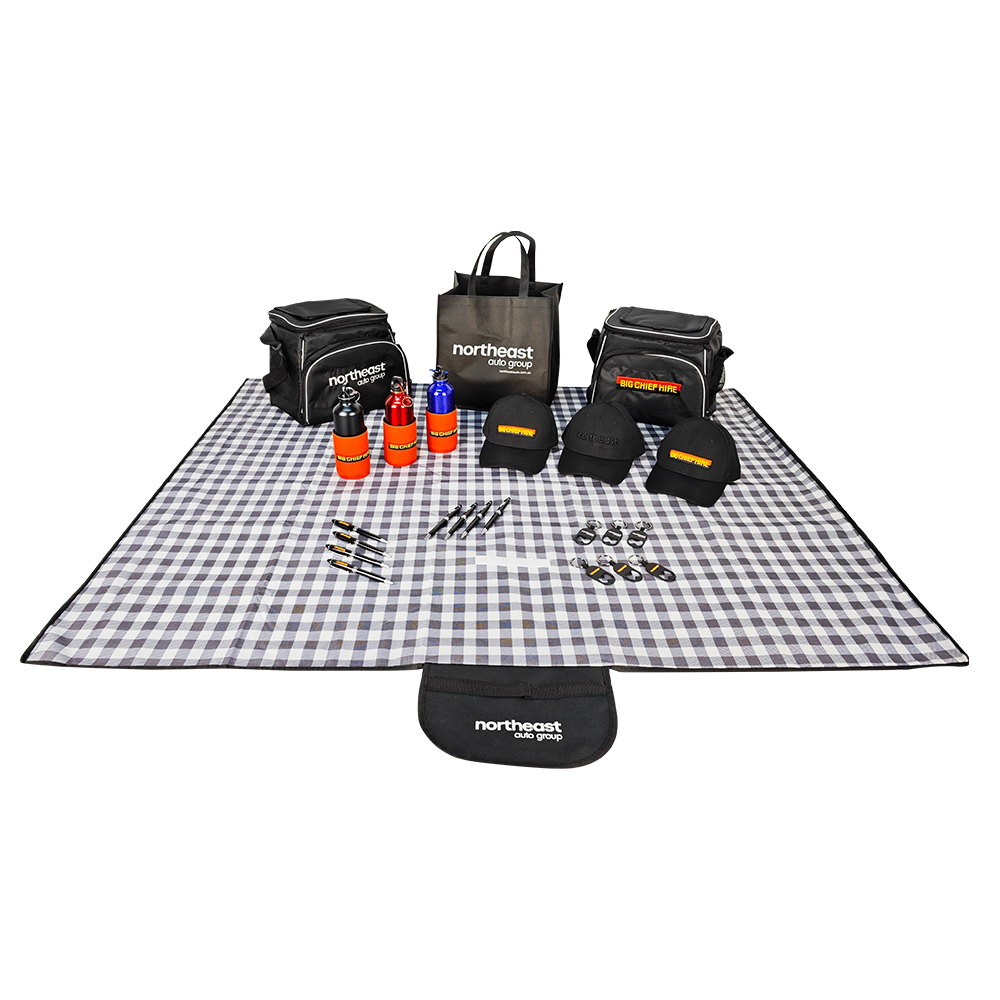
A custom picnic blanket gift set built for hire desks, dealership networks and outdoor-equipment brands: a gingham fold-out blanket that packs into its own black carry pouch with a webbing handle, matched by a charcoal cooler bag with an embroidered patch, a black non-woven tote, anodised metal bottles in red, black or blue wearing orange foam sleeves with a printed wrap band, twill caps, chrome-trimmed pens and stamped paddle tags that double as bottle openers. Every zone prints from one artwork file, so seven surfaces carry one mark with one reorder code. MOQ 100 pcs per design, free digital mock-up, 3-5 day samples, 7-15 days production after artwork approval, up to 1,000,000 pcs per month capacity. Send artwork and your event date to [email protected] or +86-15967739086 and we back-plan the whole kit from your launch calendar.
A Fold-Out Blanket Kit That Works Overtime in the Boot
Most giveaways die in a desk drawer inside a month. A custom picnic blanket gift set is built to fail that test in the other direction: the gingham blanket keeps returning to car parks, job sites, grandstands and weekend trips, and the pieces wrapped around it – a cooler bag, a woven tote, anodised bottles in foam sleeves, twill caps, pens and a paddle-tag opener – keep one mark visible in all of those settings. The logic of an outdoor-experience giveaway is blunt. Your customers already spend time outside; the kit simply gives that time your colour and your wordmark. For hire desks, equipment rental counters and dealership networks, one kit line covers several handover moments at once – a long-weekend rental gets blanket plus cooler, a showroom event table gets bottles and caps, a sponsorship slot at a local ground gets totes – and because every component prints from a single artwork file, the mark lands with the same weight on seven different surfaces.
The Blanket Is the Anchor, and It Folds Into Its Own Case
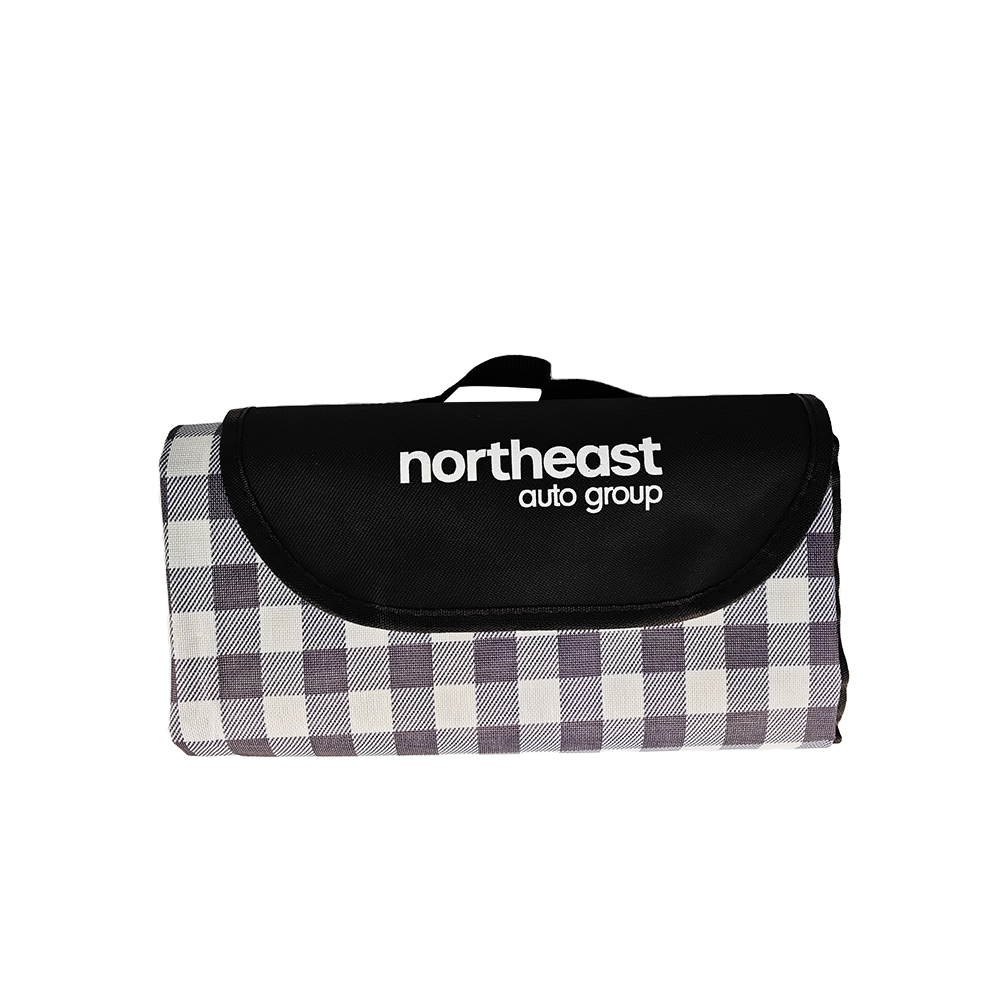
Start with the hero, because everything else here is supporting cast you can dial up or down. The blanket is a woven gingham check in off-white and slate-purple, photographed folded into its own black carry pouch. The fold-over flap takes a centred print panel for your logo, and a stitched webbing handle rises from the top edge, so the stowed bundle carries like a small bag rather than a bundled-up textile. That integrated-pouch design matters commercially for two reasons: there is no separate case to source, qualify and freight, and the flap is a clean print surface at exactly the height a phone camera catches in user-shared photos.
The check is loom structure, not a printed pattern. The photograph shows the three-tone grid clearly – solid cream squares, solid purple squares, and blended mid-tone squares where the two thread colours cross – which is why the folded blanket reads as a consumer product in retail-style imagery instead of a thin promo mat with a print slapped on it. Patterned fabric photographs better than a blank surface carrying a centred logo, and buyers of outdoor giveaways know it: the blanket earns shelf presence before the wordmark even registers.
Set your colour pairing at order stage. The photographed cream-and-purple combination is the sample, not a fixed option, so a navy-and-white or full brand-colour check follows the same production path with a different yarn plan. Whatever pairing you choose, the black flap stays the anchor print zone, which keeps the identity consistent when the kit grows into next season’s reorder. Unfolded on the grass, the check face does the talking while the flap handle does the storing – a two-second setup that beats any blanket needing instructions and a clothespin. For rental fleets, that speed is the feature: a customer who can deploy the blanket in one motion at a lookout point will do it on every leg of a long trip.
Charcoal Cooler Bag: Stretching the Picnic Into a Full Day Out
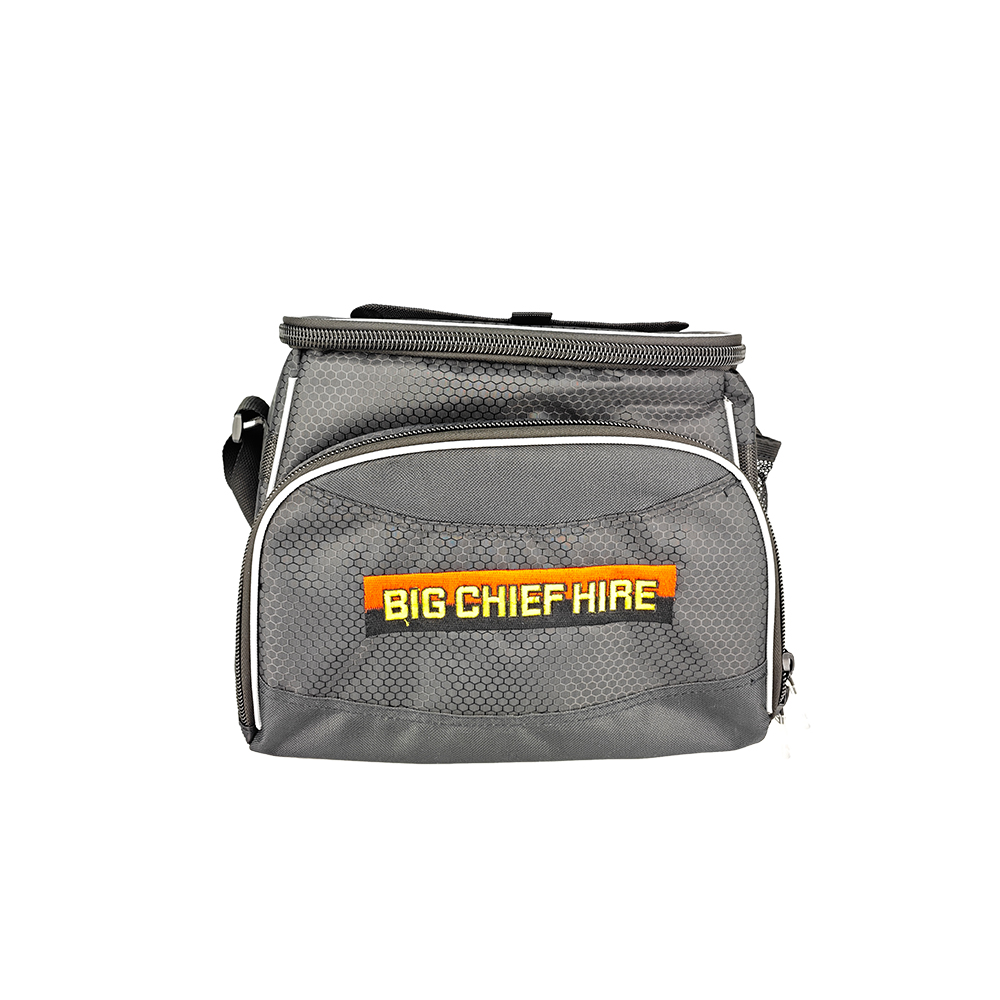
The cooler is a charcoal woven-polyester body wearing a repeating hexagonal motif across its front panels, broken by smooth matte bands under the top zip and along the base. A curved front slip pocket is outlined in white piping – a contrast stitch line that survives being grabbed by the handle hundreds of times – and the zips are dark coil runs with metal sliders and short cord-loop pulls you can work with gloves on. A black webbing shoulder strap hangs off metal rings at the side, a folded carry loop sits at the top, and a mesh slip pocket appears at the right edge for things you want reachable but not visible.
The logo zone on this component is an embroidered rectangular patch centred on the front pocket: colour-block field, banded lockup, raised thread. Stitch over print was deliberate. A soft cooler gets dragged, stuffed into boots and slung over fences; embroidery on a patch outlives a surface print on a flexing insulated panel, and the patch also lifts the perceived value of a promotional cooler from throwaway to kit item. When the recipient keeps the cooler for their own weekends, the patch keeps your mark legible long after the campaign window closed. Pair one cooler per blanket and the bundle becomes a genuine day-trip package rather than a single-use picnic novelty – the story hire desks tell on high-value seasonal rentals.
The cooler’s hardware is specified for field life, not for the photograph: the cord-loop zip pulls won’t snap off like rigid plastic tabs, the shoulder strap rings are metal rather than stitched fabric loops, and the mesh side pocket drains instead of holding water. Each of these choices shows up in return rates two seasons later, when a kit item is still in rotation at the beach rather than in a bin. Order-stage decisions mirror that: pick patch thread colour against the charcoal body, and decide whether the piping stays white for contrast or matches the brand colour for a quieter read. The top zip runs full width, so the main compartment opens wide enough to pack flat against the wall – useful when the cooler shares a kit carton with a folded blanket.
The Woven Tote: A Second Carry Surface With Almost Zero Freight Drama
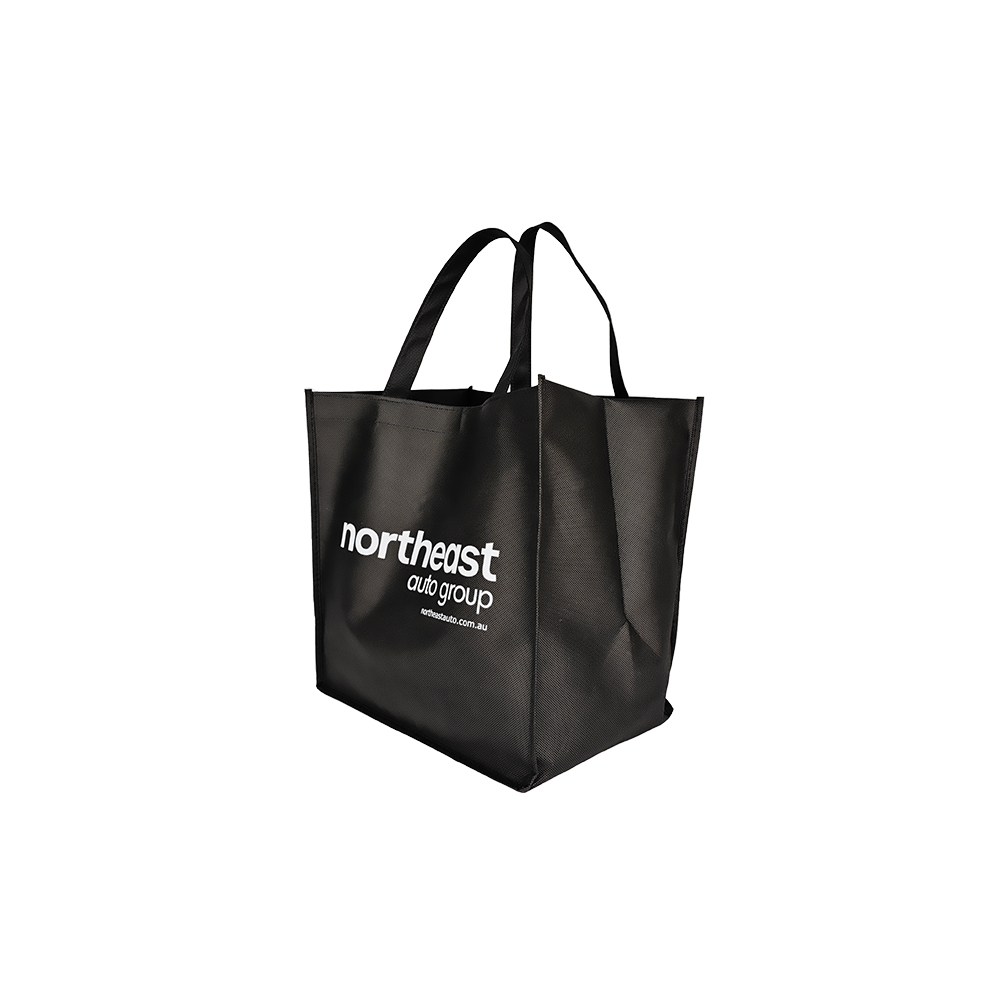
The tote shown with the kit is black non-woven polypropylene – the fine cross-hatch texture of spunbond fabric is visible straight off the photograph. It holds a boxy, gusseted shape standing upright even when empty, which tells you the panel weight keeps its structure in a stack, and two looped handles of the same material anchor into the top rim rather than being stitched on as an afterthought.
Printing sits on the front panel as a single spot-colour block, mid-height, with the side gussets deliberately blank. That placement solves a real problem for branded totes: full-bleed wraps distort around corner gussets and look sloppy in use, while a contained front-panel mark stays crisp from every viewing angle. The sample print in the photograph carries a sub-line under the wordmark – your own lockup does the same job – and it shows NWPP print taking thin type cleanly at arm’s length, the distance at which a walking customer is actually seen by everyone else on the street.
Freight-wise, a carton of totes is close to nothing: they nest flat, weigh grams, and add a logo surface to the kit without moving the shipment into the next weight bracket. For event handovers, the tote is the piece that lets the recipient carry the rest of the kit – bottle, cap, pen, blanket pouch – home in one trip, which is the difference between an item used at the event and an item left on a seat. Procurement teams who budget by cost-per-impression tend to find the tote wins the table outright: it is the lowest-cost surface in the kit, yet the one most likely to travel through a town centre on a Saturday, past hundreds of eyes that were never at your event at all. Handle length is worth settling during sample review too – the photographed looped handles clear a shoulder comfortably, and that one measurement decides whether the bag gets carried daily or abandoned at the door.
- Kit composition: blanket plus any subset of cooler bag, NWPP tote, sleeved bottle, cap, pen, paddle-tag opener
- Gingham colour pairing for the blanket and the layout of the print panel on the carry flap
- Cooler trim colours: patch thread, pocket piping, zip pulls, shoulder-strap webbing
- Bottle body colour against sleeve-band colour, and whether carabiners ship pre-attached
- Cap treatment: woven front patch versus tonal embroidery on black twill
- Pen barrel colour, chrome accent finish and imprint method along the barrel
- Tag function: plain key paddle, bottle opener, or the combined paddle shown in the photographs
- Individual poly-bagging per component and outer-carton marking to your distribution plan
Sleeved Metal Bottles: Three Finishes, One Print Band
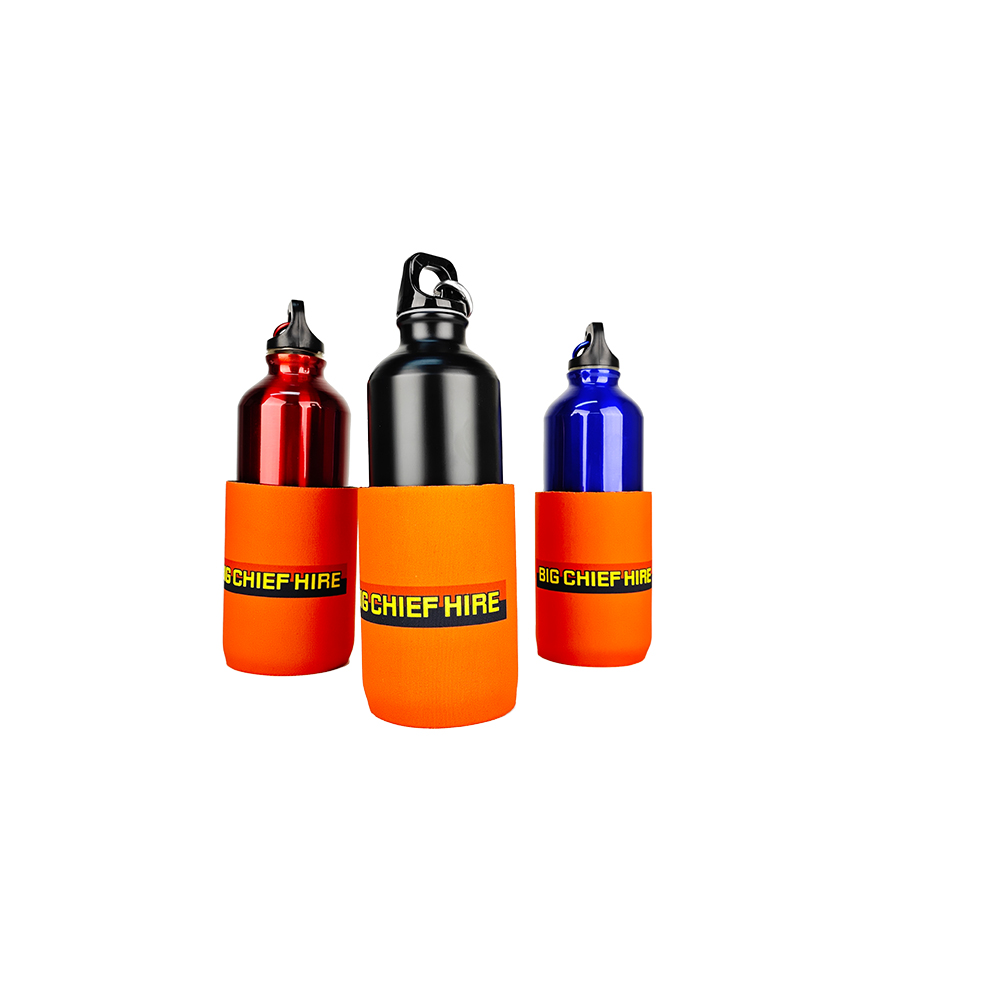
The bottle trio shows the drinkware branch in red, black and royal blue anodised metal, each under a black plastic flip-top cap with an integrated carry loop. Around the lower half of every bottle sits a bright orange foam sleeve with a black wrap band – and that band is the print surface for the wordmark, sized so the logo clears the hand grip instead of vanishing into it.
Read the carrying details straight off the photo: the centre bottle’s cap loop takes a silver carabiner, and the flanking bottles show coloured pull-ring accents on their caps. A loop-and-carabiner cap means the bottle hooks to a bag strap, a belt loop or a rack instead of rolling under a seat – which is how drinkware survives a worksite or a hire car. The sleeve adds a second job beyond print: foam buffers the metal body against dents in a boot full of tools, and it keeps cold drinks closer to cold on a hot grandstand afternoon – two small jobs that quietly extend how long the bottle stays in daily use.
Anodised bodies take the same brand-colour logic as the blanket check. Choose your bottle colourway at order stage and the sleeve band keeps the print consistent across all three finishes, so a mixed-colour kit never looks mixed-branded. Quantity planners usually treat the bottles as the reorder anchor: they wear out slowest, get taken home most often, and the sleeve band can be reprinted in a future campaign without touching the metal body’s tooling at all.
The spec sheet below is what we quote against; your quotation adds freight brackets and the per-line price for the mix you choose.
| Item | Custom picnic blanket gift set, outdoor promotional kit (line reference AG-PN999) |
| Set contents | Fold-out gingham blanket with integrated carry pouch; plus any chosen mix of cooler bag, NWPP tote, sleeved bottle, cap, pen, paddle-tag opener |
| Materials as photographed | Woven gingham textile blanket with black synthetic carry flap; charcoal polyester cooler with embroidered patch; black non-woven polypropylene tote; anodised metal bottles with foam sleeves; cotton/poly twill caps; plastic-and-metal pens; stamped steel tags |
| Colour | Slate-purple/cream check, charcoal, black, red, royal blue, orange accent band |
| Logo | Buyer-owned artwork across all seven zones, position-adjusted per surface |
| Packing | Each component poly-bagged; kits built to your spec; carton marks per your routing plan |
| MOQ | 100 pcs per design |
| Sample time | 3-5 days |
| Lead time | 7-15 days after artwork approval |
| Capacity | 1,000,000 pcs per month across our gift lines |
Pens, Caps and the Paddle Tag: Small Hardware, Same Artwork
The kit line-up runs black-barrelled pens with polished chrome clips and tips plus a thin accent band of the kit colour on each barrel, and black twill caps – two carrying a woven rectangular front patch in the sleeve colourway, one in low-contrast tonal embroidery for buyers who want the mark present but quiet. That cap pair alone explains the kit’s spread strategy: the loud patch for consumer-facing handovers, the tonal stitch for executive gifting and internal events, both cut from the same twill so a mixed order photographs as one family.
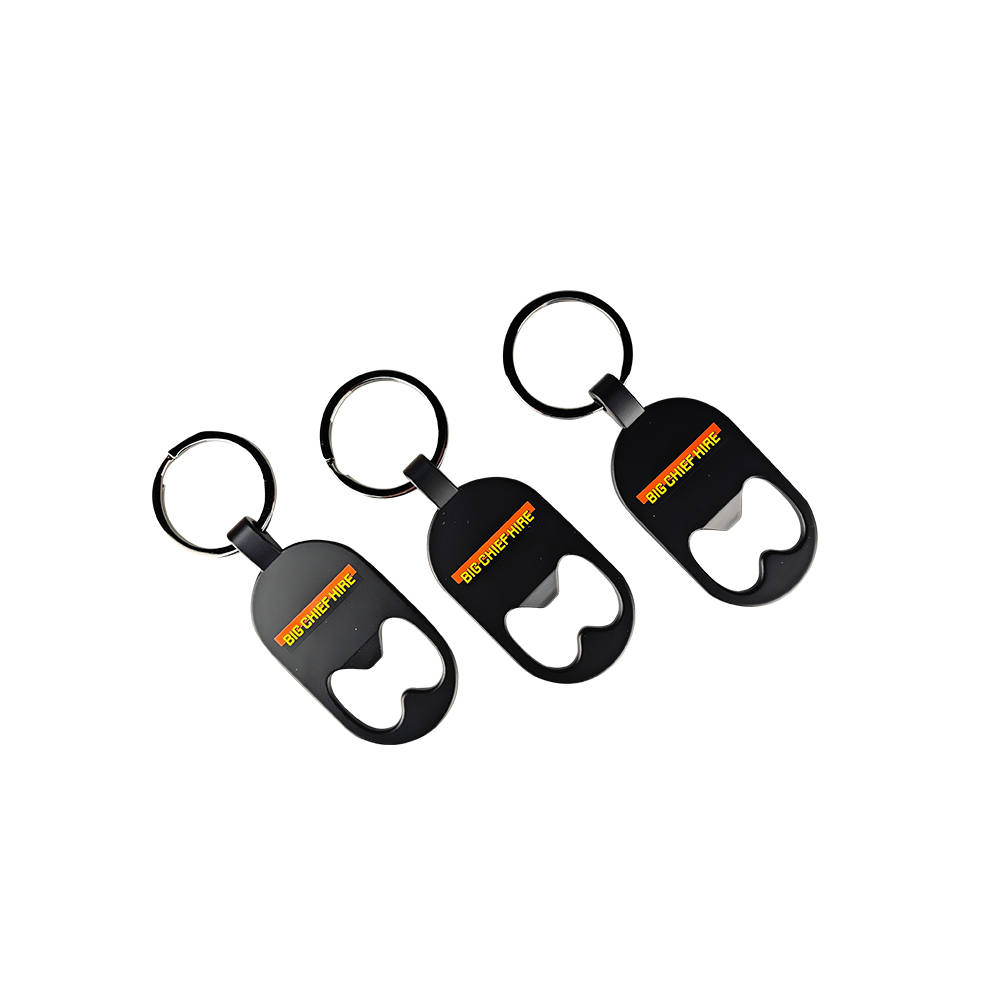
Front-row hardware closes with the key tags, and the close-up photograph confirms the tag is really two objects in one: a stamped black paddle on a bright split ring, with a cutout and a raised metal lip at the lower end that makes it a bottle opener. One die, two functions, and a flat black face that takes your artwork at miniature scale through pad print. At a trade booth, a bowl of opener tags moves from hand to hand all day, each hand a fresh view of the logo band; at a grandstand or a campsite, the same tag earns its keep on every crown cap that gets popped – a reuse rate almost no promotional object can claim. Pens fill the desk-side gap: cheap to freight, instantly useful at registration tables and warranty paperwork alike, and their barrels accept the same lockup as everything else in the set.
Each paddle ships on its ring with the band print cured, so there is no assembly step between your carton and your counter. Stack them in a bowl, bag them into kits, or pair one per bottle – the reorder reference stays the same component line, and the 100 pcs per design floor applies per line, not per placement idea. That is what keeps a seven-surface kit administratively boring, which is exactly what buyers of promotional sets want their paperwork to be – no new supplier audits, no new artwork approvals, no new shipping terms on a top-up order. The pens and tags also make sensible top-up lines between campaign waves: when event volume needs an extra few hundred units fast, ordering only the small hardware keeps the reorder inside one short production window without touching blanket or cooler quantities. Clip a tag to each rental key set and the opener travels with the vehicle for the life of the fleet cycle – a slow-burn impression that outlasts any single scheduled activation, and one that costs cents per unit at program volumes. Tag bowls sit naturally next to the pen cup at any check-in desk.
Seven Print Zones, One Master File, One Reorder Code
Carry-flap panel, cooler patch, tote face, sleeve band, cap front, pen barrel, tag face – all seven zones run from one artwork file with each position adjusted to its surface. That is the case for ordering the set instead of seven separate giveaways: one artwork submission, one colour discipline, one delivery window, one reorder reference. When marketing refreshes a contact line next season, the kit reorders as a line item, not as a scavenger hunt across suppliers, and the orange accent that ties sleeves, cap patches and pen trim to one visual thread is managed centrally, so a 500-unit top-up in month six matches the launch kit shot for shot. The displayed figure on this product anchors the 100-piece tier; volumes above it are quoted line by line on the quotation sheet.
Send the artwork file, the kit mix and your target event date. A free digital mock-up of every print zone comes back first, so colour positions are agreed before anything is cut; a pre-production sample runs in 3-5 days after that; bulk production lands 7-15 days after artwork approval. Because components sit on separate production lines, the 100 pcs per design applies per component line – a 500-blanket wave does not force 500 pens into your purchase order, and you can weight the mix by handover channel. For season launches, work backwards from the event date: production window plus transit days, then hold two spare days for artwork tweaks. That buffer has rescued more launch dates than express freight ever did, and it costs nothing but a calendar entry. Rental fleets in the southern hemisphere order against summer holiday calendars; dealerships against year-end clearance weekends; either way, the date that starts the clock is your sign-off, not your enquiry.
Packing, Freight and Marketplace Prep
Folded blankets ship stowed in their own pouch so the printed flap faces the carton lid; soft components nest around drinkware rather than under it; metal pieces get individual sleeves before the kit is bagged. FBA labelling and prep are available when your programme sells through marketplaces instead of only through counters and events. Freight moves by sea, air, DHL, UPS, FedEx or TNT, and the lane is set at quotation stage against your weight profile and deadline – blanket kits are bulky-light, so mixed cartons usually rate better than single-item pallets. If you split shipments across a year, we flag per-line reorder dates against production capacity of 1,000,000 pcs per month across our gift lines, so a top-up never queues behind another client’s launch.

Does the picnic blanket need a separate carry case?
Can we buy just the blanket and the tote from the set?
Does the 100 pcs per design MOQ apply per kit or per component?
Which print methods cover the different surfaces in this kit?
Is there a water-resistant layer under the gingham face?
What triggers the 7-15 day production clock?
More Gift-Set Configurations From the Same Programme
If the outdoor kit is one branch of your giveaway tree, the sibling builds cover the others: custom corporate welcome gift sets for HR onboarding boxes, custom wellness promotional gift sets for clinic and gym outreach, custom branded merchandise sets for single-colour enterprise rollouts, and custom election campaign gift sets for ballot-season volunteer packs. A umbrella and electric fan gift set covers hot-weather events with the same one-file print discipline. Browse the wider gift sets category or send artwork straight through the request-for-quote page.
Get the Blanket Kit Mocked Up for Your Next Outdoor Wave
Send artwork and your event calendar to [email protected], or ring / WhatsApp +86-15967739086. You get a free digital mock-up across all seven zones, a 3-5 day sample, and 7-15 days of production after approval – one file, one delivery window, one reorder code for the whole kit.