Custom Corporate Welcome Gift Sets | Day-One Kit
Custom corporate welcome gift sets with logo, built as a day-one box for new starters: a printed lanyard with swivel clasp, a webbing key strap on a carabiner, a stamped steel bottle-opener tag, click pens in mixed barrel colours, PU hardcover notebooks in seven cover colours, black non-woven totes, printed cards and booklets, a clear zip pouch and matte drinkware – every print zone generated from one artwork master file. MOQ 100 pcs per design, free digital mock-up, samples in 3-5 days, production 7-15 days after artwork approval, 1,000,000 pcs per month capacity across our gift lines. Order against intake dates instead of event dates: pre-assembled kits per starter, bulk components for local assembly, or single-unit dropship boxing for remote hires. Send your artwork master and start schedule to [email protected] or +86-15967739086.
The Day-One Box: Custom Corporate Welcome Gift Sets With Your Logo
A new starter’s first week decides how loudly a company culture whispers. Custom corporate welcome gift sets with logo are the loud version: one box, opened on day one, containing the lanyard, key strap, pens, notebook, tumbler and bag that this person will physically carry for the next two years. The commercial argument for building that box as a set is not sentiment – it is file discipline. Every print zone on every component is generated from one artwork master, so the badge strap and the tote face carry identical weight, identical colour management and identical positioning rules, and the whole box reorders as a single line item when headcount grows.
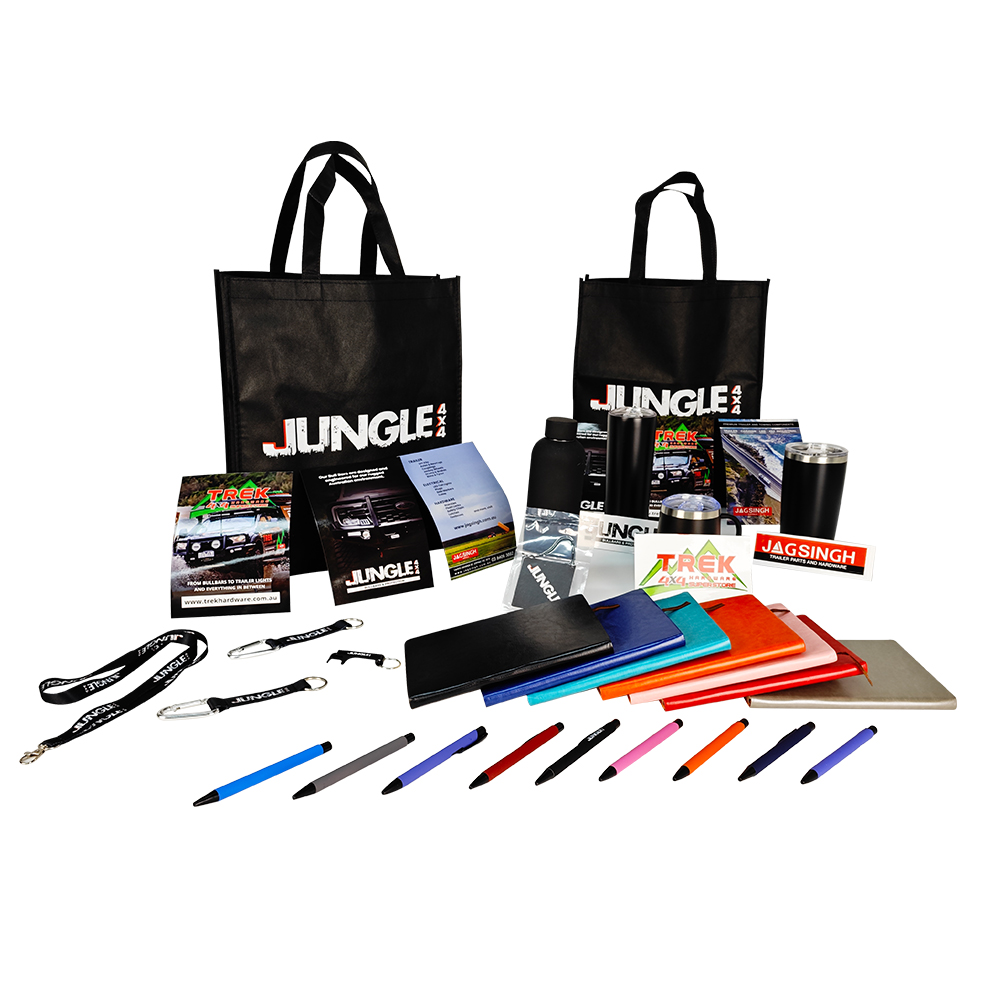
The spread photographed on this page shows the method working across a mixed catalogue: two black non-woven totes, printed cards and folded booklets, a clear zip pouch, matte black drinkware, a fanned row of seven hardcover notebooks and nine pens in assorted barrel colours – all sharing one identity. Below we walk each component family you can drop into the box, starting with the one that is worn before it is ever used: the lanyard.
Worn Before It Is Used: The Printed Lanyard Zone
Order logic before the walkthrough: the welcome box is easiest to control when one owner – people ops or the site manager – holds the artwork master and nobody else releases variants. Every component below accepts the same lockup files, and the spec decisions that follow (repeat pitch, hardware fittings, colour mixes) are all settled once, at sample stage. That single owner, single file, single reference pattern is what keeps a growing headcount from turning the welcome programme into twenty disconnected reorders with twenty print versions floating around the office.
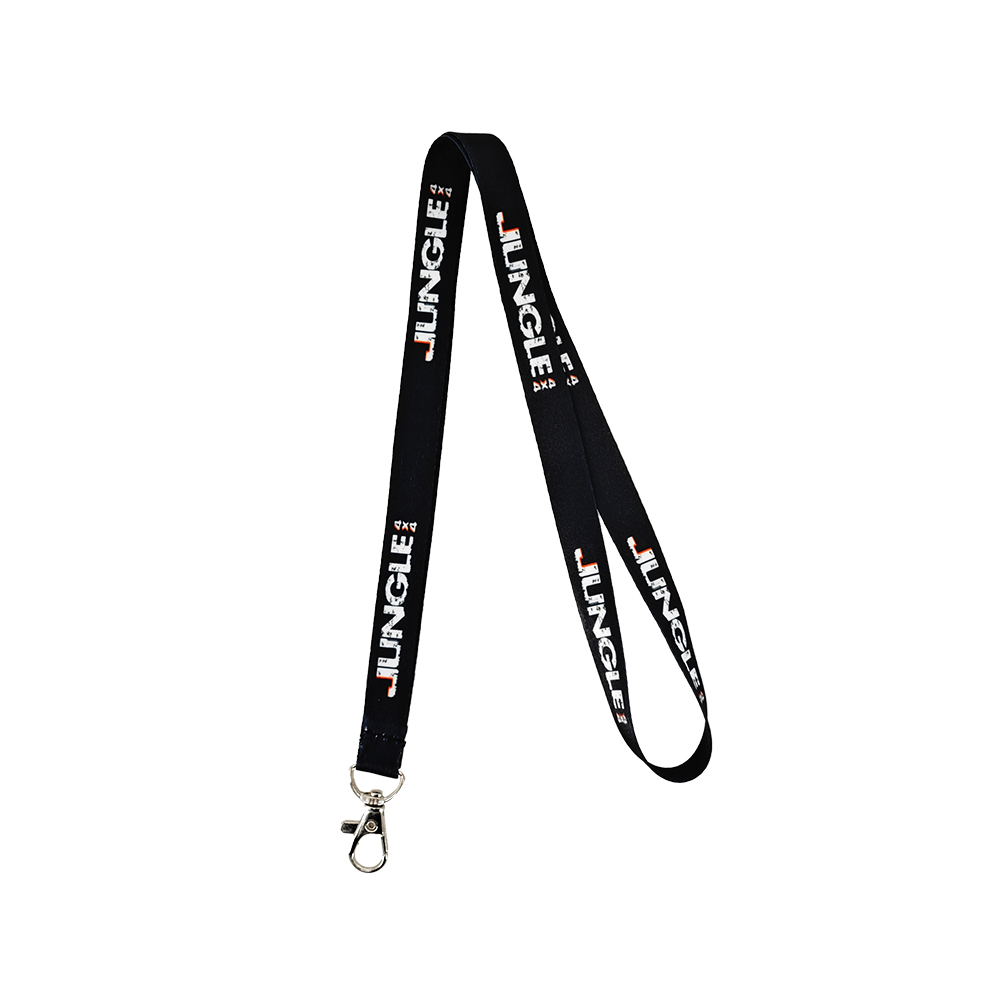
The lanyard is the first item a new starter puts on – badge in, out to the floor, back to the desk – which makes it the highest-impression component in the welcome box. The photographed strap is a black woven polyester webbing, roughly 15-20 mm flat width, with a repeating wordmark print running down its full length in white with a single contrasting accent letter, so the lockup reads correctly from any hanging angle no matter how the strap twists. Print goes into the fibre rather than sitting on it, which is why jacquard-and-sublimation straps survive dishwasher-duty wear: lanyards are the component that gets soaked, knotted and thrown in a bag daily, and a woven-then-printed strap outlasts a printed-then-hemmed one by campaign years rather than months.
Hardware is the other decision worth locking at spec stage. The photographed end shows a polished lobster swivel snap-hook crimped to the strap with a folded metal tab – the swivel keeps the badge facing outward after a day of turning, and the crimped fold resists pull-out far better than stitched attachments. At quotation you choose the second-end fitting too: a badge card sleeve for office staff, a J-hook for trades kits, or a removable snap for shared visitor straps. Because the lanyard print repeats along the full loop, your wordmark faces the room twice per conversation – a small geometry fact that makes lanyards the cheapest billboard in the box, and the reason facilities teams reorder them ahead of everything else when a brand refresh lands.
Budget people should also note the lanyard’s break-even: printed webbing costs cents per unit at programme volume, and unlike a mug or a bag it is worn inside your own building every working day of the employee’s tenure. When buyers ask which welcome component earns the highest impressions-per-dollar, the honest answer is the strap, because its audience is not one recipient at one event but every colleague and visitor who reads a badge at head height for two years. That is also the reason we recommend ordering lanyards at the full annual intake number even if other lines quarter down – the webbing tooling and repeat artwork stay live for the whole contract year, so top-ups come off the same approved film without a fresh mock-up cycle or a new sample request.
Keys and Kickers: The Webbing Strap and the Opener
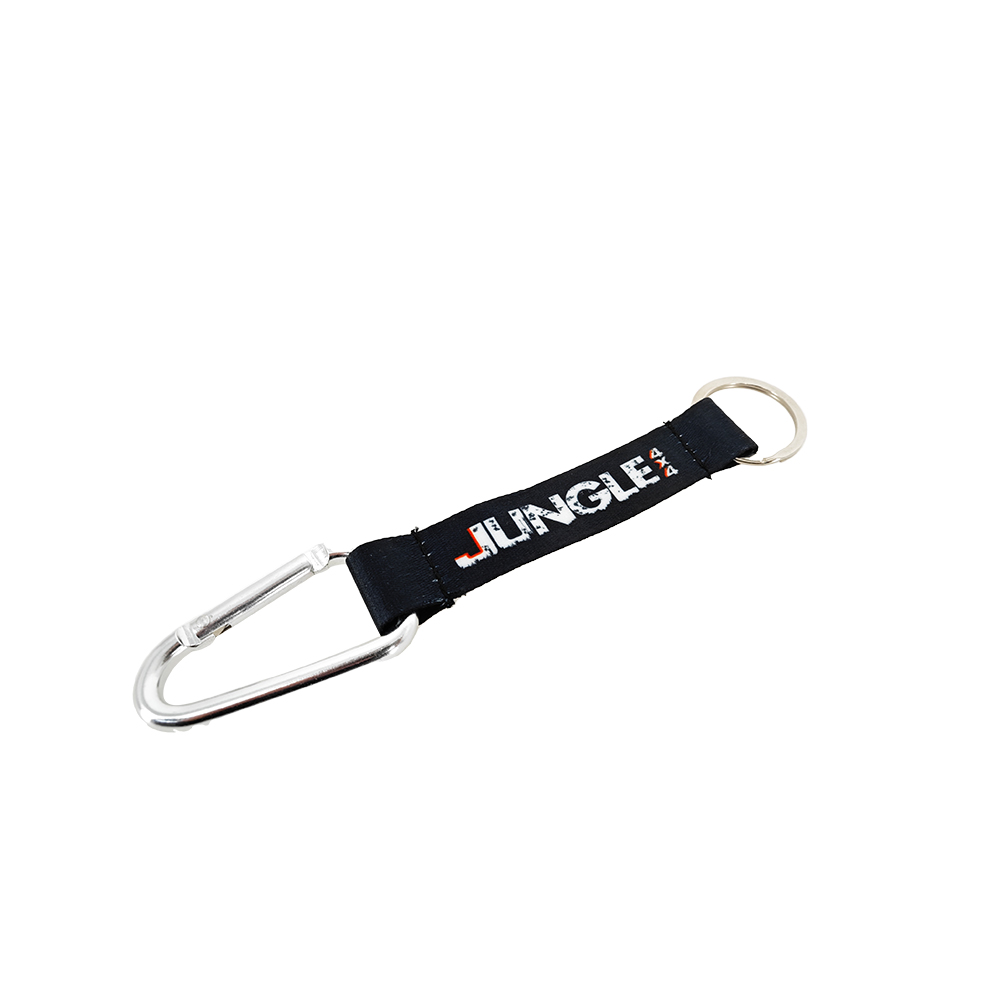
The second strap in the set does a different job. The photographed key strap is a short length of the same black woven webbing, ends folded and stitched, running between a polished spring-gate carabiner at one side and a split ring at the other. That configuration solves real onboarding problems: the carabiner clips the vehicle or office key to a belt loop or bag so the fob stops walking off, and the stitched loops mean the printed centre panel always faces outward on a rack. When you issue keys to a starter – flat, forklift, office door – the strap makes the keyring itself part of the identity system instead of a loose piece of hardware, and the printed centre panel keeps the whole bunch legible.
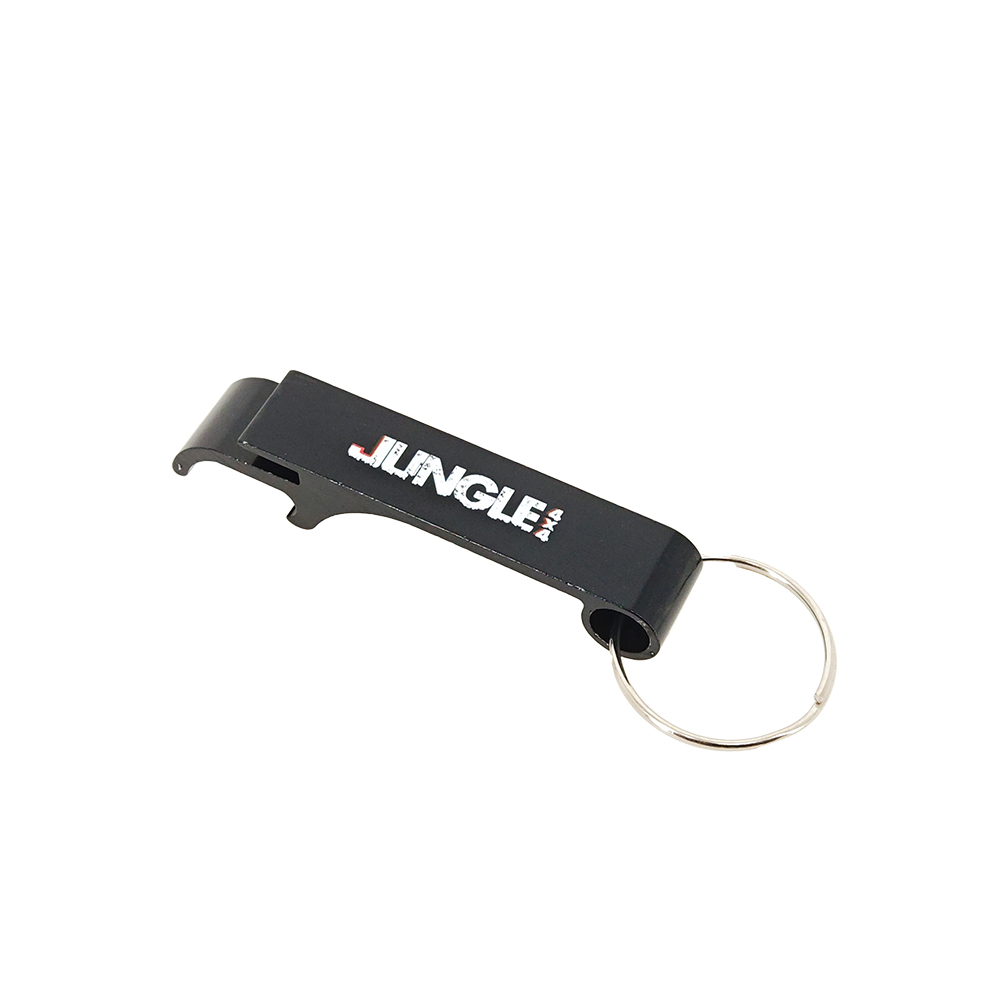
The opener is the set’s joke that keeps working. One piece of flat stamped steel, black-coated, bent at one end into a smooth pry hook with a small cap-catch notch beside it, rolled into an eyelet at the other, and hung on a bright split ring. No moving parts, nothing to break, and a full flat top face sized for a lengthwise wordmark that stays legible after a boot full of tools. Team-event culture being what it is, this component has the highest observed reuse rate of any small item in the box: a Friday-barbecue or site-trailer context means the badge strap and opener see daily service while the notebook is still on the desk, and every one of those uses puts your mark in a hand and a photograph. Order both the strap and the opener on shared webbing and coating colours and the two key hardware pieces look like one family when the starter loads up their kit.
For facilities teams the strap carries a second, quieter benefit: issued keys stop migrating. A carabiner-clipped key lives on a belt or a bag rather than in a shared drawer, which is the difference between a clean asset register and an audit that finds half the forklift keys loose. That operational argument – fewer replacement keys cut, fewer access reviews chased – tends to win internal budget approvals faster than any branding argument, and it is why key hardware is one of the first lines to sell through when a welcome programme runs continuously across intakes. If your site issues both door fobs and vehicle keys, order the strap with a longer webbing centre panel: the extra millimetres keep the two print zones clear of each other when a starter hangs six keys on one ring, which is the difference between a readable rack of straps and an unreadable clatter of metal.
What the Starter Writes With: Pens, Notebooks and Desk Surfaces
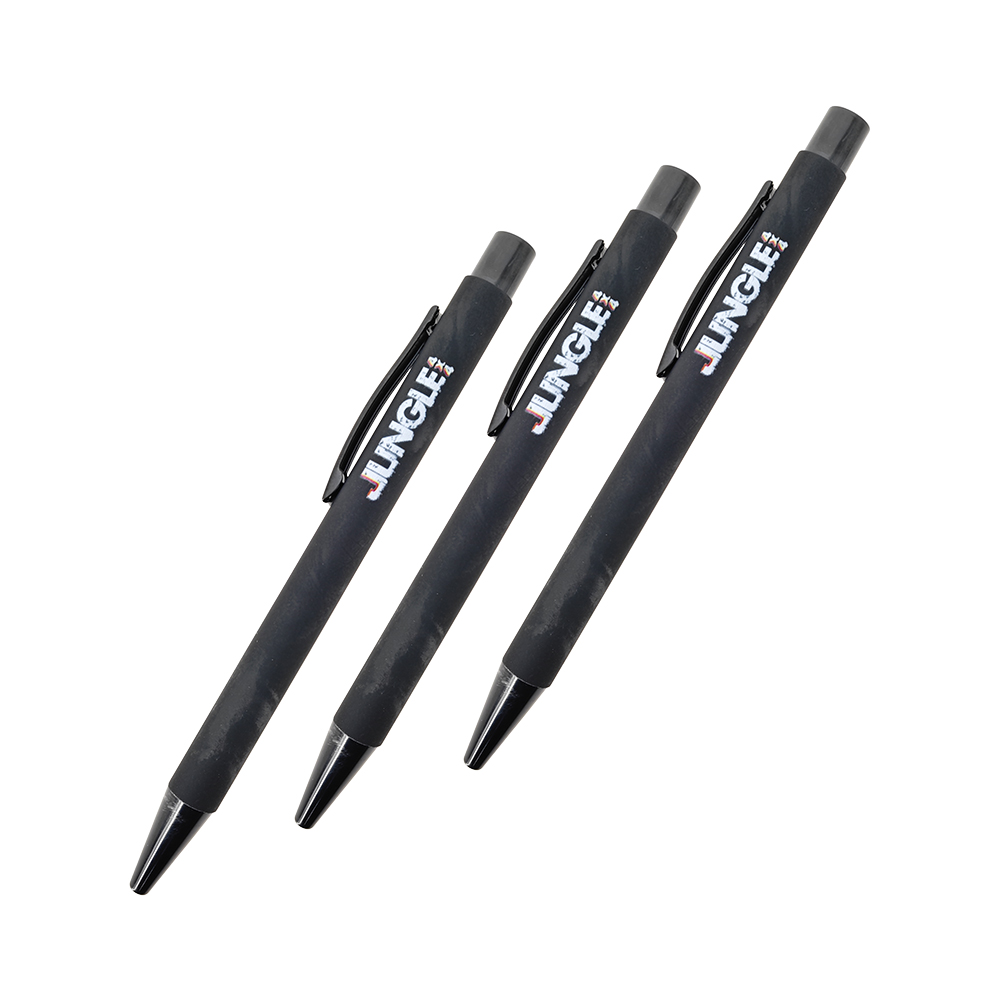
The pen trio in the photographs is deliberately plain: click-action barrels in a dark marbled moulded plastic, glossy black clips, push-buttons and cone tips, and one logo line printed along the upper barrel in the axis of the pen. That axis orientation matters more than buyers expect – the print runs lengthwise so it reads correctly the moment someone holds the pen to write, not rotated when the pen is in use. The featured spread shows the barrel-colour option range: nine pens in a row – blue, grey, violet, red, black, pink, orange and navy – over the same chrome-accented hardware, which is exactly how a pen line should present choices. Mixing barrel colours inside one welcome order does not multiply your minimums: colour is a pick at line level, print artwork stays the single master file.
The notebook fan in the same spread carries seven hardcover covers – black, royal blue, teal, orange, light pink, red and champagne gold – each a matte PU-grain wrap with an elastic closure band and a logo zone centred on the front. Pick cover colours against your palette at sample stage; the print method adapts to the textured surface during mock-up. For onboarding specifically, notebooks are the item that survives the job: lanyards get cut off, totes get repurposed, but the first-week notebook keeps meeting notes for years, and its cover keeps your mark at every desk shot on the company’s own social feed. Pair pen and notebook as the writing sub-kit, and the box has a component for every meeting a starter will attend in month one. The elastic band keeps the notebook shut in a packed bag, which sounds trivial until a starter’s first week ends with a satchel of loose documents and no place to write.
One procurement habit pays off with pens especially: order the barrel colour mix in one run rather than three separate orders. A single job keeps the print registration identical across every colourway – the same artwork plate, the same shift, the same ink batch – so a starter holding a violet barrel and their manager holding black see the exact same print quality. Split orders risk subtle ink and registration drift that buyers notice even when they cannot name it, and they burn three mock-up approvals where one would have done. The clear zip pouch and the tag card in the photographs are the two paper-adjacent pieces that make the box feel authored rather than assembled, and they cost the least per unit of anything on the spec sheet – keep them in every variant you ship.
Paper Touches: Hang Tags, Cards and the Clear Pouch
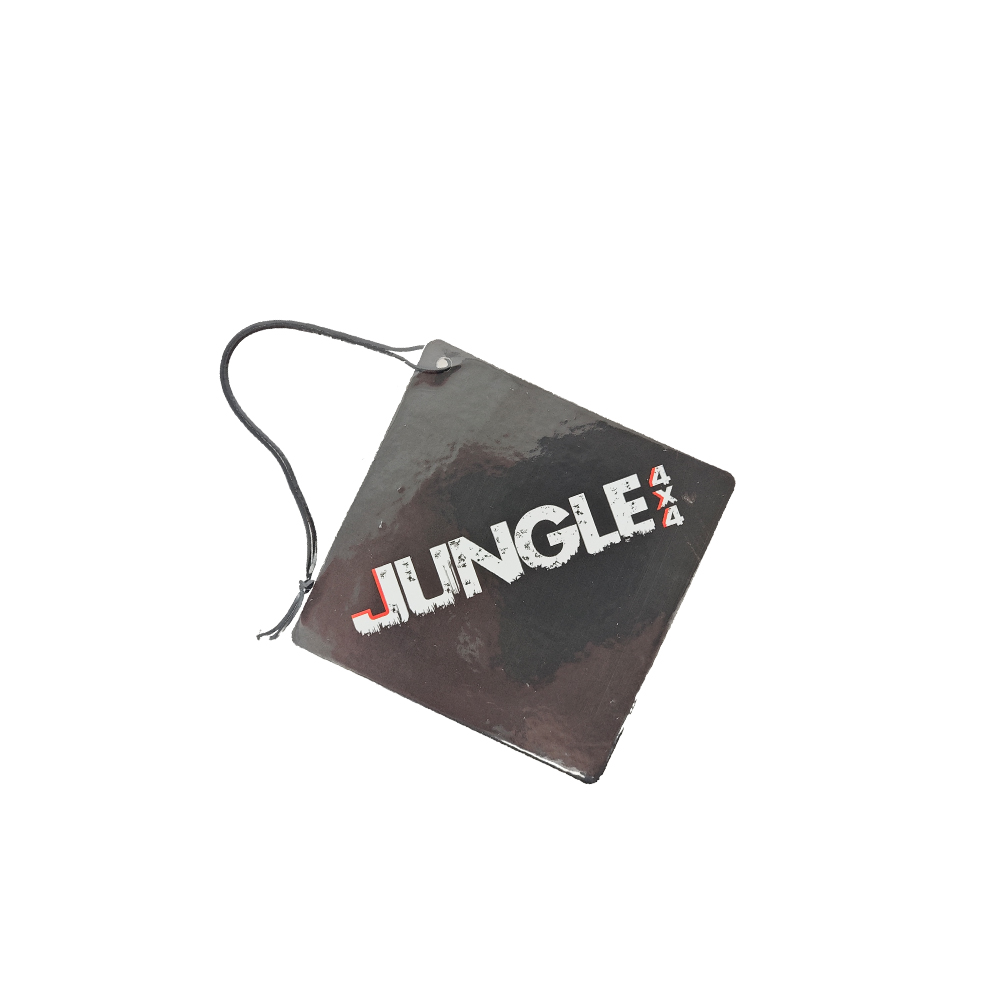
The tag photographed for this set is a square printed card on a weathered dark stock, finished with a metal-reinforced eyelet and a black cord loop for hanging. In a welcome box its job is functional first: it is the item you staple or string the kit’s contents list to, the card a starter reads while unpacking, the surface that says what the box is for in their own language. That is why we treat tag stock, weight and eyelet colour as spec decisions rather than defaults – a tag that folds on the first read does its message no favours. The featured spread extends the paper family into printed cards, folded booklets and flyers: policy summaries, site maps, welcome letters, all printed to the same colour profile as the textile components, so the box arrives looking authored rather than assembled. The clear zip pouch photographed among them is the tidy answer for documents and spare badges: printed directly onto transparent film, contents visible, edges sealed, and nothing softening in a rainy commute.
What You Can Specify on This Welcome Set
- Box composition: lanyard, key strap, opener, pens, notebooks, totes, drinkware, paper goods – add or drop line by line
- Lanyard webbing colour, repeat-print pitch, and second-end fitting: badge sleeve, J-hook or snap
- Key-strap length, stitching colour, and carabiner gate style
- Pen barrel colour mix within one order, chrome or matte hardware, print axis orientation
- Notebook cover colour from the photographed fan, band colour, and page-rule options
- Tote panel print size, gusset kept blank or printed, handle length
- Tag stock weight, eyelet finish, and cord colour; pouch film tint and seal style
- Boxing: pre-assembled welcome kits per starter, or components packed in bulk by line
| Item | Custom corporate welcome gift set, onboarding day-one kit (line reference AG-WK1004) |
| Set contents | Lanyard, webbing key strap, stamped opener, pens, notebooks, NWPP totes, printed cards/booklets, clear zip pouch, matte drinkware – assembled to your checklist |
| Materials as photographed | Woven polyester lanyard and strap webbing with metal clasps; stamped coated steel opener; plastic-and-chrome click pens; PU hardcover notebooks with elastic bands; non-woven polypropylene totes; coated card tags; transparent laminated pouch; coated metal tumbler bodies |
| Colour | Black base with spot-colour print as photographed; notebook and pen colourways per the featured spread |
| Logo | Your file drives every component; artwork is scaled per print window, not per product |
| Packing | Per-starter kits boxed complete, or components cartonned by line for local assembly |
| MOQ | 100 pcs per design |
| Sample time | 3-5 days |
| Lead time | 7-15 days after artwork approval |
| Capacity | 1,000,000 pcs per month across our gift lines |
Ordering Against a Start Date Instead of an Event
Welcome sets have a different calendar from trade-show swag: the deadline is a person’s first Monday. Send us your intake schedule and the artwork master; a free digital mock-up covers every zone before anything runs, a pre-production sample follows in 3-5 days, and bulk production lands 7-15 days after artwork approval. The displayed figure on this product anchors the 100-piece tier – because onboarding volume is rarely 100 per week, plan the order as a quarter of intake plus a buffer, and keep the remainder on the same line reference so a mid-quarter rush reuses the approved file rather than restarting the clock. Mixed starts – three new engineers and one marketing hire – still count as one design as long as every zone runs that same artwork.
Two calendar habits protect intake classes: freeze your artwork master before the sample request, not after, because a late logo edit resets the mock-up-to-approval loop; and build one spare carton per class – a lanyard snaps, a pen vanishes into a site trailer, and nothing deflates a first week like an unfinished welcome box. It also helps to separate the two approval signatures most companies mix: whoever signs the artwork should not be the same person who signs the delivery date, because a single approver under time pressure will accept off-position print rather than restart a clock.
Freight planning for distributed teams deserves its own line in the project file, too. If starters are spread across three regions, ship one consolidated production run to your largest site with a labelled component carton per sub-office, rather than running three separate international orders against three sample cycles. The artwork file, colour profile and line references stay identical across offices, and your landing costs stay in the sea-freight bracket instead of the courier one.
Packing, Freight and Multi-Site Distribution
Components arrive individually poly-bagged; pre-assembled kits ship boxed per starter with the tag card visible on top, or carton by component line if your people team prefers local assembly. FBA labelling and prep are available for resold add-on packs, and single-unit dropship boxing works for remote starters – the strap, opener and pens fit an envelope carton, which keeps per-head freight sane for distributed teams. Freight moves by sea, air, DHL, UPS, FedEx or TNT against your start dates, and split shipments across a hiring year are scheduled against production capacity of 1,000,000 pcs per month across our gift lines.

Can a welcome set be assembled differently per new hire?
How many pens, notebooks or lanyards count as one design?
Does the MOQ apply if we only need 40 kits this quarter?
Which surfaces in this set hold fine print legibly?
Can we include printed policy booklets with the kit?
What happens to the kit when the brand refreshes?
Related Gift-Set Builds From the Same Catalogue
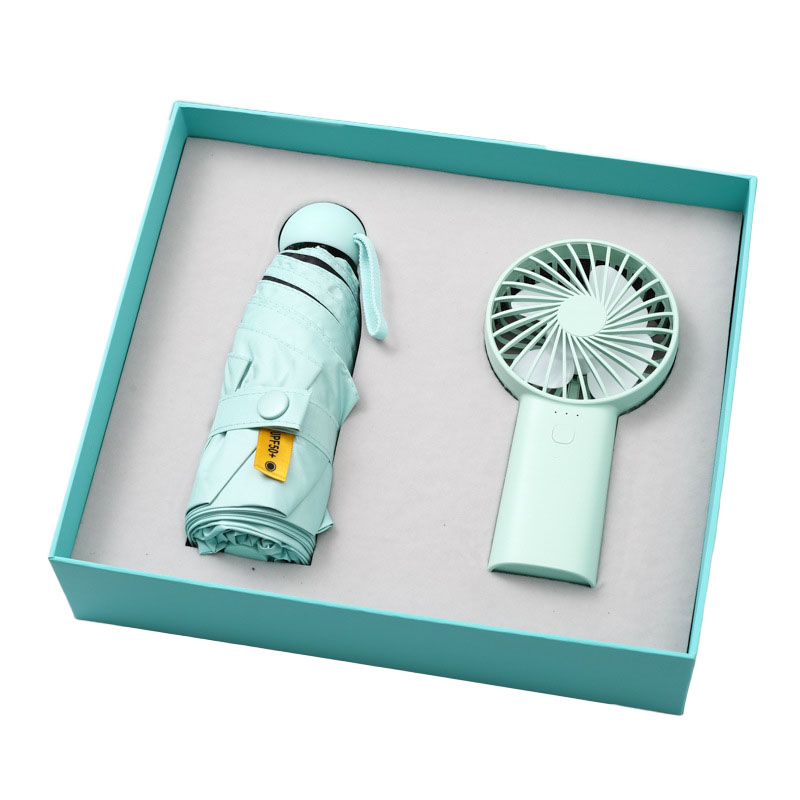
The welcome box is one programme intent among several on this site: outdoor handover kits live in the custom picnic blanket gift set, health-sector colour palettes in custom wellness promotional gift sets, company-wide single-colour rollouts in custom branded merchandise sets, and ballot-season packs in custom election campaign gift sets. The umbrella and electric fan gift set handles summer field kits; component electronic specifications are quoted exactly on request. Browse all gift sets or send the checklist through the request-for-quote page.
Box the Next Intake Class Properly
Send your artwork master and the next start dates to [email protected], or ring / WhatsApp +86-15967739086. Free digital mock-up across every zone, 3-5 day sample, 7-15 days production after artwork approval – one artwork file, one start date, one code to reorder from when headcount grows.