Custom University Promotional Gift Sets
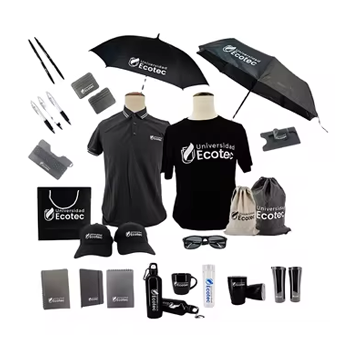
Run bookstore apparel, orientation kits, donor presentation boxes and athletics gifting off one signed artwork file with custom university promotional gift sets built for higher-ed programmes. The photographed line puts a single two-line wordmark on opened stick umbrellas, a polo and tee, six-panel caps in both embroidered and printed finishes, canvas drawstring pouches, a rope-handle paper bag, a glossy carabiner sports bottle, mugs, tumblers and elastic-closure notebooks — every item sharing one emblem, one colour standard, one clear-space rule. Each decorated style holds a 100 pcs per design floor that reorders on its own, samples run 3-5 days, production completes 7-15 days after artwork approval, and FBA prep covers the alumni-association storefront. The displayed price anchors the 100-piece tier; your quotation lists every component separately.
Custom University Promotional Gift Sets That Keep One Mark On Everything
Campus merchandise dies when the wordmark drifts — a bookstore cap in one shade of navy, a laptop sticker in another, a mug from a third supplier where the crest has been resized to fit. Custom university promotional gift sets solve that by putting apparel, hardgoods, drinkware and stationery through one artwork approval: the same emblem, the same two-line wordmark, the same clear-space rules, applied across every item a student, donor or visitor can carry off campus. The programme photographed on this page shows exactly that pattern: two opened umbrellas, a polo and tee on torso forms, caps, pouches, a rope-handle paper bag, a sport bottle, a mug, tumblers, notebooks and pens, all sharing one lockup in white. Whoever commissioned that demo run supplied the wordmark — it is sample artwork, not ours, and every zone it sits on is yours at production.
The commercial logic is procurement-simple. Bookstore-retail items, orientation welcome kits, donor gala boxes and athletics gifting normally route through separate vendors with separate minimums. On our line, one design holds a 100 pcs per design floor per item, size and mix run per your order sheet, and the displayed price anchors the 100-piece tier so budget planning starts from a real number rather than a guess. Samples take 3-5 days, production 7-15 days after artwork approval, and capacity across our gift lines — 1,000,000 pcs per month — means a five-thousand-unit intake programme never queues behind a novelty reorder.
The Weathered Truth Of Umbrella Merch
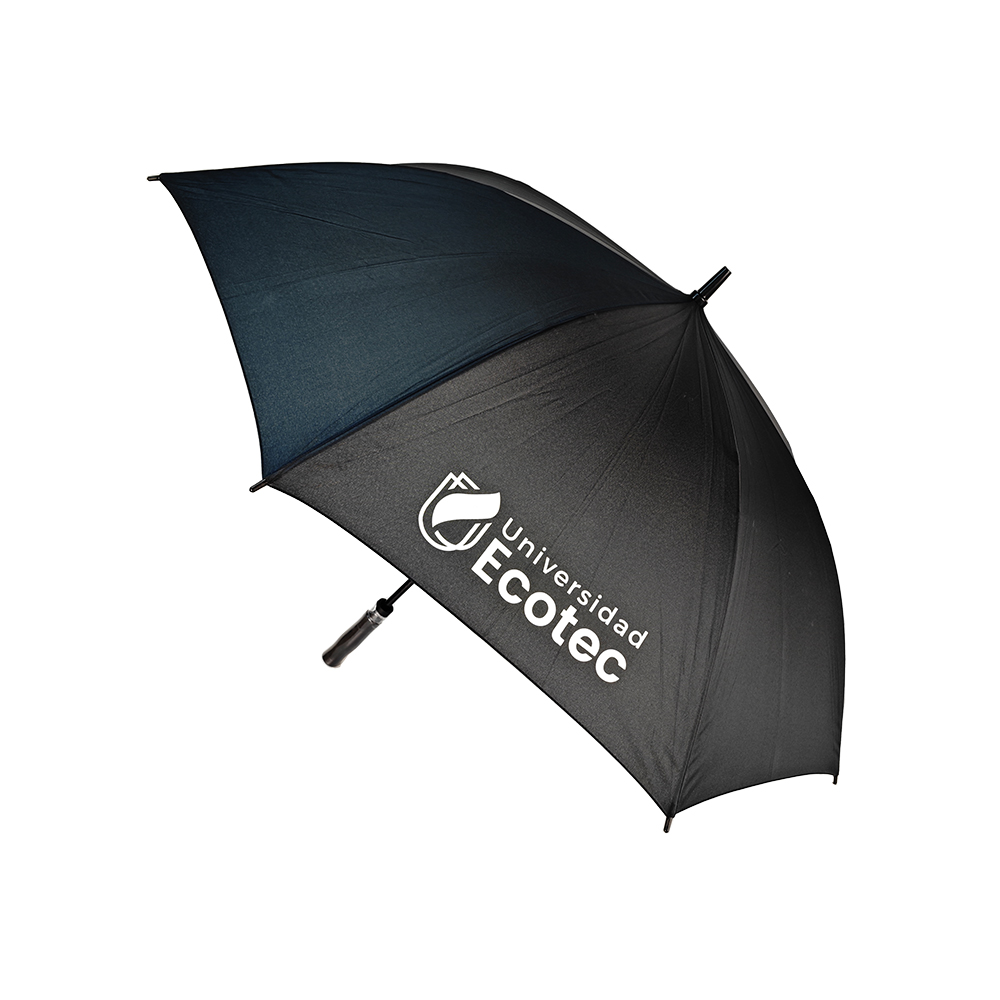
A stick umbrella is the single most-abandoned object on any campus and the single most-picked-up one when it rains — which makes it a perfect wordmark carrier, and a brutal quality test. The photographed canopy is a full dome of matte black water-repellent weave over metal ribs, a rigid rod shaft with a sliding runner, and a glossy molded grip. The print field sits mid-panel: a shield emblem beside two lines of text, sized to stay legible when the dome is only partly open and the umbrella is hooked over a backpack strap. Screen printing on pongee-type fabric takes white ink cleanly; the sample lockup in the image demonstrates placement at panel centre, where ribs do not break the letterforms.
For higher-ed programmes we typically quote two umbrella paths. The stick model shown here suits donor events and office gifting — it is the version people keep by the door. Compact folders suit bookstore retail because students pack them, and both formats can share one print plate set if your artwork clears the size range. Because canopies are printed before assembly, order quantities that span both formats in one colour still hold a single colour approval, and nothing drifts between the two product families mid-semester.
Rain and shine also stress the ink in different ways — UV fade from courtyard sun, abrasion where the folded canopy rubs its own panel. That is why we fix the print method with you at mock-up stage rather than defaulting every item to the same process, and why replacement batches pulled from a stored file are colour-checked against the original signed reference, not against whatever is currently on shelf.
Frame the umbrella quantity question the way bookstore buyers actually meet it: stock-outs are seasonal and predictable. A September intake of three thousand students with a rainy transfer week will clear a printed umbrella bin in days, while February sells none. The sane pattern is a sea-freight volume fill in late spring for the autumn gate, held in your own store room rather than ours, because carrying cost sits better with a four-month-old carton of weather gear than a six-week-old one arriving mid-campaign. When you need a small emergency top-up against a scheduled event — an outdoor commencement you cannot move — the air and express lanes exist for exactly that, on the same artwork and the same rib-count, so the emergency batch is not visually distinguishable from the planned one. Opened-canopy photographs like the one above also matter to your merchandising team: the dome print is the only angle where a campus umbrella advertises, so store displays should show it open, and we pack ribs and runners to survive being displayed that way on a peg rather than collapsed in a bin.
Notebooks As The Academic Workhorse
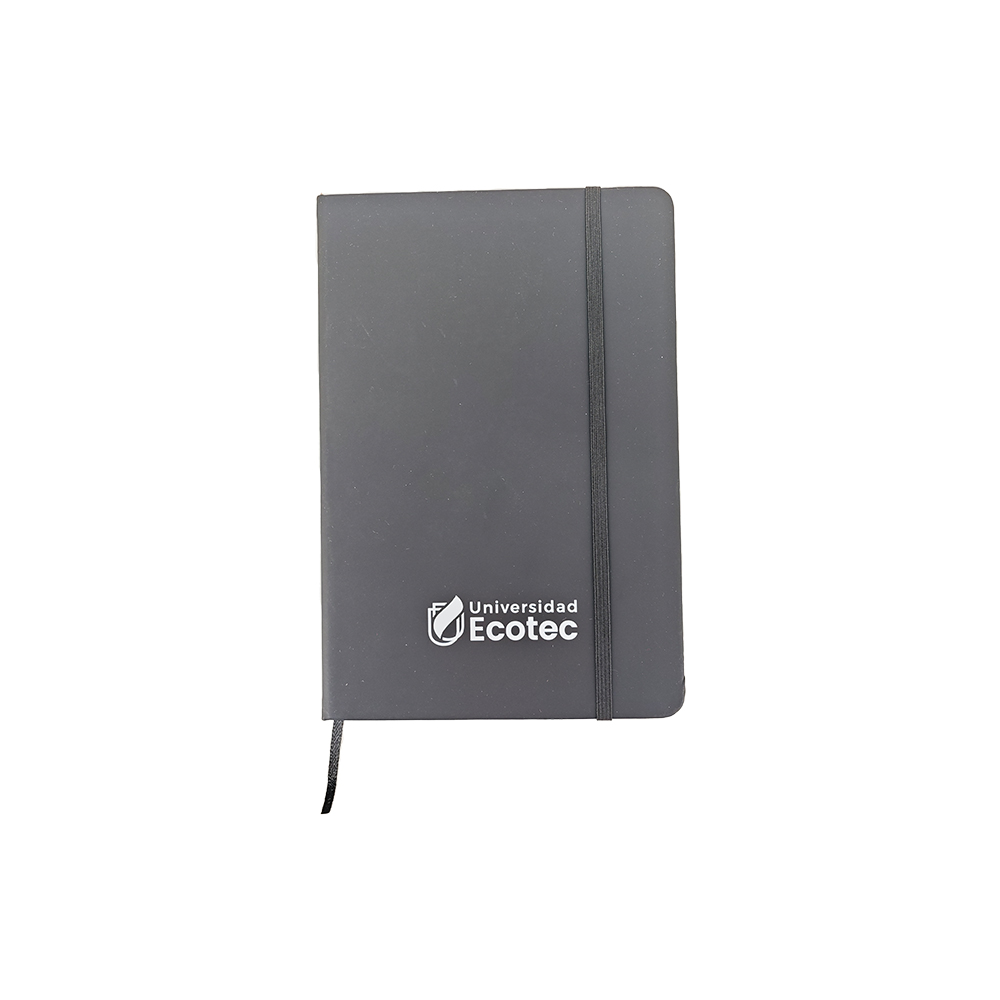
Nothing sells through a campus store like a hardcover notebook, and nothing gets compared more ruthlessly by faculty. The photographed journal is a charcoal grey PU-leatherette book with fine pebbled grain, rounded corners on the opening side, a ribbed vertical elastic closure running down the right third, and a dark woven bookmark ribbon emerging from the bound block. The white lockup sits low-centre on the cover, deliberately placed to the left of the band so the elastic never crosses the lettering — a small design decision that separates merchandise that still reads crisp in February from merchandise whose wordmark is bisected by a stretched band after one term. Cover size follows the store rather than the catalogue: A5 sells as gift, B5 sells as syllabus supply, and both run from the same plate when artwork is vector-based.
Internally, this format runs on ruled cream stock with a header line for numbering and dating pages — the plain academic configuration. For orientation kits, alumni chapters frequently ask us to print a first-spread insert: academic calendar, library map, chapter contact card. It costs paper and one extra bind pass, and it turns a commodity notebook into the one item in the dorm that carries the institution’s own content daily. Colours beyond the photographed charcoal and black run to your brand standard; the cover grain, band colour and ribbon colour are held tonal so a two-tone campus palette stays coherent across the whole stationery line.
Two formats of this book serve two channels. The plain charcoal cover with the low-centre wordmark is the retail unit — the one a student buys at the till and recognises next term on someone else’s desk. The boxed presentation version, paired with a pen in a fitted tray like the hotel programme’s grey colourway, is the ceremony unit: graduation gifts from departments, new-faculty welcome packs, visiting-lecture keepsakes. Same cover tooling, two packing lines, one artwork file. If your store runs both, order them in the same production window and the leatherette batch matches roll to roll, which is the difference between a family of products and two coincidences.
Bulk notebook orders also solve a budget problem administrators recognise: a departmental supply of plain branded journals at the 100-piece floor per run is cheap enough to treat as office consumable rather than gift. Registrar offices, deans’ suites and conference hosting desks reorder the same charcoal book quarterly, and the stored artwork file means quarter six looks exactly like quarter one. The elastic band and ribbon combination matters there too — a band that over-stretches after a semester of use looks like a discount giveaway, so we specify band gauge against your sample approval before any volume run, not after. When your file includes both the bookstore retail version and the office-consumable version, the retail unit carries the full crest and the office unit a simplified one-line mark from the same signed sheet, keeping a visible family between them without doubling plate costs.
Headwear And Apparel: Two Decoration Methods, One Silhouette
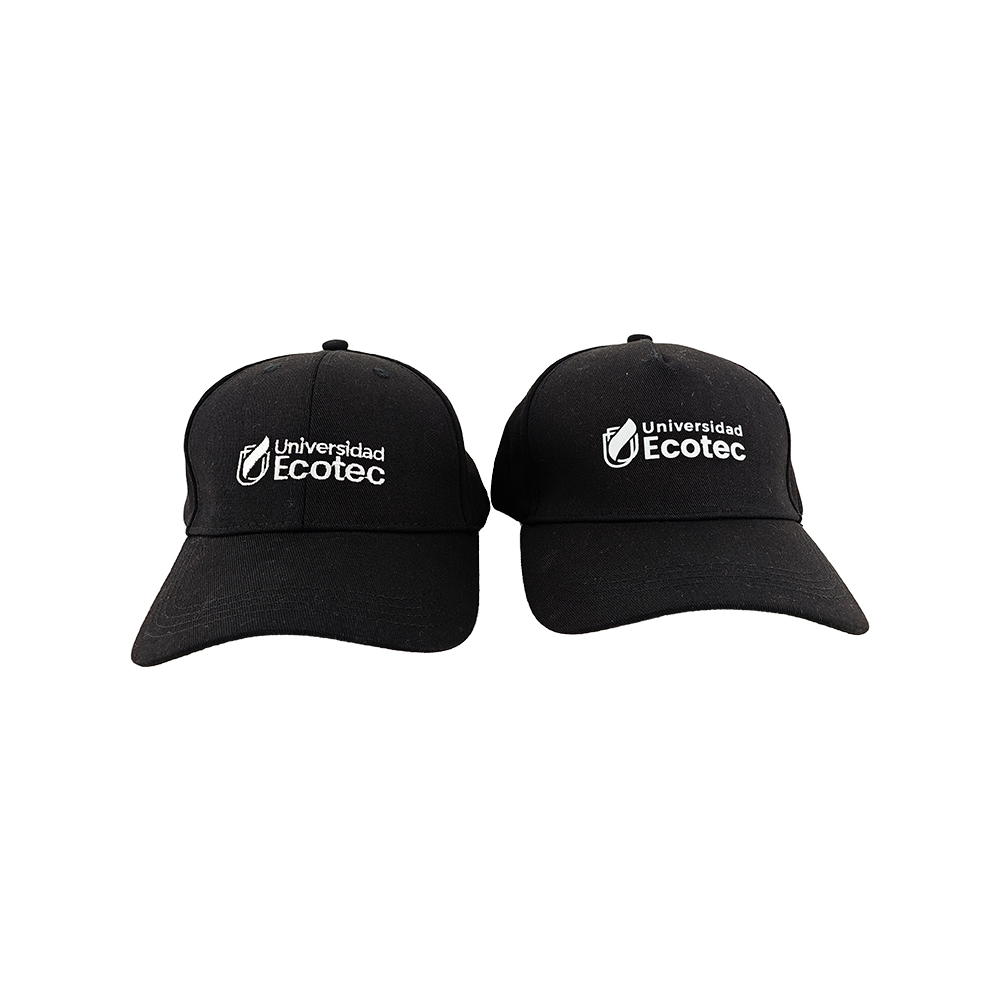
The cap pair in this image is the clearest technical demo on the page: two identical black six-panel twill caps, fabric-covered button, stitched eyelets, low unstructured crown, pre-curved multi-row stitched brim — decorated two different ways with the same lockup. The left cap’s mark sits raised and textured, consistent with embroidery; the right cap’s mark sits flat and bright, consistent with print. Same artwork file, two price points, two feels. Bookstore margins usually buy the printed version in volume; donor and staff gifting buys the embroidered version in smaller runs; both share one crown profile so the programme never looks like two different hats wearing one name.
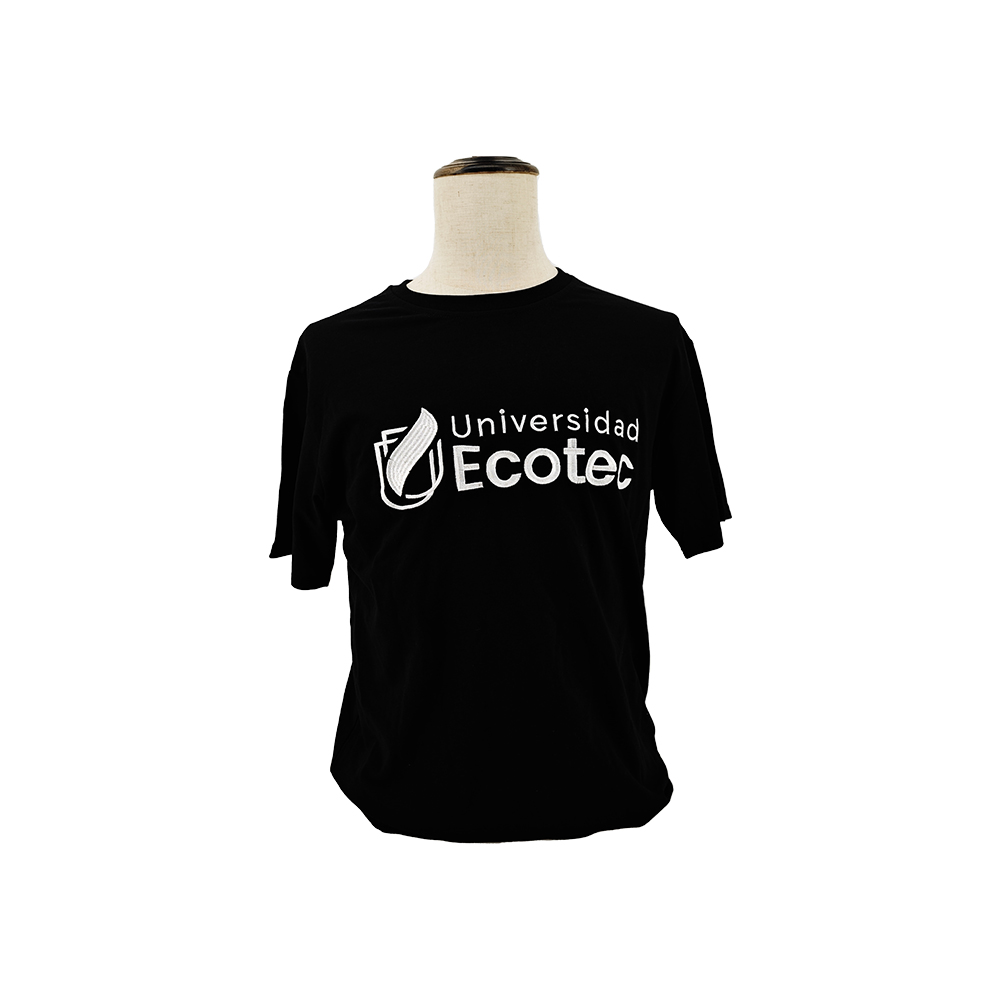
The tee photographed on a cream fabric torso form runs the same lesson at a larger canvas: a black crew-neck jersey with the white emblem-and-wordmark across the chest, the print showing slight texture on the knit. The polo format in the opening collage takes the same lockup at left-chest scale. For apparel programmes we ask one question first — is the wordmark the design, or does the design carry the wordmark? — because a chest-block tee and a left-chest polo from one file serve retail and gifting respectively, and getting both from one artwork approval is the difference between a merch programme and a pile of products. Size sets, blank colour substitutions and youth cuts for school-affiliated programmes are quoted per style; size breakdowns ride the 100-piece design floor per style, not per size.
Bookstore buyers frequently ask a reasonable question: is the printed cap inferior to the embroidered one? On a six-panel twill crown of this profile, no — the flat print holds its edges through a semester of being shoved into a backpack, and at retail margins it is the version that stays in stock. The embroidered piece costs more in thread and stabiliser and reads heavier in a hand; it is the gift-box choice for staff recognition and donor welcome bags. Neither claim needs testing on your shelf: sample both from one file in the same 3-5 day window and let the merchandising committee choose per audience. When your programme orders the printed version, the artwork’s clear-space margins transfer directly from the embroidery digitising sheet, so the mark on the flat cap sits at the same coordinates as the mark on the stitched one — the two methods become interchangeable in an order mix without a visible seam on the display rack.
Garment construction notes worth deciding before volume: collar rib weight on tees, because a thin neckband waves after three dorm-laundry cycles and a dorm-laundried tee is the shelf standard your students will judge against. Stitch-density on embroidered caps, because a dense block reads premium on a rack but prints stiff in a photograph on the store site. Sleeve length tolerance on polos when you order a mixed size run, since institutional buyers split small/medium/large unevenly and a re-bleed order six weeks later must match the first drop’s silhouette exactly. Every one of those sits inside the sample-approval step — a 3-5 day window whose entire purpose is that a merchandising director can hold the physical object before three thousand units inherit its quirks. Institutions with a licensed-mark office often want our mock-up sheet routed to that office as part of the same approval; we supply it as a clean composite per item for exactly that review cycle.
Drinkware That Travels To Other Campuses
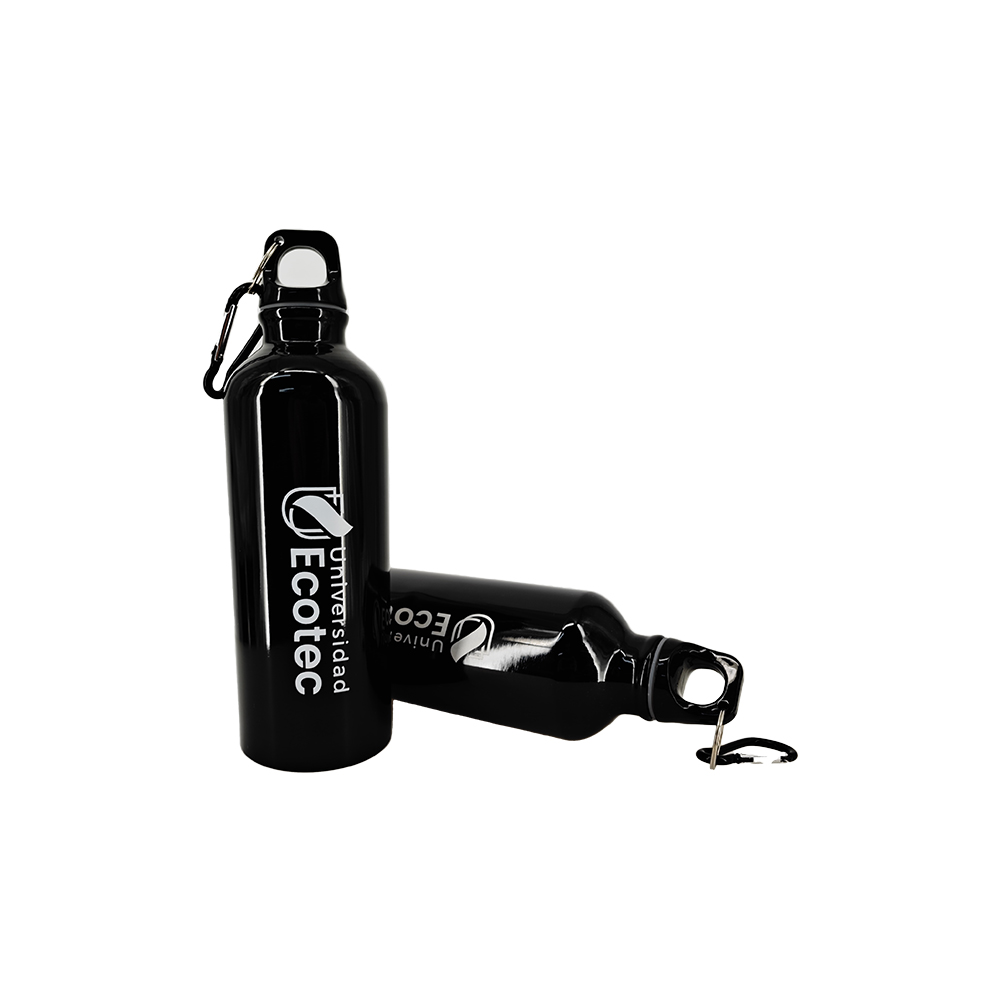
The bottle pair demonstrates the highest-return item in any university programme: a high-gloss black aluminium-look sports bottle in the classic cycle shape, screw cap with an integral triangular carry loop, each loop shown clipped with a carabiner. The single-colour white lockup — shield mark plus two-line wordmark — prints straight down the barrel on the upright bottle and appears inverted on the lying one, which tells you where the wrap seam is and how the artwork must be keyed for the rotary unit. Gloss surfaces take single-colour print with sharp edges; if your standard calls for a metallic or multi-colour crest on this barrel, that shifts the method and the quote, and we would flag it before your spring reorder, not after.
Drinkware is what leaves campus. It turns up in gyms, libraries and airports in other cities, quietly advertising the institution to exactly the demographic admissions cares about. The collage also shows ceramic mugs and matte tumblers in the same lockup for office and departmental gifting — the desk-side counterpart to the sports bottle — so one programme can cover the stadium suite and the faculty lounge without two artwork files. Capacity figures for bottle and tumbler lines are quoted exactly in your specification sheet rather than guessed from photographs, and carabiner hardware on the loop caps is matched to the metal finish standard set for the rest of the programme, so clip and crest never read as separate purchases.
Soft Goods, Bags And The Carrying Ecosystem
Around the hardgoods, the photographed programme runs a soft-goods layer that makes merch daily rather than occasional: canvas drawstring pouches in natural undyed and dyed grey, cinch-top with the wordmark screen-printed centre-face; a black card-stock paper bag with white rope handles for gift-shop checkout; a crossbody-style zippered bag; sunglasses in matte black frames. The pouch line is the workhorse — cheap to print, impossible to lose, used for everything from lanyard giveaways to intramural kit — and because natural canvas and dyed grey both accept white ink cleanly, one print plate can serve two colourways in the same production window.
The grey soft-touch accessories in the collage round out the carry set. We deliberately keep their description short here: function varies by configuration, and we would rather quote your exact component list than let a photograph imply a feature. Whatever the final mix, the rule on this page holds: one lockup, one clear-space spec, one colour approval across every surface, textile or hardgood.
What You Can Specify On This Programme
- Wordmark and emblem: single colour (white shown), metallic, or your full crest reproduced from vector artwork
- Umbrella: stick format as photographed or compact folder; canopy colours to institutional standard; panel print centred between ribs
- Notebook: cover grain and colour, elastic and ribbon in tonal or accent colour, low-centre or corner print, optional printed insert spread
- Caps: printed or embroidered front panel from one file; crown profile and brim stitch held identical between methods
- Apparel: tee chest-block and polo left-chest scales from one artwork; blank colours substituted per season without re-approval of position
- Drinkware: glossy or matte body finishes; single-colour wrap keyed to the print seam; carabiner or strap options on loop-cap bottles
- Soft goods: canvas pouches in natural or dyed; rope-handle and ribbon-handle bag faces; print position identical across all faces
- Colour governance: one Pantone set signed at artwork stage; hardware and trim matched to it across component lines
Reference Specifications
| Item | University / campus promotional gift set — apparel, headwear, drinkware, stationery, umbrellas, bags and accessories |
| Set contents | Configured per programme; the photographed line covers umbrellas, polo, tee, caps, pouches, paper bag, sport bottle, mug, tumblers and notebooks |
| Materials | Water-repellent canopy weave; PU-leatherette covers; cotton-blend jersey and piqué; coated aluminium-look bottles; canvas; coated paper bags |
| Colour | Black and charcoal core as photographed; institutional colourways and print inks to Pantone reference on file |
| Logo | Screen print, embroidery, pad print, transfer; single-position standard, extra positions quoted per item |
| Packing | Retail-ready hang or poly options, gift box for presentation sets, export master cartons per your routing sheet |
| MOQ | 100 pcs per design |
| Sample time | 3-5 days |
| Lead time | 7-15 days after artwork approval |
| Capacity | 1,000,000 pcs per month across our gift lines |
Fitting A Merch Calendar: Orientation, Homecoming, Graduation
Higher-ed buying is calendar-locked, and a programme that misses orientation does not get a make-up window until next August. Plan in reverse from the gate date. Drop artwork files eight to ten weeks ahead: first comes the digital mock-up — free, and rendered across every item on your list so the bookstore manager, the athletics office and the advancement team approve the same sheet. Samples then run 3-5 days for standard photographed items. After artwork approval, production takes 7-15 days, and freight mode decides what calendar you actually hit: sea for the annual retail fill, air for a homecoming restock, DHL, UPS, FedEx or TNT for committee samples and executive pieces.
Mid-year reorders are where the 100 pcs per design floor earns its keep: each item reorders alone, so slow tees never force you to rebuy fast caps. Keep the signed file on our record and a reorder is a part number, not a project. For institutions running multiple campuses or faculty crests alongside the primary mark, we freeze the shared wordmark treatment once and let each unit order only its own descriptor line — same plates, separate quantities.
Packing For Bookstore Shelves And Online Fulfilment
Retail merch has a different packing physics than gifting. Hang-tagged tees and capped poly-bagged bottle sets ship in carton quantities matched to your shelf planograms; gift-boxed notebook sets ride with corner protection; caps ship stacked with tissue between crowns so the brim curve survives the container. Every carton is marked with item code, colour and size split per your routing sheet so receiving at a campus store is a scan, not a sort. For programmes whose online storefront matters — alumni associations shipping donor packs from a warehouse instead of a campus stockroom — we pick, pack and label to FBA requirements from the production line, keeping retail and gifting inventory in one replenishment rhythm. The image below shows the packing stage reference before store-specific labelling is applied.

Questions Campus Purchasing Offices Ask
Do we have to buy the whole collage as one set?
Is the wordmark printed on your photos a school you are working with?
Can embroidery and printing use the same logo file without redrawing?
How do size runs work for tees and caps inside the 100-piece minimum?
We reorder part of the line every semester. Does the colour drift?
What price shows on this product page, and how do quantity breaks work?
Compare These Before Locking The Programme
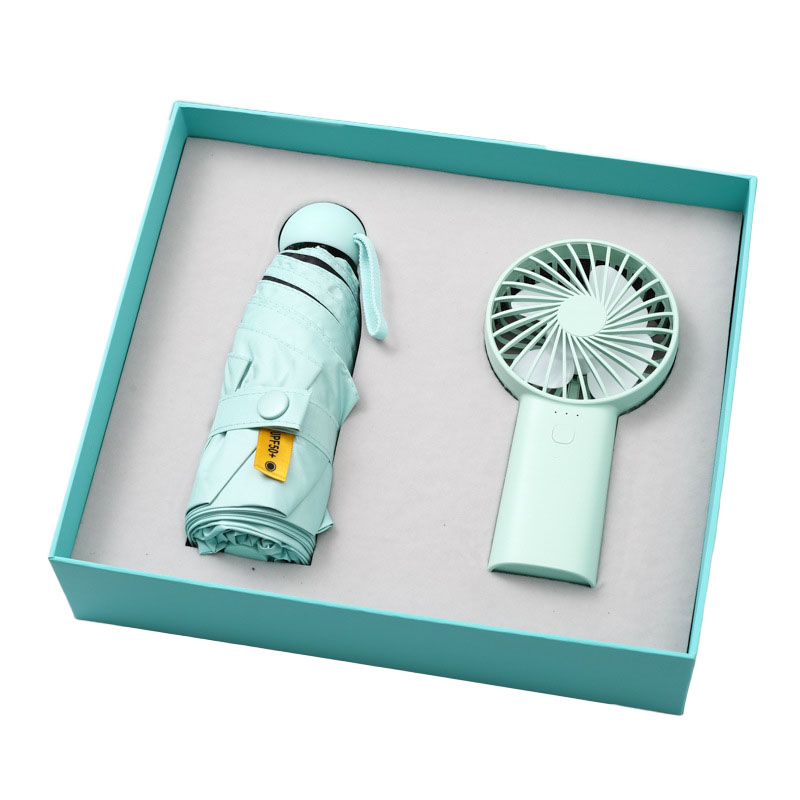
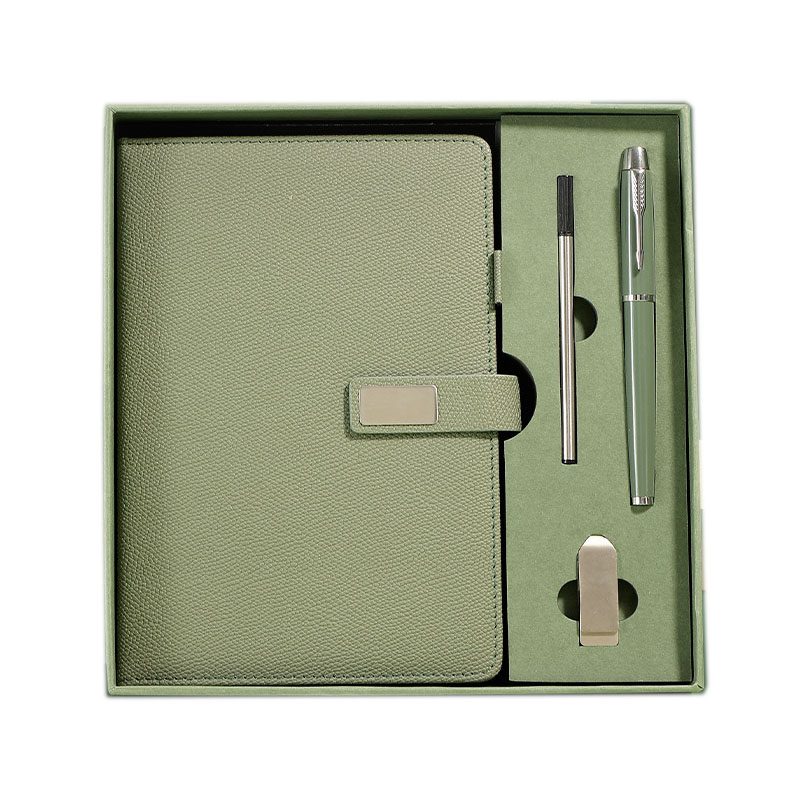
Most campus buyers end up weighing three page types. The gift sets category shows the full boxed-programme range, and the box-packed shelf covers rigid-box configurations used for donor and gala presentation sets. If your athletics or facilities side wants weather gear as a standalone rather than inside a programme, the umbrella and electric fan gift sets page pairs canopy with handheld cooling in one box. The executive stationery angle — journal, pen and metal USB in a fitted tray — is on the notebook, pen and flash drive sets page, the drinkware-lead desk trio on the tumbler, notebook and pen set, the seasonal desk gift on the mug and warmer box, and the hospitality welcome-kit logic on the hotel welcome gift sets page — useful precedent if your guest house or conference centre buys the same mark.
Start A Campus Programme File
Send the wordmark vector, the component shortlist and your gate date — orientation, homecoming, commencement — and the sales desk returns tiered quantities, a free digital mock-up across every surface, and a production window that respects the academic calendar. Direct contact: +86-15967739086, [email protected], or the quote request form on site. The form below reaches the same desk.