Custom Pastel Blue Boutique Paper Bag With Gold Rope Handles
$1.00
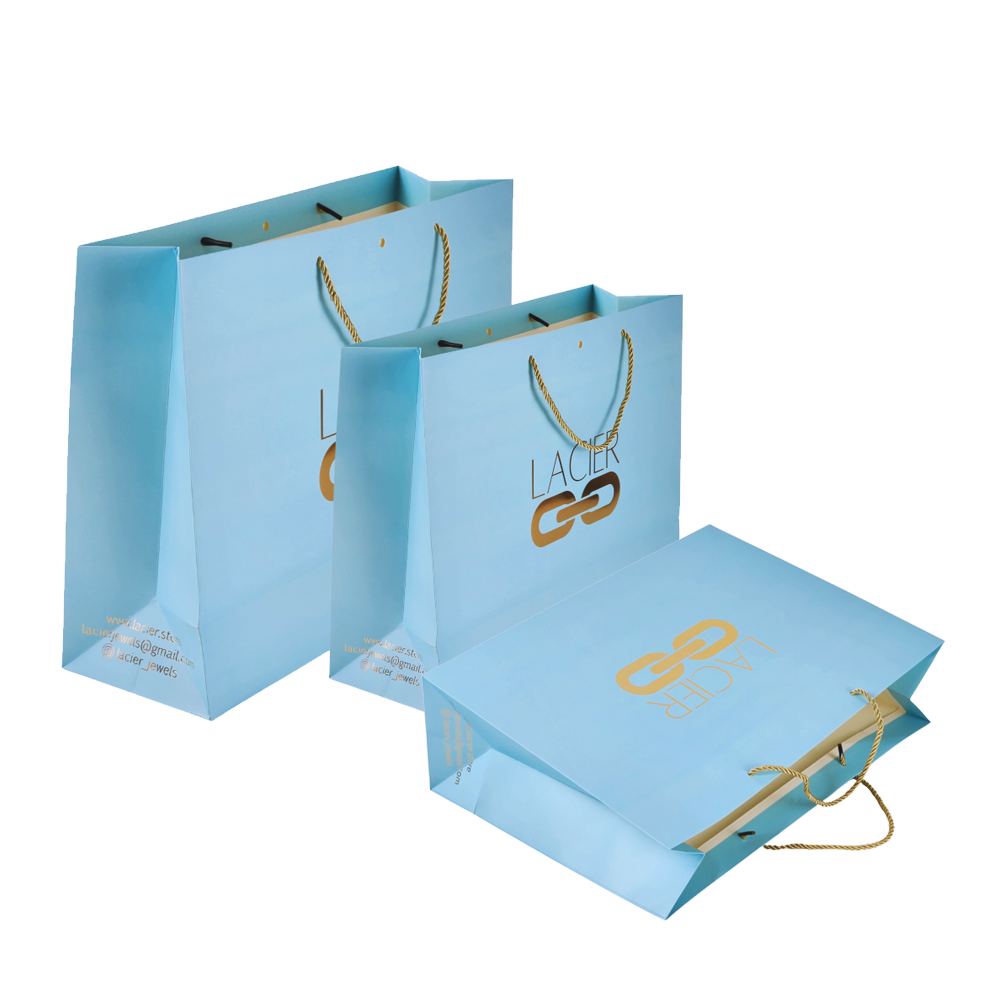
A pastel baby-blue boutique shopping bag with gold twisted rope set in punched eyelets, a hot-foil emblem on the front panel and a cream two-tone printed interior that flashes when the bag opens. Made for fashion, beauty, jewellery and gift retail where the carry-to-the-door moment is part of the brand.
Minimum: 100 pcs per design — two colourways, two lines, one shared size die
Fast path: digital mock-up at no charge, physical proof in 3-5 days, bulk production in 7-15 days after artwork approval
Customisable: PMS-matched body colour, 250 gsm ivory board standard (kraft and specialty on request), foil emblem, spot UV or embossed accents, lamination in matt or gloss, gusset text block, custom dieline
Delivered: assembled at 100 pcs per sleeve, export cartons by sea, air or courier (DHL / UPS / FedEx / TNT); FBA prep supported
The price shown is a reference figure at the 100-piece tier; send your spec for exact unit rates.
What the Counter Moment Has to Carry
A boutique bag does its real work in the ninety seconds after checkout: the customer lifts it off the counter, turns toward the door, and for that stretch the bag is the most visible thing about your store. This construction is built for exactly that window — a pastel baby-blue body with a soft matte cast, gold twisted rope standing up from punched eyelets, a small hot-foil emblem catching light at chest height, and a pale kraft-cream inner wall that flashes the moment the bag is set down and opened.
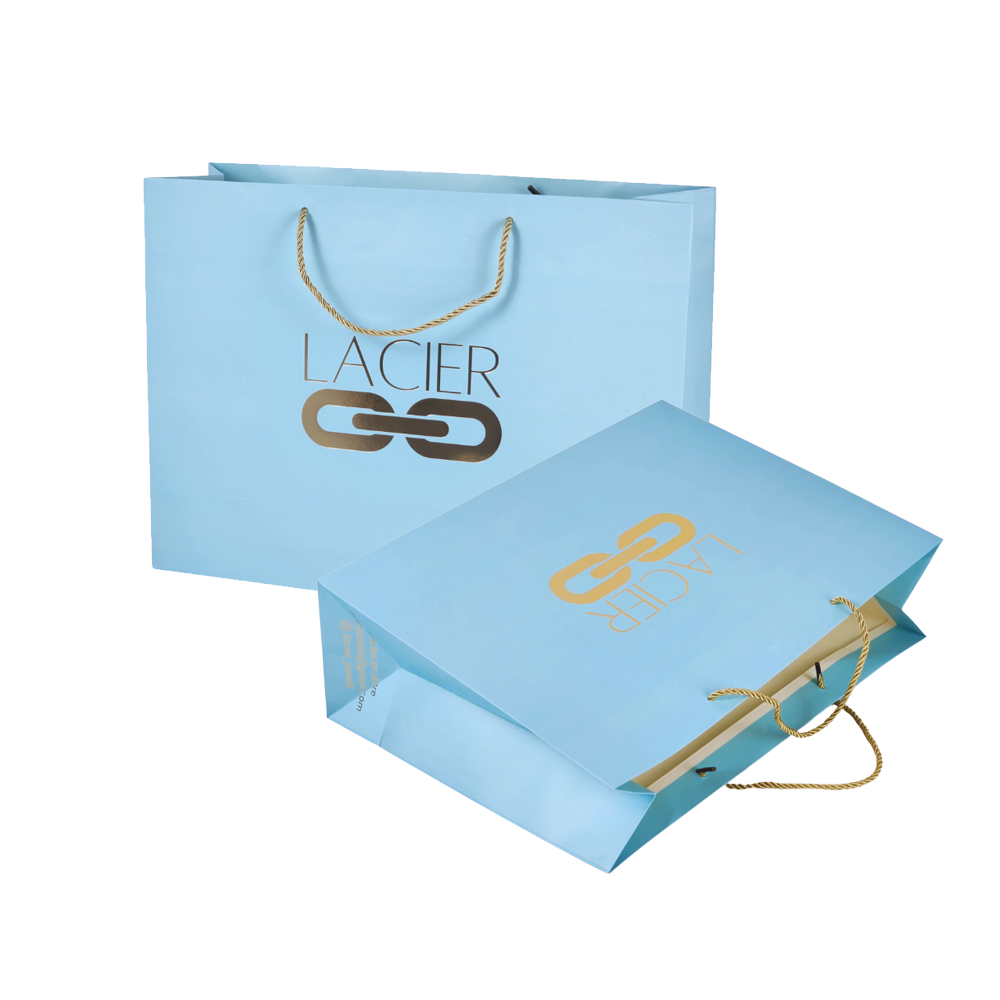
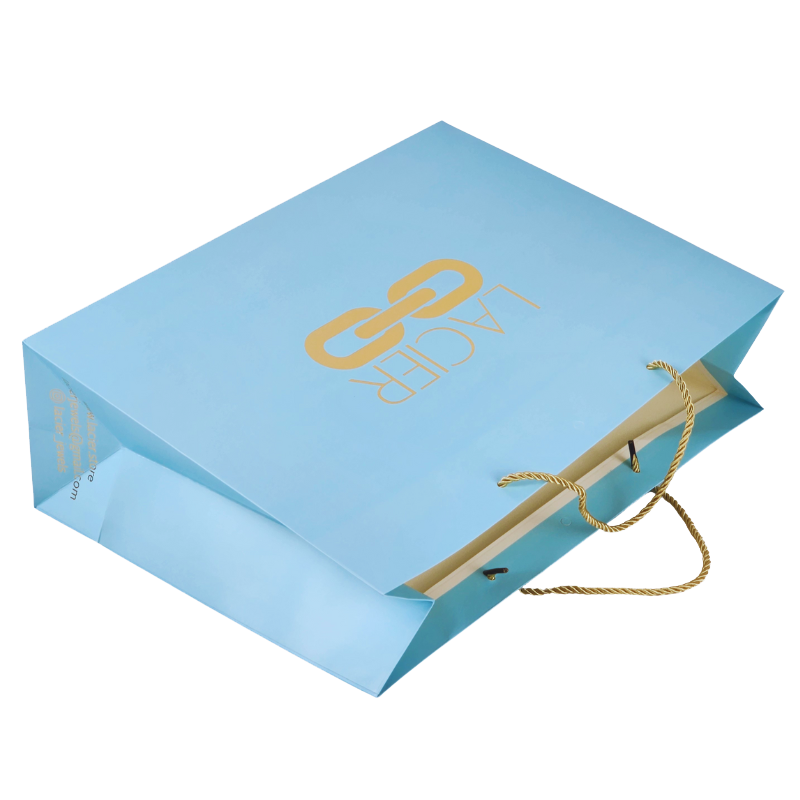
Handle hardware changes the reading of a quiet palette more than any colour decision. Rope that sags over the rim cheapens even a perfect brand blue; stiff twisted cord held on metal eyelets keeps the profile crisp and signals a dressier price point before a word of copy is read. Fashion labels, beauty counters, bridal boutiques, jewellers and gift retail buyers order this combination for that reason. The photographed proof — one bag standing, one lying with its mouth open — is the exact pair of views buyers ask for: the standing bag shows the front panel and rope stance, the lying bag shows inner-wall colour, foil registration and the folded gusset.
The Spec Sheet You Rewrite
Nothing on the sample bag is fixed. Treat the photograph as one resolved version of a build sheet where every line is yours:
- Body colour – the pastel blue is PMS-matched print on standard board; hand us your own brand tone and we mix to it, in the same value or a lighter and darker pair for seasonal sets.
- Foil work – emblem and wordmark hot-stamped in gold as photographed; silver, rose gold, holographic foil or a blind emboss with no metal at all as alternatives.
- Hardware – gold twisted rope through punched eyelets with the knot tied on the inner wall; other cord colours, ribbon flats or cotton rope all quote against the same eyelet die.
- Interior – the cream two-tone inner wall is printed on the inside faces, so the surprise costs nothing extra at assembly; choose tonal, contrast or full-wrap artwork inside the mouth.
- Gusset real estate – the folded sides are live print surface; the sample carries a typeset text block there that on your order holds your address, opening hours, social handle or a line of brand copy, all supplied by you.
- Size – custom dieline, reference format shown; the tall straight body suits folded apparel, boxed beauty, skincare sets and general carry, and gets recut around your actual SKUs.
- Design help – free: send a logo file in any format and we mock the foil emblem, gusset block and interior print onto the bag digitally before tooling starts.
Two questions decide most of the quote before artwork even exists. First: what goes in? The heaviest basket a shopper plausibly carries sets rope gauge and eyelet spacing, and we want that number in writing rather than guessed later. Second: does the bag need to survive a second life as a reusable shopper, or is it designed for one beautiful trip to the car? Aims differ, prices differ, and both are legitimate specs — the board weight, lamination and hardware only make sense against the answer.
Assortment math is the third decision most buyers miss. The MOQ is 100 pcs per design, so a store network running pastel for spring and a deeper tone for holiday books two design lines on one purchase order, sharing a single size die with no re-tooling charge when the footprint stays put. The dieline is the fixed asset; artwork is the consumable.
Why We Photograph the Bag Twice
Suppliers who show one heroic front angle are selling you a rendering. This line ships proof shots in pairs because a boutique bag is judged from more than one vantage in actual use: on the arm at the counter, standing on a shelf, and lying open on a bed in an unboxing video. The standing view settles the design questions — emblem placement, rope stance, how the pastel reads as a block of colour against competing bags. The lying view settles the construction questions: the pale inner wall visible at the mouth, the foil wordmark holding its registration through the curve of the fold, the typeset block living properly inside the gusset without breaking across the crease.
Those details are cheap to approve on a proof and expensive to discover on a delivered pallet, which is why the two-view treatment is standard for every design rather than a special request. When you brief us, ask what the second angle shows on your artwork — a good answer tells you whether a factory has actually made bags for retail or just made pictures of bags. The pair below is the same file our production team works from: front panel, inner wall, gusset face and hardware in view together, so sign-off covers the whole object in one exchange.
There is a practical benefit for your marketing calendar too. A brand launching a bag line needs assets before the press run, and approving artwork against one flat mock-up means the physical product can disappoint in places the render never showed: where the rope shadows the wordmark, where a contrast interior reveals itself only when the mouth gapes, where gusset text wraps out of sight at the fold. The lying view is exactly the angle a customer photographs on the bed before a trip, so if the design survives that view, it survives every use case in between. Build your artwork brief around the two views and revisions drop to almost none — which is how a 7-15 day production window stays honest instead of slipping every time someone notices a detail late.
Specifications at a Glance
| Item | Custom Pastel Blue Boutique Paper Bag |
| Construction | Upright straight walls, flat glued bottom, side gussets, rope carried on punched eyelets |
| Size | Custom dieline — reference format shown; recut to your products |
| Paper | 250 gsm ivory board standard; kraft and specialty papers on request |
| Printing | CMYK with PMS matching for brand colours |
| Finish | Matt or gloss lamination; hot-foil logo, spot UV, embossed or debossed accents |
| Handles | Gold twisted rope through eyelets, inner-knot anchored; cord and ribbon swaps |
| Packing | 100 pcs per poly bag or box, then export cartons |
| MOQ | 100 pcs per design |
| Sample time | 3-5 days |
| Lead time | 7-15 days after artwork approval |
| Capacity | 1,000,000 pcs per month across our bag lines |
Foil, Eyelets and Interior Print: Where the Money Looks Like Money
Hot-foil stamping behaves differently from printed metallic ink, and shoppers feel the difference without being able to name it. Foil sits a fraction proud of the sheet and throws light as the bag moves; metallic ink is just another colour station that happens to shimmer flat under fluorescent store lighting. On the sample, the emblem is foil and the surrounding blue is ordinary process print — a deliberate split that keeps the premium signal at eye level while the rest of the job prices like normal printing. One foil die, one colour plan, quoted as a single pass rather than two surprise invoices.
Where budgets need a second look, we run the arithmetic honestly: a small logo in foil is one of the cheapest luxury touches per piece because the stamping area is tiny, while an all-over foil pattern turns into a different product economically. Send logo dimensions and we price foil against gloss lamination and spot UV side by side, so the buying decision is made on numbers rather than on a hope about what the finish might do to the invoice.
Eyelet-mounted rope solves the problem that ruins cheap bags. The load hangs on a metal ring and an inner knot, not on glue near a fold, so handle life tracks your heaviest plausible basket instead of your lightest sale. A beauty purchase with two boxed products is trivial for this build; a hardware-and-cotton tote stuffed with hardback catalogues is a different conversation, and that conversation happens at proofing against your stated weight, not after a return pile tells you the answer.
The interior print is the third detail shoppers photograph without thinking about why. The same brand name reading once on the front panel and again in a contrast colour inside the mouth is what separates an unboxing shot that looks considered from one that looks accidental. It costs one extra printed surface at press time and nothing at assembly, because the inner faces run through the press on the same sheet as the outside.
Stock Choices and How They Take Print
The option sheet below is the working reality of our cutting room rather than a marketing render: coated white boards that hold a saturated pastel exactly, uncoated boards that mute colour slightly and read more understated, kraft tones that change the whole personality of the same artwork, and specialty textured faces where the paper grain becomes part of the logo zone. The pastel blue photographed here lives on coated ivory board — the ground colour is printed, not the paper dyed, which is what lets the same layout return season after season at a stable value.
Board weight is the quiet decision. 250 gsm ivory board is standard for boutique carry and gives the bag its stance with a normal retail load; step up for heavier formats or step sideways into specialty faces when a brand wants hand feel to do some of the talking. Whichever direction you pick, the eyelet die, gusset fold and handle anchoring stay identical, so a texture swap is a paper decision, not a re-engineering job. That is also why samples on request move quickly: the structure is proven, the sheet just changes.
The Finishing Cabinet, Opened
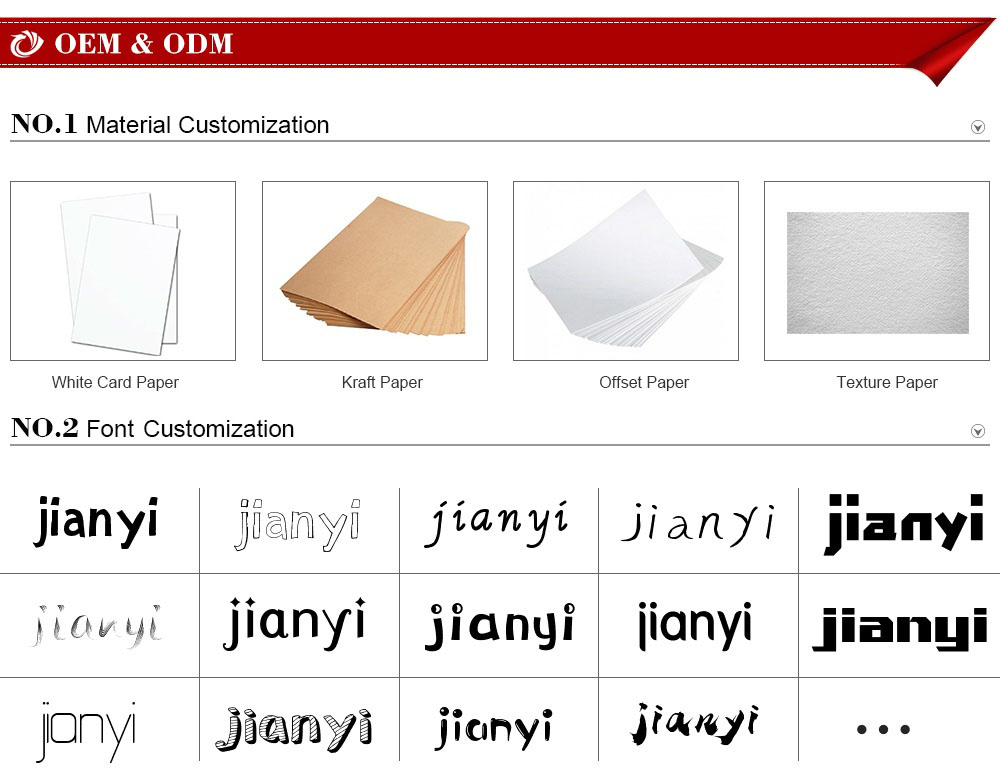
Beyond foil, three surface treatments decide how a boutique bag ages on the shelf, and the sample board in this section shows each of them executed on real stock rather than a render. Spot UV lays a raised clear varnish exactly over chosen artwork zones — usually the logo, sometimes a pattern — and reads as depth rather than colour, which suits palettes too quiet for gold. Embossing pushes a design upward from the sheet so it can be seen and felt with no ink at all; debossing sinks it into the paper. Both are the right answer when a brand wants the mark discovered by touch at the counter instead of spotted across the store, and both hold up beautifully on the pastel ground because a light board shows shadow where a dark one hides it.
Lamination runs underneath every choice as the base decision: matt for the soft, contemporary look the photographed bag carries, gloss for saturated colour punch, soft-touch films for jewellery and prestige beauty programs where the tactile read is the point. A laminate is not decoration — it is the scuff guard that decides whether a bag traveling in a shared carton arrives counter-ready or thumbprinted, and it seals the print against the moisture of a rainy storefront season. That is why we quote it as standard rather than upselling it: the returns saved on arrival condition pay for the film several times over before anyone weighs the look.
One caution straight from the press: heavy embossing over a tight foil registration can drift at the edges on large solid areas, because the emboss die pushes paper the foil already touched. Multi-technique layouts therefore get checked in the physical proof rather than assumed from the mock-up — and the proof comes to you before the bulk line switches on, in 3-5 days. Buyers who approve foil-and-emboss combinations from a screen alone tend to learn this the expensive way; buyers who hold the proof learn it free. The same logic governs spot UV over pale inks: registration is visible against a pastel field in ways it hides against black, so placement gets signed off in hand.
How do these choices map to budgets? Foil on a mark the size of a coin is the smallest premium increment on the sheet; blind emboss costs the same die work but no foil stock, so it reads quieter for the same money; spot UV is priced by coverage area, which is why a logo-sized patch barely moves the unit number while a full-pattern varnish changes the conversation. There is no worst option in that list — there is only the wrong combination for a brand voice. A bakery-shop chain and a fine-jeweller can order the identical bag construction and both look correct, because the finish stack is where the price positioning actually lives, and the sample board in this section exists to make that decision concrete before the dieline is cut rather than after the invoice is argued about.
The hardware gets the same honest treatment: eyelet finishes are specified, not inherited. Gold-toned rings on gold rope are the photographed default, but matte brass, black nickel or matching-paint eyelets all thread onto the same cord, and choosing ring and rope together under one colour decision prevents the near-miss look of two golds that disagree. Every combination shown here is produced in-house in sequence — print, laminate, stamp, punch, string — which is why one lead time covers the whole stack instead of one per process.
From Logo File to Loaded Cartons
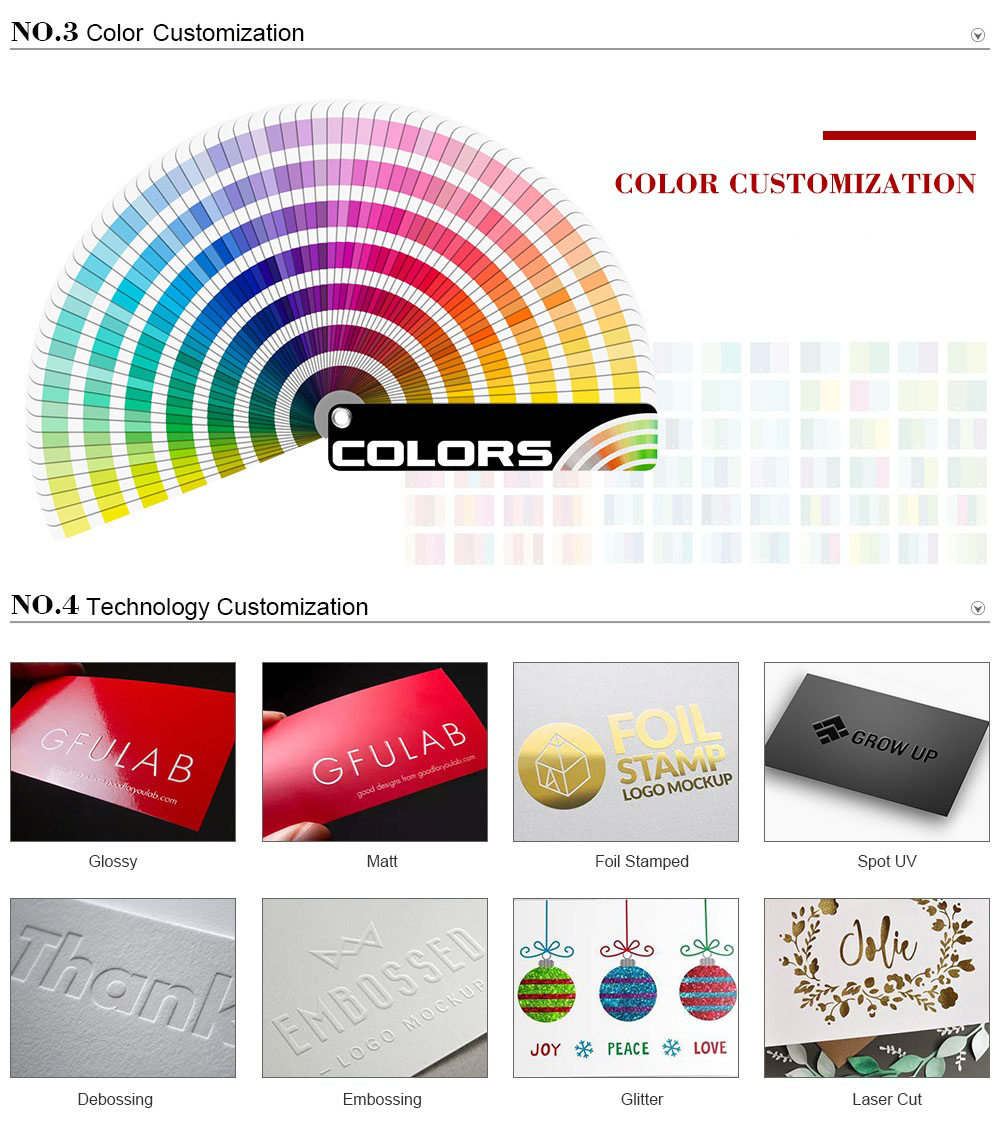
The sequence, in writing, so nobody’s calendar drifts: artwork and target quantity arrive → we return a free digital mock-up with your emblem placed on the real bag template → you sign off colour and dimension → a physical sample follows in 3-5 days, judged in daylight for foil and rope rather than on a phone screen → bulk production closes in 7-15 days after artwork approval. Proof time and production time stay separate numbers; they are never bundled into one reassuring blur, which is how launch dates actually get protected.
Capacity of 1,000,000 pcs per month across the bag line means a store reopening push or a holiday re-do fits inside one season instead of waiting on next quarter’s press plan. The price displayed on this page is a reference rate at the 100-piece tier — the entry point for a single-store test, a trunk show or one marketplace listing — and real unit numbers come from your size, colour plan and finishing coverage consolidated into one quote with no separate artwork charge.
Where timelines genuinely compress or expand is revision count, not press speed. A clean vector logo and a signed-off mock-up start the clock the day they land; a raster mark redrawn twice and a colour re-decided at proof stage add days nobody billed for. Two habits protect your date: nominate one person to sign artwork, and test the mock-up at actual size printed on your own office printer before returning approval — emblem proportions read differently at 300 mm wide than they do on a laptop.
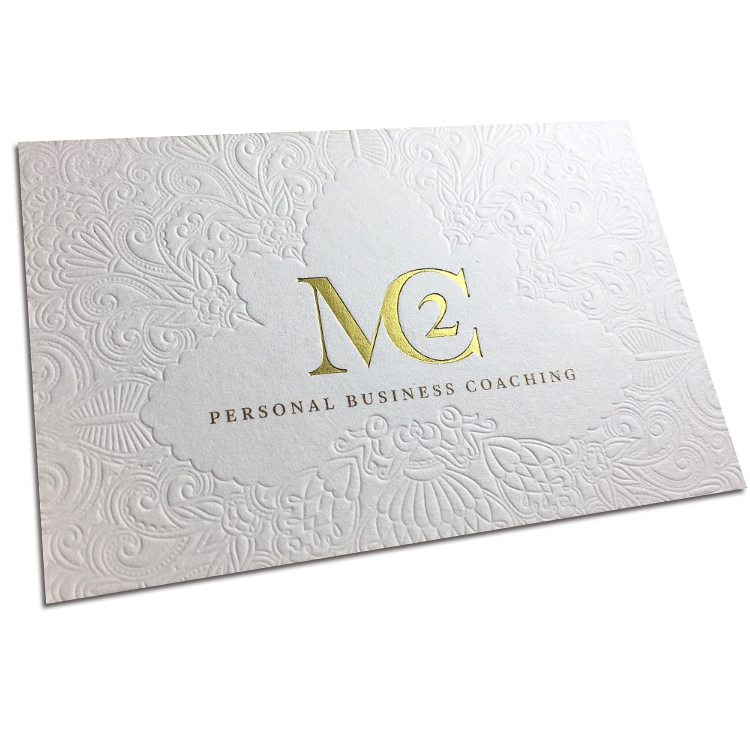
If the file situation is messier than that, say so plainly in the first message. A photographed business card, an old website banner saved at 72 dpi, a logo trapped inside a PDF — our design team has rebuilt all of them into vector artwork before, at no charge, and knowing what actually exists prevents a wasted mock-up round. The order of work never changes for the buyer’s benefit: whoever supplies the cleanest information earliest watches the fewest delays.
Reorder seasons follow the first order like clockwork once the file is archived: your dieline, colour formula and foil die stay on file, so a spring program’s follow-up holiday run starts at the proof stage instead of the drawing board. That is where boutique chains get the most value from the shared-die model — one size stocked across locations, artwork swapping by season, each variant booked as its own 100-piece design line on a single purchase order. Because the archived artwork lives on our side of the email thread, a returning customer can reopen last year’s file, change one colour field, and be back on press inside the same fortnight.
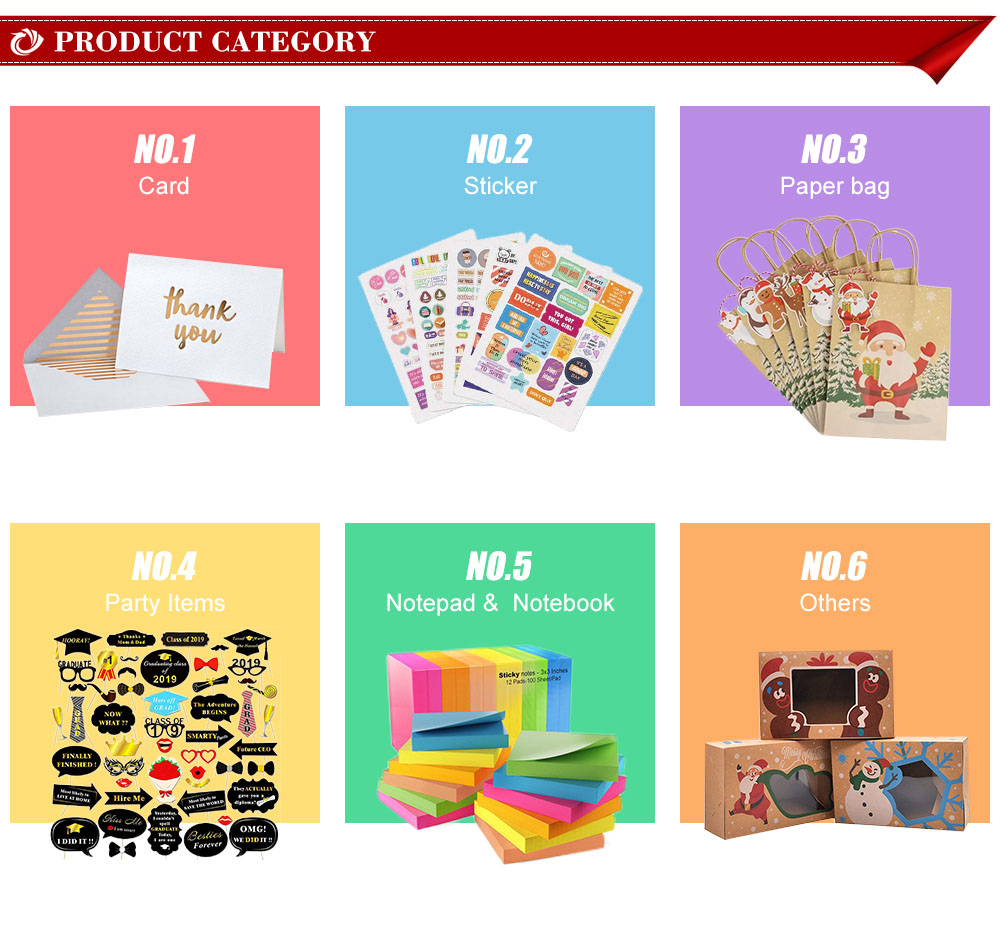
The family chart below places this bag among the wider print lines we run, because bag programs rarely stay just bags once a brand commits: swing tags, cards and sticker sets tend to ride the same PMS colour decision, and quoting them together keeps ink, dates and freight in one conversation. Bringing the whole print program into a single PO also means a single production calendar you can check against, rather than three vendors each guarding their own lead-time guess.
Packing and Delivery Options
Orders ship assembled — bases glued, rope knotted, eyelets pressed — then nested at 100 pcs per poly bag or inner box inside export cartons with counts matched to your store plan. Multi-door retailers typically have staff unpack straight into back-of-house shelving, so shelf-ready bags with no folding step remove a whole task from opening procedures. Freight runs by sea for carton volume, by air for date-critical seasonal drops, or by courier (DHL, UPS, FedEx, TNT) for proofs and top-ups; Amazon FBA labelling and prep are supported when marketplace listings are part of the program rather than only storefronts.
Carton specs are declared before a shipment is booked, not discovered at customs: pieces per inner sleeve, sleeves per carton, net and gross weight, and carton dimensions all go on your packing list so store-level receiving matches the purchase order without recounting. Bags travel flat-packed in structure but assembled in shape, nested grain-side up so nothing presses the foil zone during stacking; retailers who restock directly from the shipper carton rarely need any handling step at all. If your freight forwarder has carton preferences or a maximum weight per box, name them in the order paperwork and the packing plan is built around your constraints — export cartons are a spec line like any other, not a fixed assumption.
Boutique Buyers Ask
Can the pastel blue be matched to our exact brand Pantone?
Is the gold handle real twisted rope on metal eyelets?
What does foil stamping cost versus a plain printed logo?
How many pieces must we order per colourway?
Will the bag hold apparel and boxed beauty weight?
Can you print an address block on the side gusset like the sample?
Other Carriers Worth Comparing
The darker, formal end of this silhouette lives at navy and black luxury bags with foil labels; for bottle-format gifting see the single-bottle wine carrier with white rope; and everyday colour-printed carry sits on the cartoon shopping bag page. The full luxury paper bag line collects every handle and finishing combination, and the broader printed bags category covers daily retail formats.
Get a Number for Your Store Program

Send quantity, target size and the surfaces you want foiled through the form below, or bundle this style with others via the quote request list. The reply is a single document: unit pricing, dated milestones from proof to dispatch, and a mock-up with your emblem placed on the bag. WhatsApp / Tel: +86-15967739086 | Email: [email protected]