Custom Hardcover Laboratory Notebooks With Grid Pages
$2.80
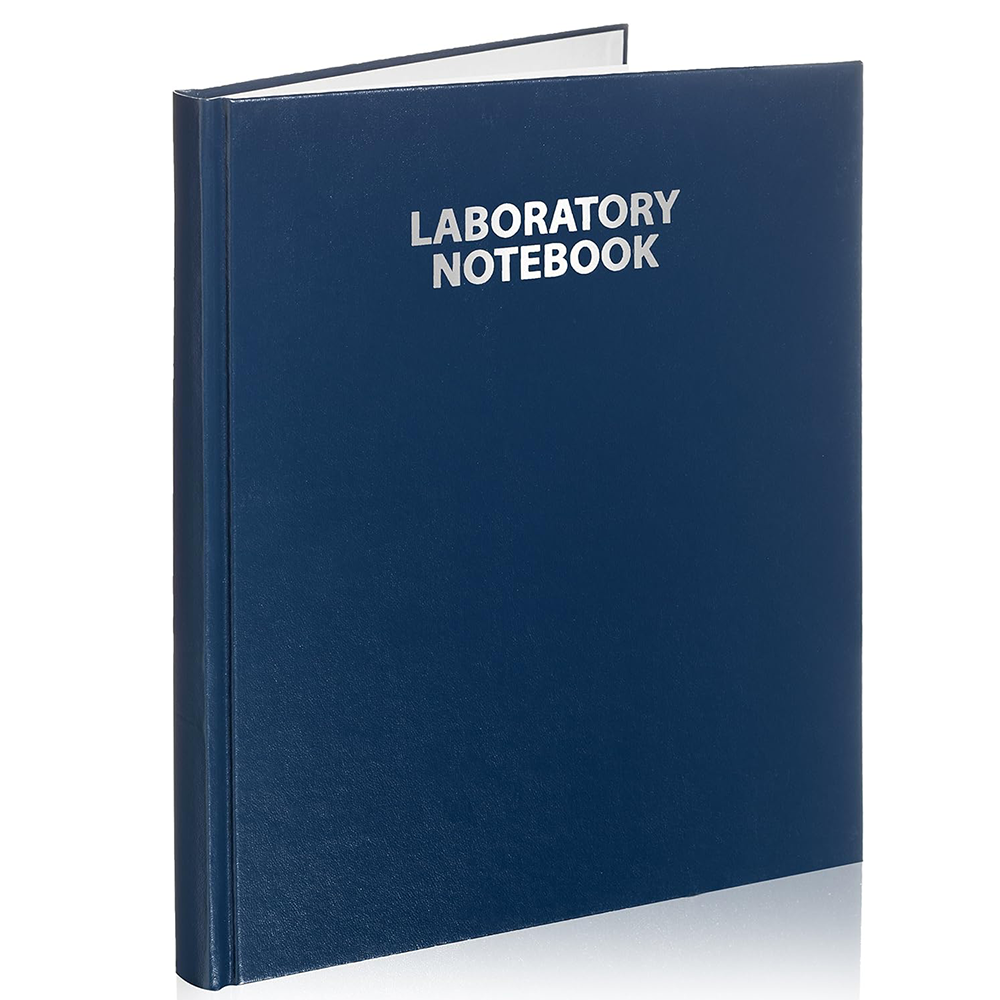
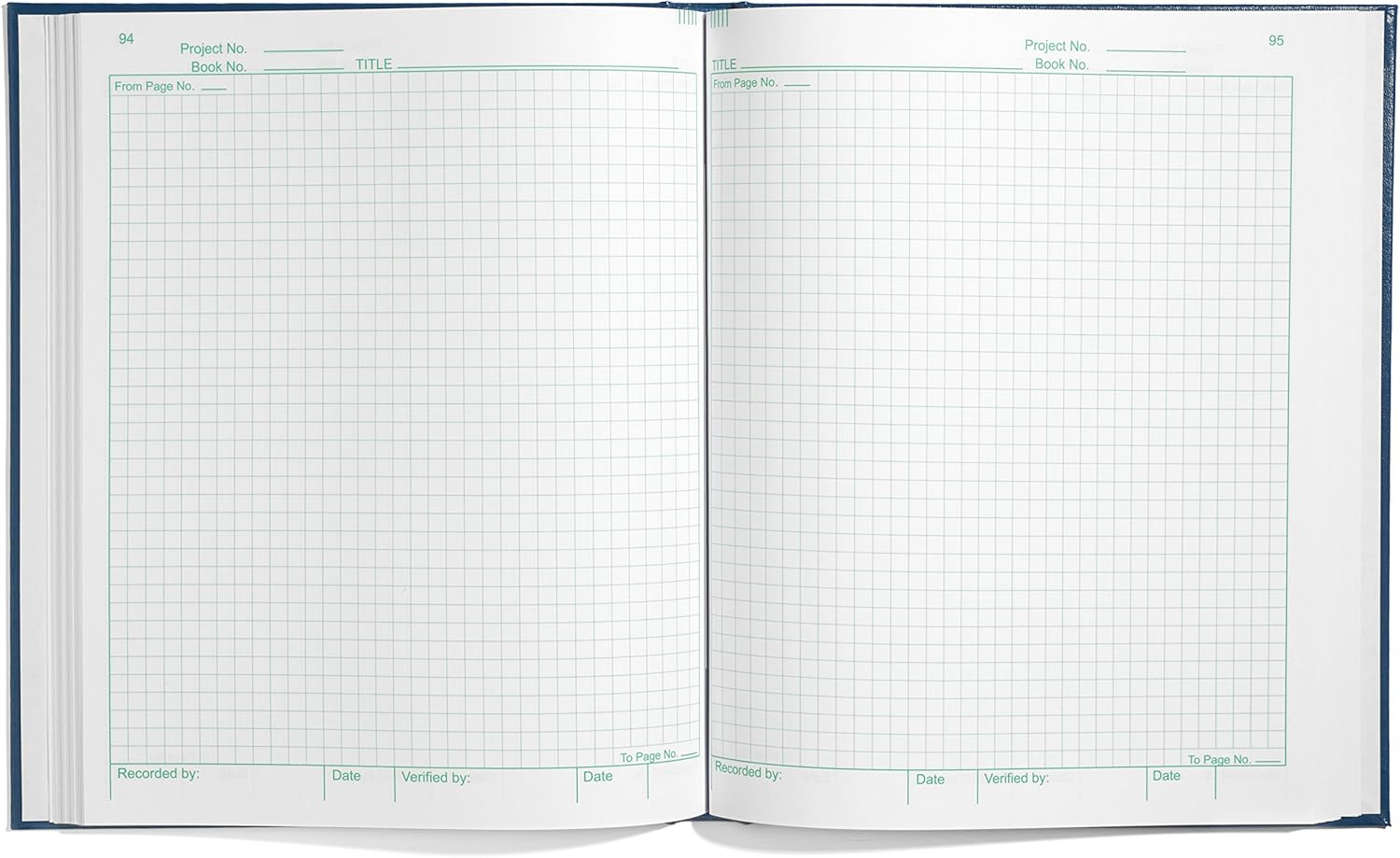
Custom lab notebook with grid pages, built the way a controlled record should be: a navy grained hard case with rounded spine and your foil or debossed title replacing the photographed LABORATORY NOTEBOOK mark, and white uncoated sheets printed with a pale green square grid plus TITLE, Project No., Book No., Recorded by and Verified by fields on every leaf. Photographed folios 94 and 95 prove sequential pagination; sheet count and bond weight are quoted on request rather than invented. MOQ 100 pcs per design, samples in 3-5 days, bulk production in 7-15 days after artwork approval, with sea, air and express freight plus FBA prep on the same line for purchasing offices that buy through marketplaces.
A custom lab notebook with grid pages is a controlled document first and a stationery purchase second. Science departments, clinic registries and field-operations teams buy these books for one reason: a record that can still be filed, audited and re-read years after the entry went in. The photographed sample shows what we build for that job. The case is navy with a fine grained texture and a rounded spine; two lines of silver foil lettering read LABORATORY NOTEBOOK across the upper front panel; the sheets inside are white uncoated stock printed with a pale green square grid, sequential folio numbers and a full block of header and footer fields on every leaf.
That framing matters to procurement because most notebook listings sell covers, not records. The record lives in the printed apparatus: which field carries the project, which page range belongs to it, who wrote the entry, who checked it, and whether a page can quietly disappear. Below we take each of those questions to the photographs, then give the ordering numbers — MOQ 100 pcs per design, samples in 3-5 days, bulk in 7-15 days after artwork approval.

The Printed Header Block Does the Filing Before You Do
Open the book and the logic becomes obvious. Every sheet carries the same printed frame in muted green: a header band with TITLE, From Page No., To Page No., Project No. and Book No., plus a footer band with Recorded by and Date beside Verified by and Date. Those fields convert a private notebook into a chain-of-custody record. Whoever writes the entry signs it; whoever countersigns it owns the check. Which project a run of pages belongs to gets declared at the top of that run’s first leaf, not remembered from a loose index card that separated from the book in week two. For teaching labs, this is how student notebooks become gradable without interrogation; for QA benches and clinic training files, it is the difference between a notebook and an evidence binder.
The field layout is mirrored on facing pages, a small engineering decision with real consequences. When a volume sits half-open on a shelf or gets folded back during a lab session, each leaf’s outer header still reads correctly on its own. Nothing important falls into the gutter, so a photocopied leaf keeps its complete field block, and a scanned appendix to a report stays self-explanatory. Field names are also not fixed. Experiment No., Observer, Approved by, Instrument, Station, sample matrix — the header artwork is redrawn from your wording at mock-up stage, because a record block you have to complete with a spare pen is a record block nobody fills in consistently.
There is a training argument buried in the footer band, too. A student who learns to date both the writing and the checking stops treating the notebook as a diary; the two-signature habit is exactly what a lab supervisor wants to see on a bench tour, before any instrument logbook enters the picture. Procurement offices ordering for first-year chemistry or nursing skills labs buy this structure for the same reason instructors buy red pens: the fields do half the marking. And when the same format carries a school crest on the cover — foil or debossed on the navy grain, your mark replacing LABORATORY NOTEBOOK — the book survives being left behind far better than an anonymous one, which quietly cuts replacement spend across a term.
One more thing the photographed header does for archive desks: Book No. and From/To Page ranges let a single long study, audit trail or multi-week field program be cited precisely — Book 3, pages 41-58 — without photocopying an entire volume into the file. Records managers who have inherited unlabeled notebooks recognise this immediately, and it is the argument that wins the format internally when someone proposes buying whatever plain book the office-supply catalog lists cheapest that week.
Numbered Leaves Close the Loop on Missing Pages
The photographed spread shows folios 94 and 95 printed at the outer top corners, which proves two facts at once: the leaves are sequentially numbered, and the book as shown runs past ninety-five pages. Sequential pagination is the quiet feature compliance teams ask for — a torn-out page becomes a visible gap in the sequence instead of an unfalsifiable claim during an audit. The numbers run straight through the volume rather than restarting per section, so a discontinuity is never ambiguous. Total sheet count is not printed anywhere in these photographs, so counts are quoted on request against your format and quantity tier rather than guessed onto this page.
A second detail in the same photo governs legibility years later: folios and field rules sit in one mid-tone green instead of heavy black. That choice keeps the ruling subordinate to whatever your team writes in black ballpoint or gel, and it keeps photocopies and scanner presets readable — dense black grids are the ones that muddy a scanned lab appendix. Line colour is specifiable if your archive workflow needs a different contrast balance, and numbering can be requested single-sided or double-sided at artwork lock. Ask for dark folios if your records office staples loose photocopies into an evidence binder and needs the page trail to read in monochrome.
Numbering interacts with the field block in a way worth stating plainly for anyone writing a purchasing specification: because From Page / To Page fields reference the printed folios, the two systems validate each other. A log entry that claims to cover pages 41 to 58 can be checked in four seconds by turning to those printed numbers. Loose-leaf records never survive that check, and neither does an unnumbered book, which is why auditors ask for pagination before they ask for binding. If your compliance framework cites specific retention language — chain-of-custody logs, Good Laboratory Practice style record books, inspection round sheets — the printed frame is the feature being bought on this page, and everything else is packaging. Put the retention requirement in your enquiry and the mock-up comes back with the field block already drafted to match it.
There is also a quiet inventory argument for keeping the numbering. Consumables that are identical across years are easy to top up mid-term when a batch runs short; a book whose page trail is recognised by the lab as theirs — numbered, fielded, marked — gets returned when it is left behind rather than binned. Two small savings, each invisible on a unit price sheet, both very visible on a year-end consumption report.
Grid Geometry, Ink Behaviour and Bench Abuse
Inside, the stock is matte uncoated white paper with a fine pale-green square mesh. Two properties matter where the book actually lives. The uncoated surface grips ink: ballpoint and gel sit on the fibre rather than pooling and smearing the way print-coated stock does, so an entry written at two in the morning during a long run stays readable after a gloved hand crosses the page. And the grid is light enough that plotted curves, hand-drawn apparatus sketches and numbered tables read on top of it — in the original, in the copy, and in the PDF attachment.
Consider the opposite purchase for a moment: a cheap lab book on glassine-coated stock with a heavy black grid. Six weeks into a term the students’ graphite smears into grey bands across every plotted figure, the photocopier turns the grid into a solid field that swallows decimal points, and the archive copy is worse than the record it documents. Paper specification is not a comfort feature on a record book; it is the difference between legible evidence and an expensive way to lose data. The photographed interior was chosen for exactly the failure modes above, and any reorder inherits those decisions unless you consciously change them at artwork stage.
Beyond the two surfaces the photographs show, bench behaviour shapes three more spec choices. Ink bleed matters most when technicians work in nitrile gloves and press hard: the uncoated sheet in the photos stops a ballpoint line from feathering along the fibre. Pencil erasure matters in teaching labs, and matte stock clears graphite without shining a bald spot through to the reverse side. And page-through speed matters at a bench with one free hand — the square case corners and hinge groove visible in the side shots let a book open and hold with a palm, which soft journals with curled wraps cannot.
If your laboratory or classroom already runs a different paper habit, tell us what breaks there. “Our current bond ghosts through from the reverse” or “pencil shears off the grid lines” are purchasing specifications in their own right, and they change what we recommend on the sample round — a heavier bond weight, a different shade of grid ink or a plain back to the ruled front — without changing the record apparatus you are trying to protect.
Grid pitch as photographed is a fine small-square mesh. Decimal grids, wider graph, plain rule, or a split layout — front half graph, back half rule — are standard re-screens quoted against your artwork file. Bond weight and sheet count follow the same honesty rule: the photos do not print those numbers, so we quote them per format instead of inventing them here. What the photographs do prove is everything the record side depends on: the field apparatus, the numbering, the grid colour, the mirrored layout and the case build.
The case answers how laboratory books die. They get dropped, stacked under reagent boxes, shoved into bags beside uncapped pipette tips. The photographed build is rigid board wrapped in a fine-grained navy material — the pebbled texture in the studio shots reads as leatherette or cloth over board, and either wrap is specifiable. A hinge groove runs parallel to the spine so the front panel flexes open cleanly instead of cracking the wrap along the joint, and the rounded spine keeps its shape after months of being gripped off a crowded shelf. The white page block stands flush inside the board edges, trimmed square, exactly as the side-profile photograph confirms.

Who Keeps Reordering This Exact Book
Three purchasing patterns repeat across our orders. University and school science departments reorder term by term, because printed fields and pagination make lab reports gradable and department records defensible during an accreditation visit. Teaching clinics and training programs order them as log stock, where Recorded by and Verified by lines carry genuine supervision value for hours and procedures signed off by a tutor. Field teams — environmental sampling, construction materials testing, equipment inspection rounds — order the same construction because a grained hard case survives a tool crate better than any soft journal, and a numbered page trail survives an audit better than a folder of loose sheets. In every case the next order mirrors the last: same field block, same numbering logic, new cover year. Keeping artwork files on our side between runs is what makes that mirror order fast.
Options Under Your Control Before Plates Are Made
- Cover mark: silver foil as photographed, other foil colours, blind deboss with no metallic, or a printed title panel, drawn from your logo file (free digital mock-up)
- Wrap material and colour: navy grained as shown; alternate grained wraps and colourways per artwork
- Header block: keep the photographed field set or relabel every field name to your record system
- Inner ruling: square grid as photographed; ruled, mixed grid-and-rule, and alternate grid pitches quoted per build
- Sheet count, bond weight and case size: quoted on request against your format and quantity tier
- Sequential folio printing, single-sided or double-sided, plus endpaper and back-pocket options per construction
What the Photographed Standard Fixes
| Item | Custom hard cover laboratory notebook, grid pages with printed record fields |
| Size | Portrait hard case as photographed; alternate formats quoted on request |
| Paper & Ruling | White uncoated stock, pale green square grid, header/footer record block, sequential folios (94-95 visible); sheet count and bond weight quoted on request |
| Cover | Rigid board, navy grained wrap (leatherette or cloth specifiable), rounded spine, hinge groove |
| Binding | Case-bound text block; construction details per format confirmed at sample stage |
| Logo & Finish | Silver foil two-line title as photographed; custom foil, blind deboss or printed panel per artwork |
| Packing | Individual poly bag into five-ply export carton, counted to your pallet plan |
| MOQ | 100 pcs per design |
| Sample time | 3-5 days |
| Lead time | 7-15 days after artwork approval |
| Capacity | 1,000,000 pcs per month across our gift lines |
From Mock-Up to a Locked Delivery Window
The flow is short because the construction is standard. Send the logo file and your preferred field wording; we return a digital mock-up of the cover title and the header block at no charge. Physical samples leave in 3-5 days. Bulk production then runs 7-15 days after artwork approval. The figure displayed on this page anchors the 100-piece tier; an academic-year quantity re-tiers inside the quotation, not at checkout. Back-plan against the term instead of the catalogue date: a September lab cycle wants artwork locked by early July at the latest, leaving room for sample review, one relabel round and the full production window without reaching for air freight as the rescue lever. Reorders on a stored file skip straight into the 7-15 day window.
Cartons, Pallets and the Freight Window
Finished books go into individual poly bags, then five-ply export cartons counted to your pallet plan, so a receiving clerk can verify quantities carton-by-carton without opening the shrink. Hardcover books cube out efficiently, and mixed purchase orders consolidate onto shared cartons rather than separate bookings per line item. Freight moves by sea for volume, by air when a term start is immovable, or by DHL, UPS, FedEx or TNT express for sample sets and mid-year top-ups. Purchasing offices that run through marketplace storefronts get the same FBA prep we do for retail stationery: unit barcodes, labelling and carton builds to your shipment-plan counts and weights, routed into a fulfilment centre instead of your dock.

Can the printed fields on the grid page be renamed to our own record system?
Are the leaves numbered, and does the numbering restart anywhere?
Is the grid light enough for scanned lab records and photocopies?
What does the minimum order cover if two departments want different cover titles?
Can the navy case carry a debossed crest instead of silver foil?
How early should a science department place a term-start order?
Pages Worth Opening Next
If this record format is close but not exact, the range holds adjacent builds. The printed hardcover notebook line covers full-bleed cover artwork and journal hardware; the thread-sewn planner books show stitched signatures with visible spine detail; the marbled composition books answer classroom-volume purchasing. Broader context sits in the notebook category and the printed items catalogue, and a welcome kit pairing a notebook with pen and USB hardware lives on the notebook-pen-flash-drive gift set page.
Open the Record-Book File
Send your logo, your field wording and your quantity tier, and the first reply is a mock-up of the cover title and header block against the photographed standard. Sales answers at [email protected] or +86-15967739086, and the form below drops into the same queue.