Custom White Folding Cartons For Cosmetic And Fragrance Retail
$0.85
Custom white paperboard folding cartons for fragrance and cosmetic retail: tuck-top with semicircular thumb notch, straight or reverse tuck, and sleeve formats, with glued or auto-lock bottoms and end-cap panels laid out for clean till scanning. Offset CMYK plus Pantone spots, white-ink capability, and hot foil quoted separately from metallic ink so the premium read is a decision, not a surprise. Matte film lamination protects bright white fields from shelf-rub and fingerprint shading. Footprints are quoted to your flacon or SKU drawing, MOQ 100 pcs per design, samples flat and erected in 3-5 days, bulk 7-15 days after artwork approval. Cartons ship flat in inner poly and five-ply export cartons, FBA prep supported, by sea, air or express courier.
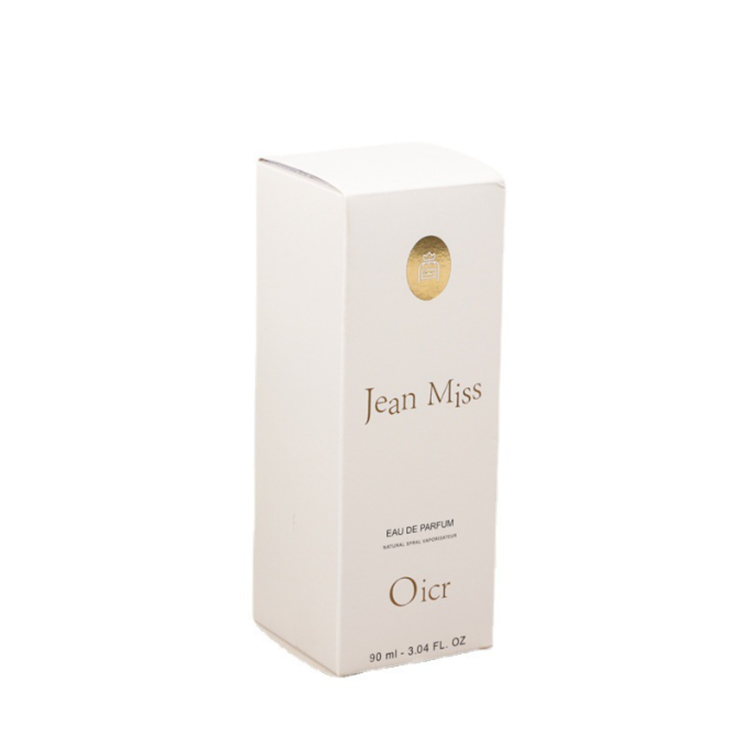
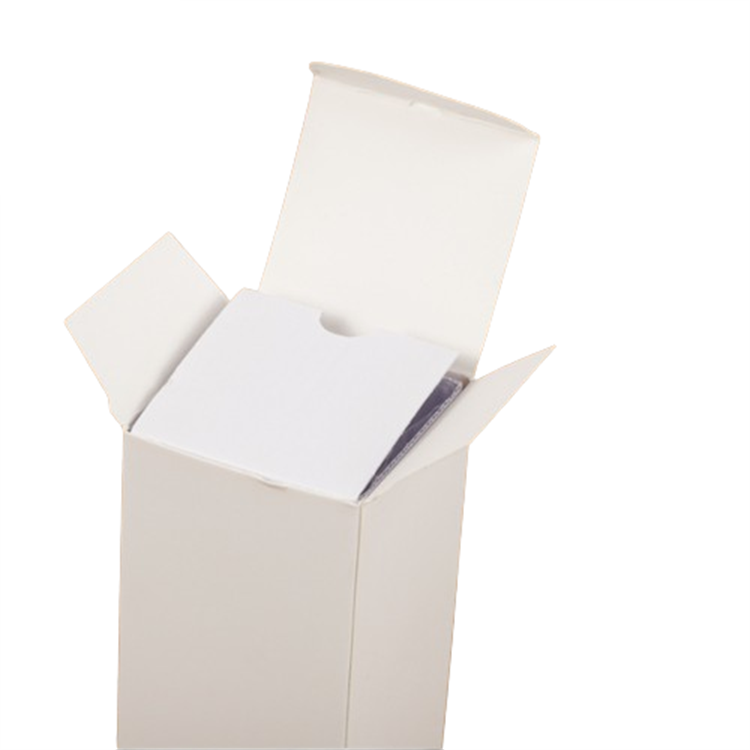
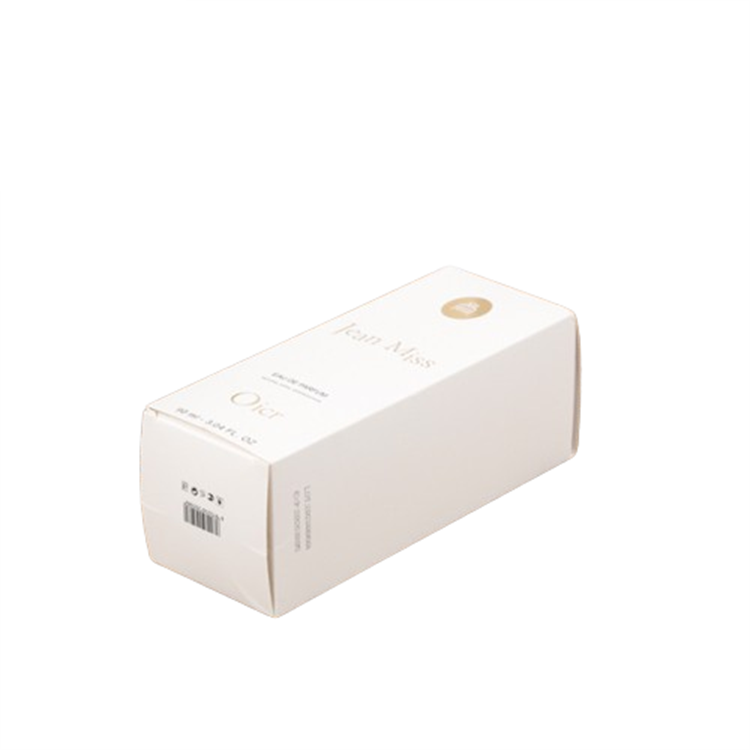
These are retail-tier folding cartons: white or near-white paperboard blanks, die-cut and folded into tuck-top boxes that a shelf sees one at a time. The photographed samples cover the two ends of the format conversation. One is a raw unprinted carton standing open, rear tuck flap up, side dust flaps spread, front flap carrying the semicircular thumb notch, so you can read the whole structure before any ink lands on it. The other is a finished slim carton on a diagonal: cream ground, round gold medallion, fine serif lines, and an end cap with the barcode strip and handling pictogram row exactly where a retail scanner expects them. Same tooling world, two very different jobs, and both quoted from your flacon or SKU drawing rather than a size chart.
Why The Folding Carton Owns The Shelf
A carton ships flat, erects in a second on a packing line, and costs per thousand what a made-up gift box cannot match, because a blank is a cutting and folding operation, not a bench operation. For an SKU that sells one unit per customer visit, that geometry is the whole argument: the box is the product face, the legal panel, the barcode carrier and the shelf presence, and it has to do all of that while riding flat in your cartons until someone pops it open. Brands working a retail listing, a marketplace tier, or a pharmacy-style shelf talk to this format first and to gift boxes second.
Structure options on this line: straight tuck with the flap opening along the top front, reverse tuck where the flap comes over the back panel, a tuck-top with a thumb notch cut into the front flap like the open sample above, and sleeve formats that slide an inner tray. Bottoms are either glued by our folding machine or auto-lock folders that your packers press shut by hand. Which one you pick is an ergonomics decision we will argue with you on your line speed, not a checkbox.
Board comes as white kraft-backed or bright coated paperboard; the choice shows up in three places people only notice after the first shipment: how the white reads under store lighting, whether a fold line whitens, and how the sheet behaves when a perfume carton spends a wet season in a container. We send board chips with every sample pack so your team is choosing between physical sheets, not two words in a spec line.
Window cut-outs, hang-hole extensions and reverse-fold panels are all dieline variations rather than new machines, which is worth knowing when a buyer asks whether a window makes the carton a custom tool. It does not: the window die sits on the same station as the thumb notch, and the film gets ultrasonically welded or glued into the aperture at the folder. What changes the price honestly is board thickness against the window edge, because a thin blank oil-cans around a large aperture on a hot shelf, and that is a spec conversation to have at dieline stage. The open sample above shows the family of flap geometry all of this gets cut into: tuck, dust, glue tab, score, one sheet, no extra operations nobody quoted.
Ergonomics decide the rest of the structure. A thumb notch sized for gloved warehouse hands is different from a notch for bare fingers at a counter. A reverse tuck protects the front face from shelf-edge wear but costs your packer half a second more per unit. An auto-lock bottom erects faster than any glued seam but adds a paper layer under the product that changes how the carton sits in a retail tray. None of these are right or wrong; they are line-speed and channel decisions, and we make them with your erecting video if you have one, or with the sample run standing up on our bench if you do not.
Configuration Points Per SKU
- Format: straight tuck, reverse tuck, thumb-notch tuck-top or sleeve
- Bottom: machine-glued seam or auto-lock folder
- Board: bright coated or white kraft-backed, chosen against product weight
- Footprint and closure height from your flacon or SKU drawing
- Print: CMYK plus Pantone spots, white ink for dark grounds
- Metallic route: gold ink or hot foil, quoted as separate line items
- Finish: matte or gloss film, aqueous varnish, spot UV
- End panel: barcode placement to your retailer’s scanner spec
- Extras on the same die: window aperture, hang hole, descriptor panel layers
Glue Tabs And Fold Lines: The Boring Failure Nobody Budgets For
Carton complaints almost never arrive as print complaints. They arrive as a seam that opened in a hot container, a tuck flap that split along the score, or a bottom that popped in transit and re-taped at the receiving dock. Every one of those is a gluing and scoring decision made before the ink, which is why we treat them at quotation instead of apologising at delivery.
On our side: the glue line gets sized to the tab width and the board coating rather than eyeballed, the rub and dry-bond of the adhesive is chosen for the destination climate, score rules are set against board direction so a fold sharpens instead of cracking its coating, and the first carton off the gluing unit is torn open at the seam to verify the bond before the rest follow. If your product runs heavy for its size, we shift to auto-lock or glued bottoms with a deeper dust flap instead of pretending a straight seam will carry glass all the way to Rotterdam. You will see the actual bond checked, and you can cut the sample’s tab yourself, which is the fastest trust-building test there is.
Artwork That Survives The Dieline: Barcodes, Panels, Finesse
The end-cap panel is retail furniture, and it earns its space only when scanned cleanly at the till. The finished sample carries the barcode strip and the pictogram row on a short end panel, cream ground, quiet zones respected, modules sized so a worn conveyor still reads it first try. What we ask of your file: vector or high-resolution barcode placed on its own layer, the quiet zone left clear of background tint, and the module width fixed to your retailer’s scanner spec before plates are made. If you sell through big-box and specialty doors with different symbology rules, we pre-press both versions off one dieline so the artwork stays identical and only the end panel swaps.
Legal and descriptor panels follow the same logic: small grey small-caps lines survive on coated board at fine sizes only if the press holds register and the film choice keeps ink density; that is a proof-stage conversation we run with your regulatory copy locked, and we return a typeset mock of the panel before you commit to it. The dense text block on the sample is there because retail requires it, and the job of the carton maker is making required text readable without wrecking the front face.
One culture point from the finished sample that saves reprints: the descriptor lines and the medallion sit inside generous margins because a carton gets handled at the case mouth, and artwork that runs to the score cracks at the fold the first time someone erects a demo unit. We mark fold lines and safe zones on every dieline return, and where a designer insists a rule line must run edge to edge, we route it across two panels rather than over a score, which is the same trick label printers have used for a century. The result at retail is a carton that still looks new at the end of its shelf life instead of day two.
Version control belongs here too. Fragrance and cosmetic cartons change legal copy more often than they change artwork: a new warning line, a volume mark, a distributor block. Build the dieline with the legal panel as a swappable layer and the reissue is a plate change, not a redraw, and the barcode panel stays frozen because it never moves position. Brands running three markets off one carton learn to love this paragraph; they usually find it after one expensive full redesign, and there is no reason to.
Gold Ink Is Not Gold Foil – Get The Quote You Actually Mean
This is the most expensive misunderstanding on a carton quote, so we say it bluntly. Metallic Pantone ink is a flat, warm flash on the sheet, cheap per thousand, and it behaves like any other ink under laminate. Hot foil is a stamped film laid into the board with heat and pressure: it catches light at an angle, has a physical edge, and reads metallic at arm’s length the way shoppers interpret premium. The medallion in the second sample and the nameplate in the third are the two looks that get confused constantly, because both are referred to as gold on a purchase order and neither is wrong.
Our recommendation logic is simple. If the metallic appears small and central, a medallion, a monogram, a rule line, foil earns its tooling cost at your quantities because it survives the shelf story. If the metallic is a broad field, ink plus a clever laminate usually gets you closer and keeps the unit price at retail tier. Quote both, see both on the sample, decide with the price sheet open. We will never silently substitute one for the other, and you should expect any honest carton supplier to make the same promise in writing.
White Board On A Real Shelf: Scuffing, Soiling, And Finish Choice
White is the most demanding colour to ship and to keep. Every rub mark on a bright white field is visible at a metre, so the finish film is not a taste decision, it is an armour decision. Matte film lamination covers the sheet with a continuous layer that resists fingerprint shading and box-on-box rub far better than a bare aqueous varnish; soft-touch adds a price and its own wear profile; gloss shows scratches least but changes the brand read entirely. The tall sample is matte with the metallic nameplate kept small, which is the pattern we see work most often at white-carton retail: a quiet field, one deliberate metallic moment, and a finish that can survive being picked up and put back forty times before someone buys it.
For artwork going edge to edge in white we also check the blanking direction and the dust from the die, because dark debris pressed into a white fold is the one defect no customer forgives. Blanks get flocked-side stacking, sheets are counted into shrink units the same day they fold, and the sample ships in the same orientation your cartons will travel, so you can inspect the folds, not just the faces.
Spec Sheet For The Carton Line
| Item | Custom printed paperboard folding cartons, retail tier |
| Construction | Die-cut and folded blanks; straight tuck, reverse tuck, thumb-notch tuck-top or sleeve formats; glued or auto-lock bottoms |
| Material | Bright coated paperboard or white kraft-backed board, quoted to product weight and dieline |
| Size | Custom; carton footprint and closure height quoted to your flacon or SKU drawing, no stock sizes carried |
| Printing | Offset CMYK plus Pantone spot colours; white-ink capable for printing on tinted and dark grounds; barcode panels pre-pressed to scanner spec |
| Finish | Matte or gloss film lamination, aqueous varnish, spot UV, hot foil stamping as a separate priced line from metallic inks |
| Insert | Optional glued product tray or fitted card inside the carton; heavy glass moves to auto-lock or glued bottoms first |
| Packing | Ships flat, erected or knocked, in inner poly and five-ply export cartons; FBA labelling and prep supported |
| MOQ | 100 pcs per design |
| Sample time | 3-5 days |
| Lead time | Bulk 7-15 days after artwork approval |
| Capacity | 1,000,000 pcs per month across our printed box lines |
From Your Bottle Drawing To A Signed Carton
Send the flacon or SKU drawing, the retail channel list, and target volumes. The first reply is a dieline with panel map, glue tabs and closure marked, plus a free digital mock-up on the exact board white you are quoting. A physical sample follows in 3-5 days, flat and erected one each, so your team can test erect time, tab feel and how the front face reads under your own store lighting before artwork signs off. Bulk then runs 7-15 days from approval. Multi-SKU families are normal here: fragrance lines of four sizes share one artwork system across four dielines, and we price the plate and tooling reuse into the bundle rather than charging it four times.
Flat Packs To Pallets: How Cartons Travel
Cartons ride flat, which is the format’s second superpower after unit cost: the same container that holds a few thousand made-up gift boxes carries tens of thousands of blanks, inner-polyed into five-ply export cartons and strapped to pallets for ocean, air, DHL, UPS, FedEx or TNT. We can ship them knocked-flat for your line to erect, or pre-erected around inserts if your packers would rather load than fold. FBA-prep applies either way, FNSKU at unit or carton level per your shipment plan.

What minimum order applies to custom printed folding cartons?
Can you match my retailer’s barcode placement rules?
Will a tuck flap hold closed after months on a shelf?
Why is hot foil quoted separately from metallic ink?
Do cartons arrive flat or assembled?
How do you keep white cartons clean before purchase?
Pairing Cartons With Gift Formats
The carton is the shelf face; most brands add one gift format above it so a purchase can be presented without repacking. The stand-up cosmetics set box carries the full kit behind this tier, and the matte black lined gift box runs the premium single-piece version of the same SKU. For a sliding secondary presentation, the drawer-style boxes share artwork elements with carton dielines at one tooling step. At the counter, printed carrier bags and the windowed trapezoid bags close the family. Send the SKU matrix to the quote desk and shelf, gift and carrier all price off one dieline system.
Start A Carton Programme
Send drawings, channel rules and volumes today; a dieline, mock-up and honest ink-versus-foil comparison come back the same week. Email [email protected] or WhatsApp +86-15967739086. The form below reaches the carton desk directly, and a specialist replies with panel options and board chips before you lock any artwork.